


The homeowner is standing in the driveway. The sales rep has a measurement report, a materials list, a line-item proposal, and a firm handshake. The homeowner is still squinting at the house, trying to picture what the new siding will actually look like. If she can’t see it, she’s going to call two more contractors before she signs anything.
That’s the problem Hover built a company around. Not measurements, not takeoffs, not integrations — visualization. Every other tool in the estimating category (Roofr, EagleView, Xactimate, AccuLynx) is built around getting the numbers right. Hover is built around getting the homeowner to say yes. The 3D model, the material visualization, the Instant Design AI launched in February 2025 — all of it exists to move the close from “I’ll think about it” to “let’s do it, when can you start.”
It also happens to do measurements well, handle tree-covered and new-construction properties where aerial fails, and plug into a 50-integration ecosystem that spans Xactimate, JobNimbus, CompanyCam, AccuLynx, and most major material suppliers. But the visualization is the moat. Everything else is downstream of that.
The sentiment stacks up. On Capterra’s 850+ reviews averaging 4.8/5 stars, the consistent five-star theme is that Instant Design closes jobs contractors would have lost without it — homeowners sign the same visit instead of calling two more bids. The recurring one-star theme in Q1 2026 is Connected Platform transition friction, particularly supplier pricing sync and takeoff export format changes. Hover’s 2025 Fast Company Most Innovative Company recognition (construction category) tracked the same theme from the industry-analyst side: “transforming the way homeowners and contractors make design decisions” is how Fast Company’s editorial framed the selection.
Hover’s Real Differentiator Isn’t Measurement — It’s Visualization
Every aerial measurement tool produces roof lines, facet areas, pitch diagrams, and material counts. The difference between Roofr at $13 per report and EagleView at $24.25 starting is mostly accuracy tiers and adjuster acceptance. Hover competes in a different arena.
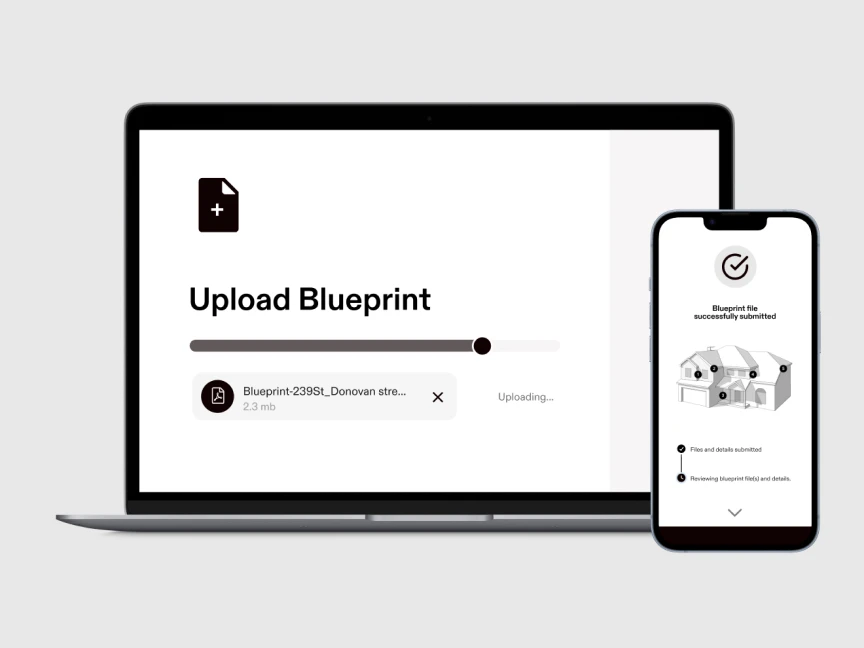
The core Hover workflow is: homeowner takes eight phone photos, Hover builds a 3D model of the house (not just the roof), and the contractor drops real product SKUs onto the model in front of the customer. James Hardie siding. LP SmartSide. CertainTeed shingles. Owens Corning roofing. Sherwin-Williams paint colors. The homeowner isn’t imagining the result — she’s looking at it.
For exterior contractors — siding, painting, full-exterior remodels, roofing with siding packages — that visual is the sales close. Capterra reviews from 2025 and 2026 cite the pattern consistently: contractors report closing rates climbing 15-40 points after adopting Instant Design. For roof-only work in a stable residential market, the visualization matters less and the measurement-first tools (Roofr, EagleView) are better value.
The honest frame for Hover in 2026 is this: if visualization drives your close rate, nothing else in the category does what Hover does. If measurement accuracy and cost-per-report drive your business, Roofr is cheaper and EagleView is the gold standard. Pick the tool that matches the sale.
How the 3D Model Gets Built From 8 Phone Photos
The capture workflow is photogrammetry — a technique where overlapping photos are stitched into a 3D mesh through feature matching and triangulation. The homeowner follows an on-screen guide on their phone: two photos from each side of the house, one from each corner, eight total. Each photo needs to overlap the previous one by roughly 30%, and the homeowner has to keep the full house in frame from slightly different angles.
Hover’s processing pipeline handles the rest. Within a few hours to 24 hours on a typical residential property, the contractor gets back:
- A textured 3D mesh of the full exterior — roof, walls, windows, doors, trim
- Per-facet roof measurements with pitch and area
- Wall measurements including siding square footage by elevation
- Windows and door counts with sizing
- Trim, soffit, fascia, and gutter linear footage
- A downloadable 3D model file (GLB format) that drops into design and rendering tools
The accuracy benchmark is the part that catches people off guard. Metro City Roofing — an independent Denver-metro roofing contractor — ran a published comparison of Hover, EagleView, and onsite measurements on atypical roofs with cut-up hips, heavy dormers, and irregular geometry. Their published finding: “Hover came in at 2.6% variance versus onsite, EagleView at 3.4%. On tree-obstructed lots, Hover had zero failures where EagleView’s aerial imagery failed roughly 8% of the time.” That’s independent contractor-side data, not a vendor-published number — the only third-party benchmark in the category outside EagleView’s CompassData LiDAR study.
The photogrammetry model has a real limitation aerial doesn’t: it requires a human at the property with a phone. For catastrophe response, pre-storm canvassing, or door-knocking sales where you want measurements before the homeowner is even home, Hover doesn’t work. Roofr and EagleView’s aerial workflows do.
Instant Design: The AI Feature Hover Launched in February 2025
Most “AI” in the estimating category is marketing. Roofr’s Instant Estimator is rule-based automation with an AI label. AccuLynx’s AI features are template-based. EagleView’s Horizon (announced April 21, 2026) is the first serious agentic AI play in the category and it’s aimed at carriers, not contractors.
Instant Design is the exception. It’s the feature that got Hover named a 2025 Fast Company Most Innovative Company for the construction category, and it genuinely changes how the close happens at the kitchen table.
The workflow: contractor is sitting with the homeowner, 3D model of her house on the laptop. She mentions she’s thinking about swapping vinyl siding for James Hardie. Three clicks — Hardie Artisan V-Groove, Iron Gray, on the south elevation — and her house renders in the new material in under 30 seconds. She hates it. Try Heathered Moss. She likes it. Save the preview, add it to the proposal, close the job.
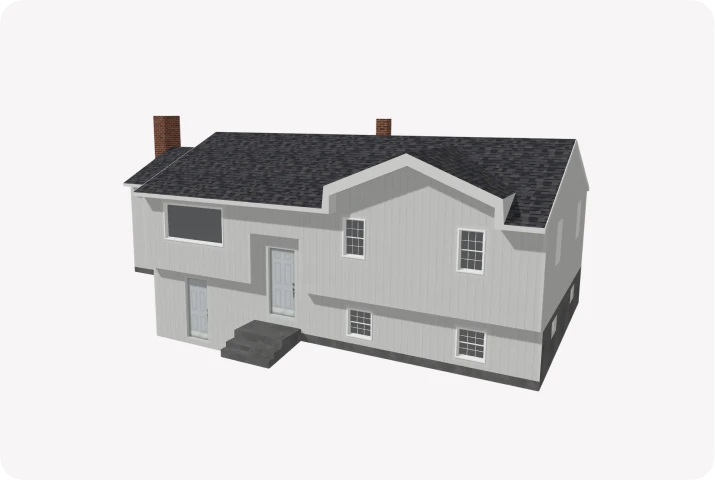
The integrated SKU catalog is what makes it work. Hover is pulling real products from James Hardie, LP SmartSide, CertainTeed, Owens Corning, GAF, and Sherwin-Williams. When the homeowner picks a material, the material price flows into the proposal through the Connected Platform integrations. What was a 4-6 week back-and-forth about “what will it look like” collapses into a 30-minute decision.
Capterra and G2 reviews flag one pattern worth noting: contractors who adopt Instant Design as part of their sales process report the biggest wins. Contractors who use it as a back-office estimating feature see less of the impact. The tool was built to sit on a table with a homeowner — that’s where it earns the per-project fee.
Inside a Hover Report — Measurements, Takeoffs, and 3D Files
Every Hover project produces a bundled output package. The pieces worth knowing:
- 3D interactive model — view and rotate in the browser, or download GLB file for design software
- Roof measurements — facets, pitches, edges, ridges, hips, valleys, waste factor
- Wall measurements — siding area by elevation, trim, corner counts
- Openings — windows, doors, dimensions
- Material takeoffs — quantity lists by product type with integrated pricing when supplier accounts are connected
- Xactimate ESX export — generated on residential projects, drops into Xactimate for claim work
- PDF deliverables — measurement sheets, takeoff lists, proposal-ready material summaries
The material takeoffs are the part most competitors don’t match. Roofr auto-calculates asphalt shingle quantities from the aerial report — but only for asphalt, not for tile or metal, and the takeoff stays inside Roofr. Hover’s takeoffs pull live pricing from ABC Supply, SRS Distribution, Beacon Pro+, and QXO, which means the number the contractor sees in the proposal is the actual delivered cost from the supplier, not a static template price.
For contractors running supplier accounts with those four, the pricing sync is the hidden efficiency. Order materials directly from inside Hover, track delivery status, export the PO into the accounting system. For contractors without supplier-integrated accounts, Hover still exports a clean quantity takeoff — the contractor just prices it manually.
What Hover Costs in 2026 (Starter, Pro, and Enterprise)
Pricing verified September 2026 against hover.to/pricing (construction plans). The line-by-line breakdown, including insurance-plan rates, is on our Hover pricing page.
Hover’s pricing is simpler than most enterprise estimating tools and more transparent than EagleView One’s quote-only rates. The thing to understand up front: every tier bills per project. Pro is not an unlimited plan — it’s a $999/year membership that knocks $20 off each project and halves the expedite fee.
| Tier | Subscription | Per-project pricing | Notes |
|---|---|---|---|
| Starter | None (pay-as-you-go) | Roof-only $29 / $49 / $69; full exterior $59 / $99 / $139; interior $29 / $59 / $89 | First 3 projects free, no card. Expedited 1-hour delivery +$39. |
| Pro | $999/year (no monthly option shown; Hover’s “save 16%” note implies roughly $99/mo) | Roof-only $9 / $29 / $49; full exterior $39 / $79 / $119; interior $9 / $39 / $69 | No per-user fees. Expedited 1-hour delivery +$19. $1,000 in credits per $10,000 spent. |
| Enterprise | Quote-only | Flat-rate options available | Multi-location, API access, custom integrations, dedicated account manager. |
The three prices in each cell are simple / average / complex structures (roof-only tracks facet count: up to 4, 5-8, 9+). A single-story ranch roof is the $29 Starter job. A two-story full-exterior with cut-up gables and multiple trim details is the $139 one. Most suburban residential full-exterior projects land at the $99 average rate, or $79 on Pro. Published turnaround runs 12 hours on Starter and 8 on Pro, with the paid expedite bringing it down to one hour. Insurance-plan pricing is higher across the board (roof-only $49 / $99 / $149 on Starter, $29 / $79 / $129 on Pro).
The break-even math between Starter and Pro is a single number: $20 saved per project against $999 a year. That’s 50 projects a year, or about four a month. Below that, stay on Starter. At 10 projects a month, Pro saves roughly $117/month net of the subscription. At 30 a month it saves about $517. The old assumption that Pro made per-project fees go away is wrong, and it changes the comparison against Roofr more than any other number on this page — see the Hover vs Roofr math for the side-by-side at 10, 30, and 80 reports a month.
The one thing Hover doesn’t publish: quoted Enterprise rates. Multi-crew contractors, franchise operations, and anyone needing API access will pay more, but Hover isn’t opaque about it the way EagleView One is — Hover will give you a quote in days, not weeks, and the number reflects volume rather than adjuster-side pricing.
The Connected Platform Launch (January 2026): What Changed
Hover rebranded its product architecture in January 2026 — from a collection of separate tools (measurement, design, material order) to a unified Connected Platform. The pieces existed before; the integration between them didn’t.
What changed in the actual workflow:
- 3D model, takeoffs, and proposal now live inside a single project view rather than exporting between tools
- Material pricing syncs live from supplier accounts rather than requiring manual catalog updates
- Change orders update the 3D model, takeoff, and proposal simultaneously
- Xactimate ESX export runs from the unified project rather than a separate export workflow
- Supplier integrations (ABC Supply, SRS Distribution, Beacon Pro+, QXO) are embedded rather than bolted on
The strategic rationale is clear: Hover was losing stack-level competition to Roofr and AccuLynx by being a best-in-class measurement tool that required three other tools around it. Connected Platform is Hover saying “we’ll be the whole stack for exterior contractors.”
The rough edges from Q1 2026 reviews are real. Contractors report supplier pricing sync lag, takeoff format changes that broke existing template workflows, and a learning curve for long-time Hover users who are used to the old separated tool model. Hover’s engineering cadence is fast — the company has publicly committed to smoothing these by Q3 2026 — but contractors adopting Connected Platform now are on the leading edge of the transition, not the settled version.
Where Hover Plugs In: Xactimate, JobNimbus, and the Rest
Hover’s integration footprint is the deepest in the estimating category — more than 50 native connections, spanning CRM, accounting, material suppliers, proposal tools, and the Xactimate / XactAnalysis claim workflow. The integrations that actually matter for contractor stacks:
- Xactimate — ESX export generates on residential projects, drops into Xactimate for claim work (export-based, not the live in-Xactimate integration EagleView has)
- JobNimbus — 3D models, measurements, and takeoffs sync into job records; contractors on JobNimbus can trigger Hover captures from inside the CRM
- AccuLynx — native integration with measurement and material sync; AccuLynx users pull Hover models into work orders
- CompanyCam — photos flow between CompanyCam project galleries and Hover 3D models, the capture-to-measurement loop stays inside one ecosystem
- Salesforce / HubSpot — for enterprise contractors running sales-team CRMs; Hover project records push into opportunity stages
- ABC Supply, SRS Distribution, Beacon Pro+, QXO — supplier accounts with live pricing sync and material ordering
- Zapier — for anything not in the native 50-integration set; trigger-action coverage is broad
The Xactimate path deserves a specific note. Hover generates ESX files on residential projects, which means measurements land in Xactimate without manual redraw. But the integration is an export — download the ESX from Hover, upload it into Xactimate — not the deep in-Xactimate workflow EagleView has through the Verisk partnership. For most residential estimating, export works fine. For large insurance claims where the adjuster pulls reports from inside the claim file, EagleView’s live path is smoother.
Roofr launched a competing Verisk-certified ESX at $10 per report on April 15, 2026, which compresses the measurement-to-Xactimate workflow further. See the Roofr review for how those three paths compare.
Hover vs Roofr vs EagleView: The Honest Comparison
The three tools sit at different points on the estimating-tool spectrum, and the right choice depends on what closes your jobs.
| Dimension | Hover | Roofr | EagleView |
|---|---|---|---|
| Best for | Exterior contractors, siding, painting, full-exterior remodels | Roof-only retail residential, price-sensitive shops | Insurance restoration, commercial, carrier work |
| Pricing (2026) | First 3 free, then $29-$139/project (Starter) or $999/yr Pro + $9-$119/project | $0-$349/mo + $13-$19/report | $24.25+ per Premium Report, One sub quote-only |
| Measurement method | Phone-based photogrammetry | Satellite aerial | Satellite aerial + proprietary imagery |
| Accuracy vs onsite | 2.6% variance | ~3% typical | 98.77% CompassData benchmark |
| Tree-obstructed lots | Works (0% failure) | Gaps on dense coverage | 8% failure rate |
| Insurance adjuster acceptance | Generally accepted | Accepted on retail | Default standard |
| Xactimate integration | ESX export | Verisk-certified ESX ($10 add-on, Apr 2026) | Native in-Xactimate |
| Visualization / AI | Instant Design (launched Feb 2025) — best-in-class | Rule-based automation marketed as AI | Horizon agentic AI (GA Jun 1, 2026) — carrier-focused |
| Mobile app | Yes (homeowner capture + contractor view) | PWA only (no native app) | No |
| Capterra rating | 4.8 / 5 (850+ reviews) | 4.6 / 5 (100+ reviews) | 3.8-4.2 / 5 (varies by product) |
The short version: Hover if you sell with visuals. Roofr if you sell on price. EagleView if you sell to insurance. Most contractors running two of the three — typically Hover + EagleView for exterior-with-claims operations, or Hover + Roofr for retail-heavy shops — and choose per job based on what the sale needs. The deeper Roofr matchup, including the pricing reality on both sides, is in our Hover vs Roofr comparison.
Who Should Buy Hover
Hover is a clear choice for:
- Siding contractors — full-house exterior jobs where the homeowner needs to see the material on her house before signing
- Painting contractors — color selection is the close, Instant Design runs Sherwin-Williams colors on the 3D model in real time
- Full-exterior remodelers — roof + siding + paint + trim packages where one tool covers the whole scope
- Roofers in tree-heavy markets — Louisiana, the Pacific Northwest, Northeast residential — where aerial imagery fails on canopy coverage
- Contractors selling to design-conscious homeowners — higher-end residential, historic homes, HOA-governed developments where visual approval matters
- Multi-trade operators — one Hover model supports the roofer, the painter, and the siding installer without re-measuring
Who Should Skip Hover
Hover is the wrong choice for:
- Insurance-restoration roofers running claims work — EagleView’s adjuster acceptance, live Xactimate integration, and historical imagery archive are still the safer defaults on claim-driven work
- Pre-storm sales canvassers — the phone-photo capture requires a homeowner at the property, which breaks the door-knocking and catastrophe-response workflows
- Budget-conscious roof-only shops — Roofr’s $13 Essentials reports plus $10 ESX add-on is meaningfully cheaper if you don’t need visualization
- Service-trade contractors — HVAC, plumbing, electrical have no use for exterior visualization; Hover doesn’t map to those workflows
- High-volume production operations — 50+ jobs/month on Pro still runs $1,500-$4,000+/month in per-project fees depending on roof-only versus full-exterior scope, which is hard to justify versus the EagleView + AccuLynx stack
The pricing-stack complaint is the most-upvoted critical thread across G2’s 4.3/5 review set — contractors running 15+ projects per month repeatedly flag that the Pro subscription combined with per-project fees on every job becomes expensive in ways Hover’s marketing doesn’t emphasize. The Capterra counter-pattern is equally consistent: shops closing premium-priced exterior jobs report the economics work in Hover’s favor because the visualization drives higher-margin sales. The tool pays for the customer segment it was built for and costs more than it should for the segment it wasn’t.
Our Take
Hover is the only tool in the estimating category that changed what selling an exterior job looks like. Every other tool gets the measurements more accurate, cheaper, or faster — Hover made the measurement secondary and the visualization primary, and the data backs up the premise. Capterra 4.8 across 850+ reviews isn’t a marketing number; it’s contractors reporting that the tool helps them close jobs.
For the right contractor — exterior-focused, visualization-driven sale, mid-to-high-end residential market — Hover earns its per-project fee (and the $999/year Pro plan, once volume passes four projects a month) in the first job it closes that would have walked without the 3D model. For the wrong contractor — roof-only insurance restoration, door-knocking canvasser, service-trade operator — it’s an expensive tool for the wrong problem.
The January 2026 Connected Platform rollout is an important read. Hover is no longer positioning as a measurement tool with bolt-on features — it’s positioning as the operations platform for exterior contractors, with measurement as the foundation. The transition has rough edges contractors are flagging in Q1 2026, but the direction is strategically sharp and the 50-integration footprint gives Hover room to be the center of an exterior-contractor stack in a way no pure measurement tool can match.
If you sell on visuals, Hover pays for itself. If you sell on price or adjuster defensibility, pick a different tool.