
The pitch behind RoofClaw is the editorial argument that nobody else in the contractor AI space is making: your customer database doesn’t have to live on someone else’s server. Every other AI agent reviewed on this site — Alivo, Avoca AI, GoHighLevel AI Employee, Smith.ai, Rosie, every receptionist on our AI Call Answering hub, every workflow tool on our AI Tools hub — runs in the cloud. Customer phone numbers, addresses, claim details, supplement filings, and CRM contact records flow into a third-party SaaS provider’s data center somewhere and stay there. RoofClaw is the only product on the AI Agents hub where that’s not the case. The agent runs on Apple hardware physically located in your office. Customer data never leaves the building. Tailscale zero-trust networking secures the link. And the team explicitly removes their own SSH access before shipping the configured unit.
This review covers what RoofClaw actually is in May 2026: a $10,000 one-time investment that ships pre-configured Mac Mini or MacBook Air hardware (the company calls them CORE_NODE and NOMAD_UNIT respectively), built on the open-source OpenClaw framework with roofing-specific customizations, configured at the Kelowna Innovation Center in British Columbia. Founded by Adam Sand — Co-CEO of Roofing Business Partner consulting and co-owner of Sargeants Roofing in Edmonton, Alberta — RoofClaw is the productization of 15+ years of operator-validated roofing consulting work. Total revenue $1.8 million lifetime per TrustMRR verified data, deployed across eight metro markets (Dallas, Miami, Denver, Atlanta, Chicago, Charlotte, Austin, Phoenix). HubSpot Diamond Partner. Score on our 7-dimension ai-agents framework: 3.8 — driven specifically by 5/5 on data sovereignty (the only product on the hub at that level) and 5/5 on autonomy level, offset by 1/5 on setup complexity (the worst on the hub) and 2/5 on cost structure.
What this review covers in order: the data sovereignty argument and why it actually matters for storm-restoration roofers handling sensitive insurance data, the hardware deployment process (CORE_NODE vs NOMAD_UNIT, what actually arrives at your office), the OpenClaw open-source lineage and why it’s a trust signal, the integration story (HubSpot Diamond Partner depth, plus the meaningful gap on JobNimbus and AccuLynx), the verified pricing reality, Adam Sand’s founder credibility, the dimension-by-dimension scoring, and the honest editorial position on which roofing operations should and shouldn’t be looking at this product.
“The fact that they build this on a physical Mac Mini, lock it down with Tailscale, and then literally remove their own SSH access before shipping it to me is what sold me.” — Elmer Glick, Roofing Business Owner, in RoofClaw’s published customer materials
Why Data Sovereignty Actually Matters for Storm-Restoration Roofers
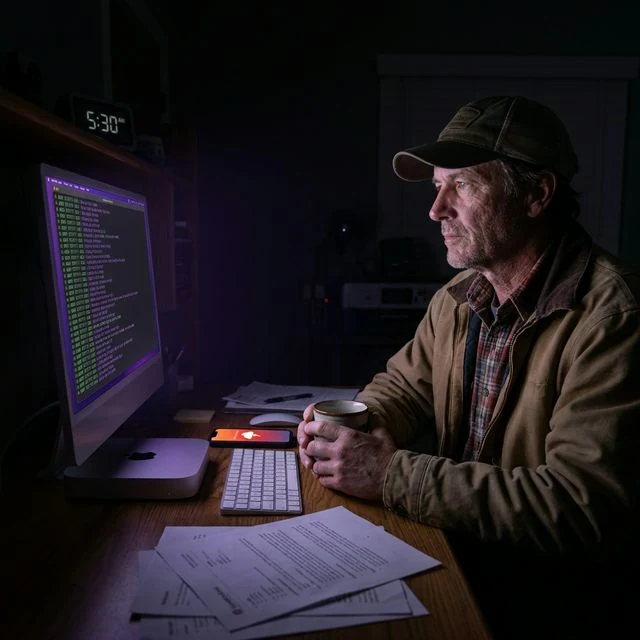
The data sovereignty argument is the editorial reason RoofClaw deserves a place on the AI Agents hub despite scoring 3.8 (lower than Alivo’s 4.3 or Avoca’s 4.1). For most contractor AI evaluations, sovereignty is a low-priority dimension — it’s weighted at 8% in our framework specifically because it matters intensely to a small subset of operators and not at all to most. But for the operators it matters to, no other product on the hub solves the problem.
The storm-restoration roofing pipeline involves a sequence of sensitive customer data that compounds in volume and stakes:
- Personal identifying information (homeowner names, addresses, phone numbers, email addresses)
- Insurance carrier data (policy numbers, claim numbers, deductible amounts, coverage limits)
- Property damage details (roof age, prior damage history, current claim scope)
- Financial transaction data (Replacement Cost Value calculations, depreciation schedules, ACV checks, supplement filings)
- Photographic evidence (CompanyCam-tagged GPS photos used in adjuster meetings and supplement justifications)
That dataset has high commercial value and high regulatory exposure. Storm-chaser fraud is a real industry problem; carrier data leaks have legal consequences; homeowner PII triggers state-level privacy notification requirements when breached. For roofing operators specifically — many of whom are also operating under state-level contractor licensing obligations that include data-handling provisions — having that entire dataset stored on a third-party SaaS vendor’s servers is a meaningful liability surface.
Cloud SaaS vendors mitigate this through SOC 2 certification, GDPR compliance, encryption-at-rest, and contractual data-handling commitments. Avoca AI carries SOC 2 + GDPR. GoHighLevel runs on standard enterprise SaaS controls. Alivo’s data-handling falls under standard SaaS norms. None of those mitigations are bad — they’re appropriate for the cloud SaaS model and they work for most operators.
RoofClaw’s argument is that none of those mitigations are necessary if the data never leaves your office in the first place. The configuration: brand-new Apple hardware purchased by RoofClaw’s team (no refurbished components, no factory bloatware), wiped and rebuilt at the Kelowna Innovation Center, OpenClaw framework installed with RoofClaw-specific roofing customizations, Tailscale zero-trust networking configured to handle remote access without exposing a public IP address, and the team’s own SSH access explicitly removed before the unit ships. The customer database lives on the Apple Silicon NVMe storage in your office. RoofClaw can’t read it. The AI agent operates on the data locally. Backups are local-only by default; off-site backup is operator-configured.
For a storm-restoration roofer who handles 50 active claims per quarter and considers the customer database a strategic asset — not just operational data — the sovereignty argument is the differentiator that justifies the trade-offs we’ll cover next.
CORE_NODE and NOMAD_UNIT: What Actually Arrives at Your Office
The hardware deployment story is the part of RoofClaw most operators have never seen before, so it’s worth being concrete about what the $10,000 actually buys.
Both options are brand-new Apple machines. Both ship from the Kelowna Innovation Center in British Columbia. Both are configured from scratch — no refurbished parts, no ghost installs, only pristine Apple silicon optimized for the internal agent swarm.
- →24/7 always-on operation
- →Tailscale zero-trust remote access from anywhere
- →Right pick for single-location operators
- →Battery-powered portability
- →Operator can deploy to storm markets directly
- →Right pick for traveling owner-operators
Both hardware tiers run identical software. The choice is operational — fixed office anchor versus mobile command unit. Most operators choose CORE_NODE; NOMAD_UNIT is for the small subset of traveling solo and owner-operator buyers.
The configuration sequence at the Kelowna Innovation Center: RoofClaw’s team purchases the Apple machine new from authorized retailers, performs a clean install (no carry-over of factory installs, no included Apple ID accounts, no demo apps), installs the OpenClaw framework, applies RoofClaw-specific customizations (the proline-claw skill, the roofclaw-lsa-agent for Google Local Service Ads, the HubSpot integration layer), configures Tailscale zero-trust networking with an invisible IP, and removes their own SSH access before the unit ships. The hardware then travels to your office via standard freight.
The 3-hour onboarding session walks through the local interface, loads your Standard Operating Procedures into the agent’s behavioral configuration, connects integrations to your business tools (HubSpot, JustCall, Zuper, Sumo, CompanyCam, Google Ads, Facebook Ads, ProLine CRM, QuickBooks, Google LSA), and trains your office team on the local console. After the session, RoofClaw’s ongoing involvement is the weekly “Winning Wednesday” community calls — there’s no enterprise support queue, no SLA-backed ticket system, no NDA-signed escalation path.
For operators comfortable with that model, the deployment lands in 1-3 weeks total from signup to operational. For operators who need a vendor-managed experience with formal support agreements, the model isn’t a fit and that should be the deal-breaker before any other consideration.
OpenClaw Lineage: Why Open Source Is Actually a Trust Signal
The OpenClaw connection is the part of RoofClaw’s story that most contractor AI evaluations skip past, but it’s a meaningful trust signal worth understanding.
OpenClaw is an open-source AI agent framework released under the MIT license. Public GitHub repository. Anyone can read the code, run their own deployment, audit the agent’s behavior, modify it for their own use case. RoofClaw is the productization of OpenClaw specifically for storm-restoration roofing — RoofClaw configures OpenClaw on Apple hardware, adds roofing-specific integrations and Standard Operating Procedure templates, and ships the configured unit with onboarding included.
Two of RoofClaw’s roofing-specific OpenClaw extensions are also published as open-source on GitHub under the MIT license:
- proline-claw — a ProLine CRM integration skill that connects OpenClaw to the legacy ProLine roofing CRM platform
- roofclaw-lsa-agent — a Google Local Service Ads automation agent that polls LSA leads, qualifies them, and pushes qualified leads into your CRM
Why this matters editorially: every other AI agent on our hub is a closed-source SaaS where you trust the vendor’s behavioral claims because you can’t read the code. RoofClaw’s open-source foundation means operators with internal IT capability — or operators willing to hire an IT consultant for a one-time audit — can verify what the AI is actually doing rather than trusting marketing language. For storm-restoration roofers handling sensitive customer data, that audit capability is structurally meaningful.
The trade-off is that OpenClaw being free and open-source means the technical floor is lower than enterprise-grade closed-source competitors. RoofClaw’s value-add is the productization layer (configuration, hardware delivery, onboarding, community support) — which is real value, but it’s also why the product costs $10,000 instead of being free like the underlying framework. Operators who want to deploy raw OpenClaw on their own hardware can do that for the cost of a Mac Mini ($600-$1,500) plus their own setup time. Most operators won’t, because the configuration time is real and roofing-specific tuning is non-trivial. RoofClaw exists because the productized version is the practical option for non-technical operators.
How Much Does RoofClaw Actually Cost?
This is the section where the public information gets messier than ideal, so it’s worth being explicit about what we know and what we don’t.
The current price as listed on roofclaw.com (verified May 2026): $10,000 USD one-time investment. That includes:
- Hardware (Mac Mini or MacBook Air, brand-new from Apple)
- Full configuration at the Kelowna Innovation Center
- All API integrations to your business tools
- The delivery session (shipping included)
- 3-hour intensive onboarding to load Standard Operating Procedures
- Lifetime “Winning Wednesday” community support calls
Optional add-on: AI Readiness Session at $800. This appears to be a pre-deployment consultation to help operators determine if they’re a fit and prep their data and workflows ahead of the main onboarding. Not required.
Pricing discrepancy worth flagging honestly: Two third-party sources list RoofClaw at $5,000 instead of $10,000:
- aitoolly.com listing (added March 11, 2026): “$5,000 one-time investment”
- TrustMRR.com revenue tracker: “$5,000 one-time investment”
The most likely explanation is that RoofClaw doubled the price between March and May 2026 as the product matured and demand grew. The current $10,000 figure on roofclaw.com is what you’ll actually pay; the third-party sources are stale. Always verify pricing at the source before any contractor evaluation.
The all-in cost comparison vs cloud alternatives over time:
| Time horizon | RoofClaw ($10K once) | Alivo ($1,299/mo) | Avoca AI ($1,500/mo est.) | GHL AI Employee ($97/mo on $97 base) |
|---|---|---|---|---|
| Month 1 | $10,000 | $1,299 | $1,500 | $194 |
| Year 1 total | $10,000 | $15,588 | $18,000 | $2,328 |
| Year 3 total | $10,000 | $46,764 | $54,000 | $6,984 |
| Year 5 total | $10,000 | $77,940 | $90,000 | $11,640 |
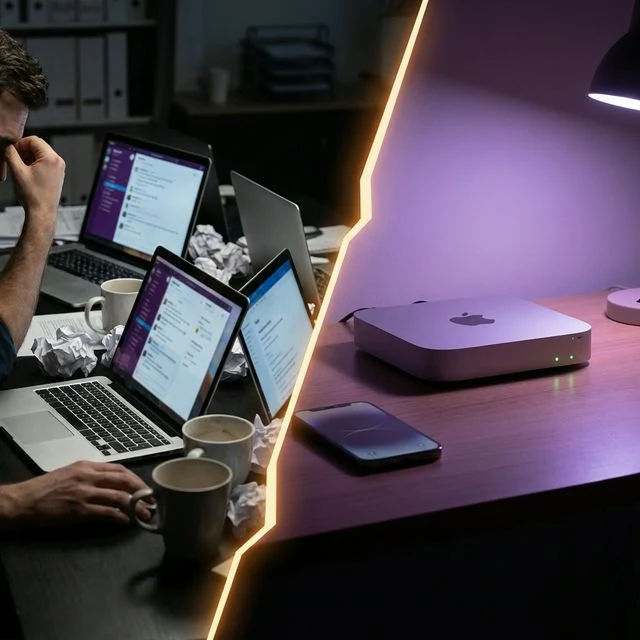
The math flips around month 8 of ownership for Alivo and month 7 for Avoca — RoofClaw’s one-time price is cheaper than the cumulative subscription cost from that point forward. Against GoHighLevel AI Employee (the cheapest cloud option at $97/mo), RoofClaw breaks even around year 5. For operators planning to own AI infrastructure for 3+ years with stable workflows, the one-time pricing is genuinely advantaged.
The math doesn’t flip for short-term operators or for operators who expect to switch products as the AI agent category matures. If you think you’ll want to swap agents in 18 months, the cloud subscription model is structurally better because there’s no sunk capital cost on hardware that becomes obsolete.
The HubSpot Diamond Partner Story (And the JobNimbus / AccuLynx Gap)
RoofClaw’s integration story is genuinely strong on one specific axis and meaningfully weak on another, and both halves are worth understanding.
The strong half: HubSpot Diamond Partner status. Diamond is the highest tier in HubSpot’s partner ecosystem, reserved for vendors with deep technical integration plus customer success metrics. RoofClaw’s HubSpot integration handles deal scoring (A/B/C/F ratings), context-aware email drafting using your CRM data, GraphQL-based contact targeting for campaign launches, and bidirectional pipeline management. For roofers running HubSpot — which is a meaningful subset of the storm-restoration market because HubSpot’s free CRM tier has captured small-to-mid roofing operators — this integration depth is comparable to what Avoca AI ships natively for ServiceTitan operators.
The weak half: no native integration with JobNimbus or AccuLynx. These are the two dominant roofing CRMs in the storm-restoration market — JobNimbus holds roughly 35-45% market share among storm-chasers, AccuLynx holds another 25-35%. Neither integrates natively with RoofClaw. The full integration list confirmed as of May 2026:
| Integration | Type | Notes |
|---|---|---|
| HubSpot | Diamond Partner — deepest tier | Deal scoring, email drafting, GraphQL contact targeting, pipeline management |
| JustCall | Native | Cloud phone system integration |
| Zuper | Native | Field service management |
| Sumo | Native | Marketing automation |
| CompanyCam | Native | Photo documentation sync |
| Google Ads | Native | Campaign management and ad optimization |
| Facebook Ads | Native | Campaign management |
| ProLine CRM | Native (open-source skill) | Legacy roofing CRM via proline-claw |
| QuickBooks | Native | Accounting integration |
| Google Local Service Ads | Native (open-source agent) | Lead polling and auto-response via roofclaw-lsa-agent |
| JobNimbus | NOT native | The dominant roofing CRM is not on the integration list |
| AccuLynx | NOT native | The other dominant roofing CRM is also not on the list |
| ServiceTitan | NOT native | Use Avoca AI for ServiceTitan operations |
| Housecall Pro | NOT native | Use Alivo or Avoca AI for HCP |
| Custom APIs | Supported | ”Any software with an open API” — but custom integration work is on you |
For roofers on JobNimbus or AccuLynx specifically, this gap is the single biggest practical constraint on RoofClaw deployment. You’d need either custom API integration work (RoofClaw supports any platform with an open API, but the integration work isn’t pre-built and isn’t included in the $10,000) or migration to HubSpot before the integration depth matches what cloud-managed alternatives ship out of the box.
For roofers already on HubSpot, the integration depth is genuinely advantaged compared to most cloud agents on the AI Agents hub.
Real Customer Evidence (And Why There Isn’t More of It)
This is the section where RoofClaw’s smaller scale shows up most visibly. Most published testimonials live on RoofClaw’s own materials or in third-party listings; G2 and Capterra footprints are minimal as of May 2026; Reddit discussion is limited to the broader OpenClaw ecosystem rather than RoofClaw specifically.
The one verified named testimonial we located:
Elmer Glick, Roofing Business Owner, in RoofClaw’s published customer materials via aitoolly.com: “The fact that they build this on a physical Mac Mini, lock it down with Tailscale, and then literally remove their own SSH access before shipping it to me is what sold me.”
That quote is meaningful for two reasons: it’s specific (the SSH-access-removed detail isn’t marketing language, it’s a technical implementation choice that matters to a buyer who understands sovereignty), and it’s named (you can verify Elmer Glick exists as a roofing business owner). It’s not a sentiment-stub testimonial.
The implied customer count math from TrustMRR’s verified revenue data: $1.8 million total revenue lifetime, divided by an average sale price somewhere between $5,000 (third-party stale price) and $10,000 (current price), implies a customer base of roughly 180-360 operators total. Recent monthly revenue is $20,000-$25,000 per TrustMRR’s tracking — the implied recent run rate is 2-5 new operators per month at the current price.
That’s a smaller, more concentrated customer base than Alivo (Tier 1 cloud-managed roofing alternative) or Avoca AI (Tier 2 multi-trade with 800+ customers). Fine for a niche product — niche by design and niche by pricing — but worth knowing if you’re someone who weights customer count heavily as a vendor risk signal.
The Adam Sand / Roofing Business Partner founder credibility is the substitute trust signal for the smaller customer base. Adam has been in the roofing industry since 2014, co-owns Sargeants Roofing in Edmonton, runs RBP as a roofing consulting firm, and RBP has helped roofing clients reach $800M+ in revenue collectively. RoofClaw is operator-built, productized from real consulting work — not a Silicon Valley AI startup that decided to enter contractor AI as a market opportunity.
How RoofClaw Scores on Our 7 AI Agents Dimensions
RoofClaw’s scoring profile is the most polarized on the AI Agents hub — exceptional at sovereignty/autonomy/specificity (the dimensions that matter to a specific buyer profile), weak at setup/cost (the dimensions that broader operators care about). The 3.8 weighted score reflects that polarization honestly.
| Dimension | Weight | Score | Why this score |
|---|---|---|---|
| Contractor Specificity | 18% | 5/5 | Storm-restoration roofing exclusively. Trained on roofing-specific scenarios via the OpenClaw + RBP roofing consulting playbook. Tied with Alivo for highest score on this dimension. |
| Autonomy Level | 17% | 5/5 | Full autonomous execution under storm-surge load. Designed for the 1,000% lead-volume spike scenarios. Configuration during the 3-hour onboarding loads SOPs that the agent operates within without ongoing intervention. |
| Integration Depth | 16% | 3/5 | HubSpot Diamond Partner is genuinely strong, but the lack of native JobNimbus and AccuLynx integration (the two dominant roofing CRMs) holds this score back from 4/5 or 5/5. For HubSpot-running roofers the score would be 4-5; for JobNimbus/AccuLynx-running roofers it’s effectively 2/5. The averaged score is 3/5. |
| Setup Complexity | 15% | 1/5 | The worst score on the AI Agents hub. Hardware delivery, 3-hour onboarding session, and Standard Operating Procedure tuning is the deepest setup investment in the category. Every other agent ships in days; RoofClaw is structurally slower because hardware is in the critical path. |
| Human Oversight Required | 14% | 4/5 | Designed for unsupervised storm-surge operation. SOPs loaded at configuration handle most edge cases. Falls short of 5/5 because community-call support model means SOP tuning still benefits from operator engagement post-deployment. |
| Cost Structure & Value | 12% | 2/5 | $10,000 upfront capital outlay is the highest entry barrier on the AI Agents hub. The math eventually flips to favor RoofClaw vs cloud subscriptions, but the breakeven is 8+ months. For operators who plan to own infrastructure for 3+ years, the score should arguably be 4/5; for short-term or experimental operators it’s 1/5. The averaged score is 2/5. |
| Data Sovereignty | 8% | 5/5 | The only product on the AI Agents hub at this score. Apple hardware on premises, Tailscale zero-trust networking, invisible IP, RoofClaw team removes their own SSH access. Customer data physically lives in your office. Open-source OpenClaw foundation means the AI behavior is auditable. |
Weighted score: 0.18×5 + 0.17×5 + 0.16×3 + 0.15×1 + 0.14×4 + 0.12×2 + 0.08×5 = 3.58, plus the +0.20 calibration constant = 3.78 → 3.8 final rating.
The interpretation: for the right operator profile (storm-restoration roofer on HubSpot prioritizing data sovereignty), the dimensions that matter most score 5/5 across the board. For the wrong operator profile (anyone outside that narrow buyer description), the dimensions that matter most are setup complexity and integration depth, where RoofClaw underperforms. The weighted average reflects honest editorial positioning — strong recommendation for a specific buyer, wrong fit for everyone else.
Who Should Actually Buy RoofClaw
The honest editorial position: RoofClaw is built for storm-restoration roofing operators on HubSpot who specifically prioritize data sovereignty as a non-negotiable buying criterion. Specifically:
- Roofers on HubSpot’s free or paid CRM tier — the Diamond Partner integration depth is comparable to what other agents ship for ServiceTitan, but it only works if HubSpot is your CRM. Operators on JobNimbus or AccuLynx should default to Alivo instead.
- Storm-restoration operators handling sensitive insurance data — claim numbers, supplement filings, adjuster correspondence, homeowner PII. If your customer database is a strategic asset rather than just operational data, the sovereignty story is the differentiator that justifies the trade-offs.
- Operators with internal IT capability or a trusted IT consultant — the 3-hour onboarding, Standard Operating Procedure tuning, and ongoing community-call support model assumes you have the technical comfort to engage with the platform rather than treating it as fully managed SaaS. If your office has nobody who reads technical documentation, RoofClaw’s setup model isn’t right for you.
- Owner-operators planning to own AI infrastructure for 3+ years — the math flips against cloud subscriptions around month 8, but the real economic advantage compounds at year 3 and year 5. Short-term operators get the worst of both worlds.
- Operators specifically interested in the OpenClaw open-source foundation — for the small subset of roofing operators who care about being able to audit the AI behavior or modify the framework for custom workflows, RoofClaw’s open-source lineage is unique on the AI Agents hub.
- Roofing operations in the eight currently-deployed metros — Dallas, Miami, Denver, Atlanta, Chicago, Charlotte, Austin, Phoenix. The community-call support model benefits from operator concentration; if you’re in or adjacent to one of those markets, peer operators are reachable for tactical Q&A.
Who Should NOT Use RoofClaw
Roofers on JobNimbus or AccuLynx as the primary CRM — RoofClaw doesn’t have native integration with either of the two dominant roofing CRMs in the storm-restoration market. Alivo is the right roofing-vertical pick for JobNimbus or AccuLynx operators because Alivo ships native bidirectional sync to both platforms.
Multi-trade home service operations (HVAC, plumbing, electrical, garage door) — RoofClaw is roofing-only by design. Avoca AI is the editorial pick for multi-trade home service.
Operators who want set-and-forget AI without setup investment — the 3-hour onboarding, hardware delivery process, and ongoing SOP tuning is real cognitive load. Cloud SaaS alternatives like Alivo, Avoca, and GoHighLevel AI Employee ship in days. If “deploy fast and iterate” is your operating mode, RoofClaw’s deployment model isn’t a fit.
Solo operators or sub-$1M revenue contractors — the $10,000 upfront capital outlay is hard to justify until you have lead volume to capture and CSR overhead to displace. Smaller operations should use Rosie ($49-$149/mo) or Upfirst ($24.95/mo) on our AI Call Answering hub as the entry tier and add a full agent later when scale justifies the investment.
Contractors who require formal enterprise vendor support — RoofClaw’s support model is community-based via “Winning Wednesday” weekly calls. There’s no SLA-backed ticket system, no NDA-signed escalation path, no enterprise account management. Operators who specifically need vendor-managed support agreements should look at cloud SaaS alternatives.
Operators in disaster-prone areas without disaster recovery planning — RoofClaw’s hardware lives in your office. If your office suffers a fire, theft, or major hardware failure, the AI agent goes offline until RoofClaw ships a replacement and reconfigures it. Cloud SaaS alternatives are resilient to these failure modes by design. Plan accordingly — keeping a daily off-site backup of the agent’s data is a discipline that operators in storm-prone metros should specifically commit to.
Anyone uncomfortable with the open-source-software-on-physical-hardware model — if “we run this on AWS with SOC 2 compliance” sounds like a feature to you and “the framework is on GitHub under MIT license, you can read the code” sounds like a bug, RoofClaw isn’t built for your buying instinct. That’s not a value judgment — different operators have different risk frameworks. Match the model to your framework.
How RoofClaw Fits in Your Full AI Stack
RoofClaw plays the agent layer in a layered AI stack the same way Alivo and Avoca do, but the deployment philosophy is opposite. Most operators who deploy RoofClaw also run a separate AI receptionist on the call-answering layer because RoofClaw’s strength is the back-office Chief of Staff role, not the inbound call-answering role specifically.
The most common RoofClaw-anchored stack we see in production:
- Inbound call layer: Smith.ai for the AI+human hybrid model (catches the call before RoofClaw’s office automation takes over), or Rosie for pure AI receptionist at lower price points
- Agent layer: RoofClaw running the back-office Chief of Staff role — CRM management, deal scoring, email drafting, campaign launches, supplement-pipeline tracking
- CRM: HubSpot as the system of record (because RoofClaw’s Diamond Partner integration depth is the practical advantage over alternatives)
- Photo documentation: CompanyCam integrating natively with RoofClaw for GPS-stamped storm-damage evidence
- Aerial measurement: EagleView or Hover for rapid roof measurement on bid-stage estimates
- Tool layer: n8n for any custom workflow connections that don’t fit RoofClaw’s product surface
For roofing operations doing 30-100 active claims per quarter on HubSpot, this stack typically lands at $300-$800/month combined plus the RoofClaw $10,000 one-time outlay, and the breakeven against a fully cloud-managed equivalent stack happens between months 8-12. The data sovereignty differentiator compounds quietly over time.
Want Your Customer Data Off Third-Party Servers?
RoofClaw runs an AI Readiness Session before any commitment ($800).
Pre-deployment consultation to determine if your operation is a fit, prep your data and workflows, and validate the integration story for your specific CRM stack. The full RoofClaw deployment is $10,000 one-time — no recurring subscription, no per-call fees.