


There is a homeowner on your roofing website right now at 11pm with water dripping through their kitchen ceiling. Either Tidio’s chat captures them while you’re asleep, your CSR catches the call tomorrow morning, or your competitor’s chat does it tonight. The math on after-hours website lead capture for contractors is brutal — 47% of homeowners researching emergency contractor services do it between 9pm and 7am, and contractor websites without working chat lose roughly half of that traffic to whoever has the chat widget that actually responds. Tidio is the easiest way to fix that specific problem, and the editorial story behind that one sentence is worth getting honest about before any contractor signs up.
Tidio is the website chatbot platform with the easiest deployment in the AI Tools competitive set — 20 minutes from signup to live bot, one-click WordPress and Shopify install, genuine free tier, and the Lyro AI add-on (Anthropic Claude-powered, native MCP support, 12 languages, 67% resolution rate) for operators who want autonomous handling of after-hours inquiries. Founded 2013 in Szczecin, Poland by Tytus Gołas and Marcin Wiktor, Tidio operates as an independent Series B-stage company with $26.8M total raised — last round May 2022 at $25M led by PeakSpan Capital. 300,000+ customers globally, 1,880 G2 reviews at 4.6/5, 590 Capterra reviews at 4.7/5 — the strongest third-party validation in the AI Tools competitive set on our hub.
This review covers what Tidio actually is in May 2026 — including the 2026 pricing reality with the Lyro AI add-on trap most reviewers fail to flag, the verified $59-to-$749 plan cliff that hits growing contractor teams, the 15-minute conversation reset rule that produces surprise billing, the December 2024 price restructure that doubled some existing customers’ bills, the genuine ease-of-use moat (20-min setup is real), the integration depth on commodity SaaS contrasted with the honest contractor-CRM gap (no native JobNimbus, AccuLynx, ServiceTitan, or Housecall Pro), the Anthropic Claude differentiator vs the GPT-default chatbot category, the bimodal Trustpilot review pattern (3.8/5 with 24% one-star) vs the strong G2/Capterra signals, and the explicit who-is-NOT-for filter that should run before any contractor commits to annual.
“Automatic message feature that helps a lot and is very, very beneficial for us to avoid losing leads.” — Stephen Nadeau, Senior Manager of Member Experience, Borrowell — published case study with 83% Lyro AI Agent resolution rate
The honest editorial through-line: Tidio is genuinely good at what it does for the right operator profile. A solo or small contractor with actual website traffic gets 24/7 lead capture they couldn’t reasonably build any other way. The trade-offs are real — Lyro AI is gated behind a paid add-on most reviewers fail to flag, the plan cliff between Growth and Plus is structurally wrong for growing teams, and contractor-CRM integration requires Zapier middleware. The right contractors get value the day they install. The wrong contractors should be on GoHighLevel’s bundled chat or skip chat entirely and focus on the AI Call Answering hub instead.
What Tidio Actually Is in 2026 (Independent Series B, Claude-Powered)
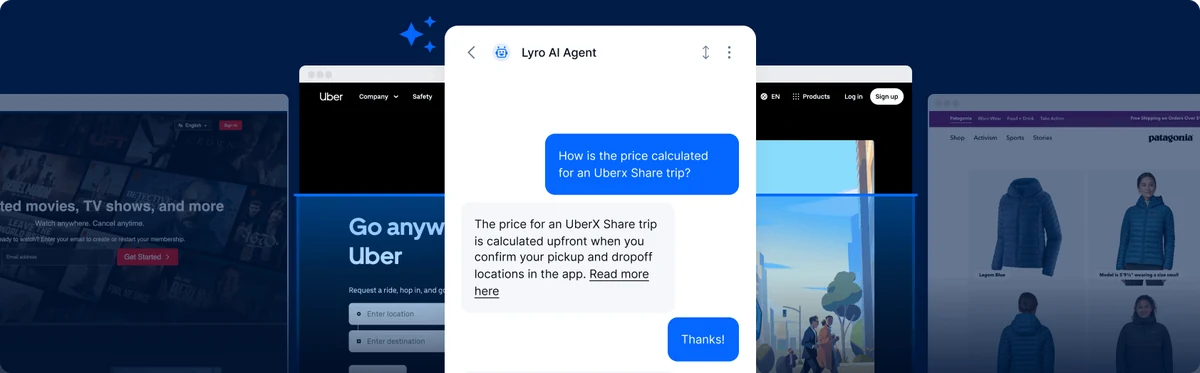
The Tidio you’ll find at tidio.com in May 2026 is meaningfully different from a typical chatbot review’s framing. Three facts most reviewers miss.
Fact one: Tidio is independent and Polish. Founded 2013 in Szczecin by Tytus Gołas (CEO) and Marcin Wiktor, the company operates as Tidio LLC with 100+ employees. No parent-company acquisition. Crunchbase, PitchBook, and Tracxn all confirm independent operating status as of May 2026. The funding history is straightforward: pre-Series B round in earlier years, then $25M Series B led by PeakSpan Capital in May 2022 (with Inovo Venture Partners and Rafał Brzoska, CEO of InPost, participating). Total raised: $26.8M. For operators evaluating chatbot vendors on company durability, Tidio’s 13-year operating history plus institutional Series B funding is a stronger signal than the typical chatbot startup.
Fact two: Lyro AI is Anthropic Claude-powered, not GPT. Tidio explicitly chose Claude as the foundational LLM for Lyro AI, citing Anthropic’s helpful-honest-harmless training approach. This is rare in the chatbot category — Drift, Intercom Fin, LiveChat ChatBot, and most competitors run on OpenAI GPT or proprietary fine-tuned models. The editorial significance: Claude tends toward more grounded responses with fewer hallucinations on out-of-knowledge-base questions, but trades occasionally for more conservative answers when the knowledge base is ambiguous. Native Model Context Protocol (MCP) support shipped in 2025-2026 — Lyro can connect to operator-provided context sources beyond the basic knowledge base, which is current 2026 capability not yet shipped by most chatbot competitors.
Fact three: customer base of 300,000+ globally. Tidio’s homepage cites the 300K figure, supported by review platform volumes that are roughly 7x larger than competing chatbot platforms covered on our hub. G2: 1,880 verified reviews at 4.6/5. Capterra: 590 reviews at 4.7/5. Trustpilot: 224 reviews at 3.8/5 (the bimodal counter-signal we’ll address honestly in the customer evidence section). Customer concentration is heavy in ecommerce (Shopify-anchored stores), SaaS, and services — not contractor-specific. The lead-capture use case translates universally, but Tidio’s product roadmap and integration priorities skew toward ecommerce.
The architectural model is drop-in chat widget plus optional AI agent. Operators install the Tidio widget on their website (one-click for WordPress, Shopify, Wix, Squarespace, Webflow; HTML snippet for custom sites), configure the canned greetings and operating hours, optionally enable Lyro AI for autonomous response handling, and start receiving leads. The operator-side experience is a unified inbox — desktop web app plus native iOS and Android apps for the team handling chats. Conversations land in the inbox; operators can respond in real-time, or Lyro handles autonomously while routing edge cases to human agents.
Where Tidio fits on our AI Tools hub: Bucket B — Voice & Communication AI, alongside ElevenLabs (which ships next on our review queue). Cross-listed to the Marketing Tools hub (which builds in Sprint 23) as a forward-compatible secondary categorization — Tidio is genuinely a marketing/customer-engagement tool as much as it is an AI tool. Scored only against the AI Tools framework because the Marketing Tools hub doesn’t exist yet.
The genuinely useful contractor use cases for Tidio specifically:
- Solo contractor with a working website that gets meaningful traffic — install Tidio Free, configure canned greetings about service area and emergency response, capture after-hours leads while you sleep. Cost: $0 until you outgrow Free’s 50 conversations/month or want Lyro AI.
- Small contractor team with 5-10 staff and a website doing 100+ monthly visitors — Growth tier at $59/month plus Lyro entry at $39/month covers 24/7 chat plus AI handling of common questions.
- Contractor agency serving multiple client websites — Tidio’s multi-project capabilities at the Plus tier ($749/month) support agency operators managing chat for 5-10 contractor clients simultaneously.
- Operators specifically wanting Anthropic Claude-grounded AI rather than GPT — Tidio is currently the only top-tier chatbot platform running on Claude as the foundational LLM.
The wrong contractor use cases for Tidio:
- Operators already on GoHighLevel — GHL’s chat widget is bundled. Don’t double-pay for Tidio. GoHighLevel AI Employee at $97/mo Unlimited covers chat plus voice plus everything else inside the broader stack.
- Contractors whose lead flow is 100% phone-call-driven — if homeowners always call rather than chat (typical for older demographics, emergency restoration, after-storm roofing), Tidio captures very little incremental volume. Use Smith.ai or the AI Call Answering hub instead.
- Solo contractors without a working website that gets traffic — Tidio captures website visitors. If your lead flow is Google Maps + Yelp + word-of-mouth and your website gets 3 visits a month, Tidio has nothing to capture. Build the website first or skip chat entirely.
- Operators needing voice or phone AI — Tidio is chat-only. No voice, no phone. For voice-AI use cases, Synthflow or Avoca AI are the right shapes.
The Lyro AI Pricing Trap Most Reviewers Miss
This is the editorial moat — the section that separates this review from the dozen content-farm Tidio reviews ranking in the top 5 on Google. Lyro AI is gated behind a paid add-on, and the Free tier’s “AI” allowance is 50 LIFETIME conversations, not monthly. Most reviewers fail to flag this, and contractors signing up for “free Tidio” expecting AI agent functionality get blindsided when they realize their Free plan reverts to live-chat-only after the lifetime allowance runs out.
Here’s the honest pricing math, verified from tidio.com/pricing as of May 2026:
Free tier is real. Base plans are live-chat-only. Lyro AI is a separate add-on. Real all-in cost depends on which combination you actually need.
- →50 conversations/month billable, up to 10 operator seats. Live chat + ticketing only.
- →50 LIFETIME Lyro AI conversations — then AI shuts off forever unless you pay. Most reviewers miss this.
- →100 conversations/month, up to 10 seats, basic analytics, operating hours, 100 Flows visitors. Lyro NOT included.
- →250-2,000 conversations/month tier-scaled, advanced analytics, auto-assignment, macros, permissions. Lyro NOT included.
- →$32.50/mo annual ($39 monthly) for 50 Lyro conversations. Tier ladder: 50 → 100 → 150 → 200 → 300 → 500 → 750 → 1,000+.
- →500-1,000 Lyro conversations land in $79-$149/mo range. 3,000+ Lyro conversations Premium tier exclusive.
- →Custom conversation volume, custom seats, departments, multi-project, custom branding, OpenAPI, dedicated CSM.
- →No plan exists between $59 Growth and $749 Plus. Growing teams hit a wall.
- →3,000+ Lyro conversations bundled, 50% Lyro resolution guarantee contractually, managed AI, SSO, compliance, Advanced Copilot.
Real-world contractor math: solo on Starter ($24) + Lyro entry ($39) = $63/mo combined. Small team on Growth ($59) + Lyro mid-tier ($79) = $138/mo. The Lyro stack is real cost, not the headline price most reviewers quote.
Pricing surprises to know about before signing annual:
-
The 15-minute conversation reset rule. Tidio bills based on “conversations,” but a conversation resets after 15 minutes of silence. One customer can consume multiple billed conversations in a single back-and-forth if they take a coffee break mid-chat. For contractor sites where homeowners often start a chat, walk away to take a measurement, then resume, this rule produces surprise overage charges. Multiple operator complaints on Reddit and Capterra describe exactly this pattern.
-
The December 2024 price restructure. Tidio quietly restructured pricing in late 2024. Multiple operators on Reddit and chatarmin’s coverage report long-running customers saw their monthly bills double under the new tiers. Existing customers were grandfathered for some period but eventually migrated. For new signups in 2026, the current pricing is what applies — but the precedent is that Tidio has restructured before and can do it again.
-
Auto-renewal cancellation friction. Trustpilot’s 24% one-star reviews cluster around three themes: difficulty cancelling annual subscriptions, surprise auto-renewal charges, and slow response from billing support. Verify cancellation terms in writing before annual signup.
-
Geographic price variance. European customers pay roughly 17% more (€29 monthly vs $29 monthly) due to VAT pass-through. US contractors get the lower price.
-
Branding removal extra. Removing the “Powered by Tidio” badge from the chat widget costs $20/month additional ($16.67 annual) on Growth tier. Plus and Premium include custom branding.
Lyro Capabilities: Claude-Powered, MCP-Enabled, 12-Language Support
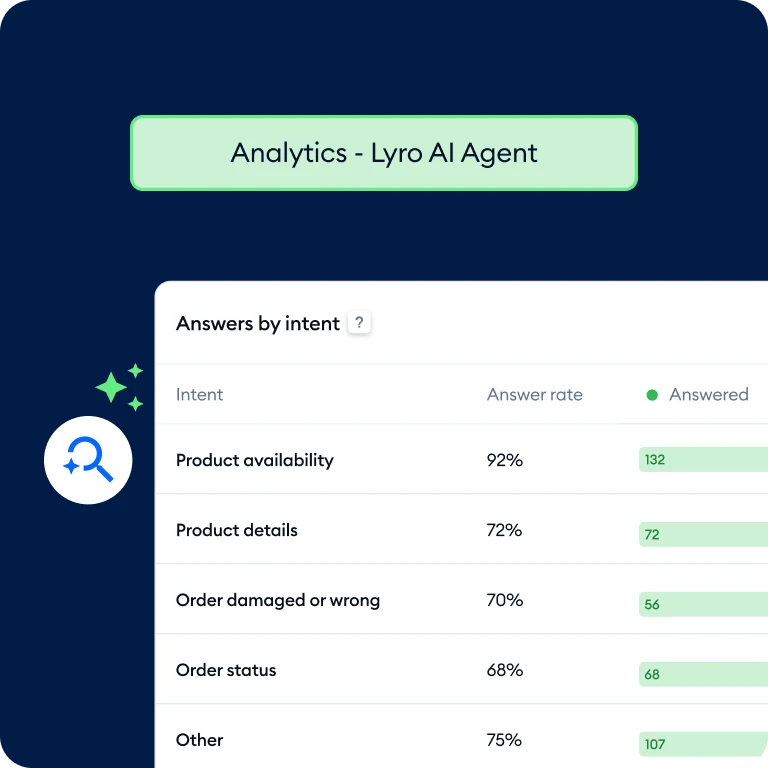
The AI capability story matters because Tidio’s positioning increasingly depends on Lyro’s quality, and the editorial honesty test is whether Lyro actually delivers what the marketing promises.
Lyro is built on Anthropic Claude. Tidio’s verbatim explanation: “We use Claude because this particular Large Language Model has been developed with the goal of becoming helpful, honest, and harmless.” This is editorially significant — most chatbot platforms run on OpenAI GPT (Drift, Intercom Fin) or proprietary fine-tuned models (LiveChat ChatBot). Tidio’s Claude choice produces more grounded responses with fewer hallucinations, though Claude occasionally trades for more conservative answers when the knowledge base is ambiguous.
Lyro’s resolution rate is 67% per Tidio’s homepage (originally launched at 70% per the Lyro Conversational AI launch blog). Premium tier offers a contractual 50% resolution guarantee — meaning if Lyro fails to resolve at least 50% of conversations, Tidio commits to remediation. The contractual guarantee is genuinely rare in the chatbot category and worth flagging for enterprise buyers.
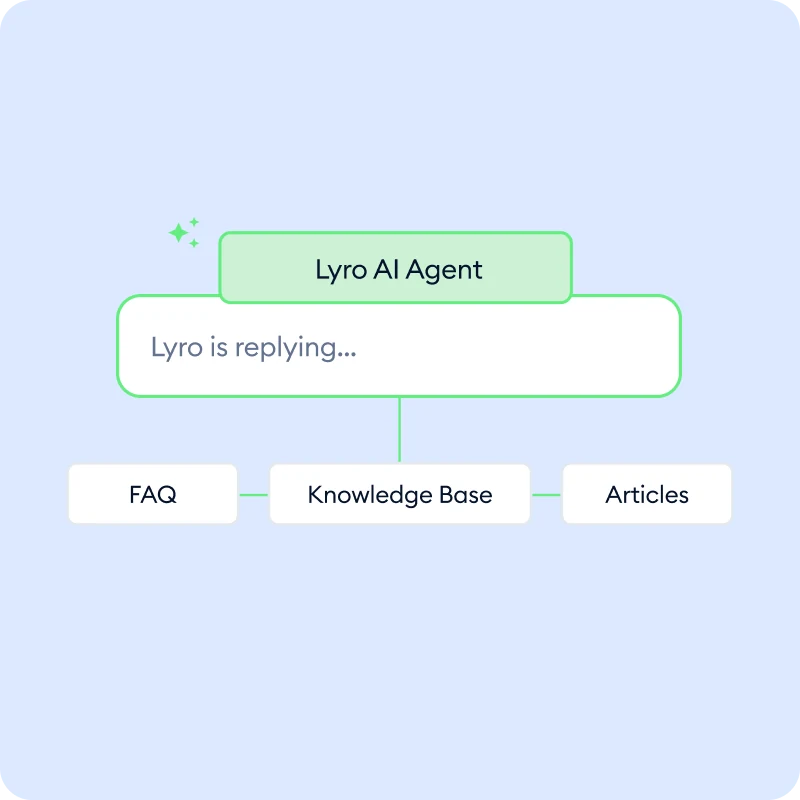
Knowledge base ingestion has two paths: auto-scrape of operator-provided support content or website content (capped at 60 pages per third-party reviews — this matters for contractors with deep service catalogs), and manual entry/FAQ upload. No open document upload for arbitrary file formats is documented as of May 2026 — knowledge base building is URL-and-text-based.
Native Model Context Protocol (MCP) support shipped in 2025-2026 — confirmed on Tidio’s AI Agent page. Lyro can now connect to operator-provided context sources beyond the basic knowledge base. For tech-comfortable operators building MCP-based AI integrations, Tidio is one of the few chatbot platforms with first-party MCP support. The relevant nodes: Lyro Smart Actions for order updates and lead qualification, plus product recommendations.
Lyro Guidance — operators can customize tone, style, escalation rules. The configuration depth is meaningful: brand voice, response personality, escalation triggers based on customer sentiment or specific keywords, fallback to human agents on unresolved questions. Operators who invest 4-8 hours configuring Lyro Guidance properly report meaningfully better Lyro performance than operators who use defaults.
12 officially supported languages for Lyro response generation: English, Spanish, German, Portuguese, French, Dutch, Swedish, Norwegian, Slovene, Polish, Danish, Italian. Tidio’s “45+ languages” marketing claim refers to LLM general capability, not officially supported response languages. Use 12 as the conservative figure if multilingual support is a buying criterion.
Hallucination control is strict: Lyro is bounded by the knowledge base content and auto-escalates unresolved questions to human agents. Tidio explicitly states “Lyro doesn’t make things up.” This is a meaningful design choice — competing chatbots with looser hallucination boundaries occasionally invent product details or service capabilities that don’t exist, and operators get burned when customers complain. Tidio’s grounded approach trades some response flexibility for accuracy.
What Lyro doesn’t do is also worth flagging:
- No voice support. Lyro is chat-only. If you need voice or phone AI, Synthflow or Avoca AI are the right shapes — different product category entirely.
- No native email AI agent. Email is supported via help desk and ticketing, but the AI capabilities are concentrated in chat, not autonomous email response.
- No autonomous outbound campaigns. Lyro is reactive (responds when customers initiate chat), not proactive. For outbound voice or SMS campaigns, see Hatch (multi-channel) on the AI Agents hub.
- No deep integration with operator backend systems beyond MCP and API. For complex workflow automation, n8n or Zapier sit downstream of Tidio.
Integrations: Class-Leading on Commodity Stack, Zero Contractor CRMs
This is the dimension where Tidio meaningfully outpaces Synthflow and n8n on commodity SaaS — and where the editorial honesty story has to address the contractor-vertical gap.
Tidio’s native integration list is genuinely deep for the platforms most contractor websites actually run on:
- CMS and website builders: WordPress (native plugin in WordPress.org repository, one of the most-installed live chat plugins), Shopify (native Shopify App Store install), BigCommerce, Adobe Commerce (Magento), WooCommerce, Wix, Squarespace, Webflow.
- CRM (general SaaS): HubSpot, Salesforce, Pipedrive, Microsoft Dynamics, ActiveCampaign, Brevo (formerly Sendinblue), Agile CRM.
- Communication channels: Instagram Direct Messages, Facebook Messenger, WhatsApp Business, Email, SMS (via Twilio integration).
- Help desk and competing chat: Zendesk, Intercom (yes, Tidio integrates with its competitors).
- Automation: Native Zapier integration with the “Send to Zapier” action available inside the Flow editor on all plans (including Free). Make and n8n via webhooks.
- API: Tidio OpenAPI documented at the Plus and Premium tiers as a sales feature.
For a typical contractor running WordPress + HubSpot + Mailchimp, Tidio’s native integration coverage is genuinely class-leading vs Synthflow (50+ integrations focused on voice infrastructure) or n8n (1,700+ integrations but requiring custom build for most contractor stacks).
The contractor-CRM reality check is the editorial honesty point that gets buried in most Tidio reviews:
- JobNimbus: ❌ NOT native
- AccuLynx: ❌ NOT native
- ServiceTitan: ❌ NOT native
- Housecall Pro: ❌ NOT native
- Jobber: ❌ NOT native
- GoHighLevel: ❌ NOT native (GHL has its own bundled chat widget)
- FieldEdge: ❌ NOT native
- Buildertrend: ❌ NOT native
- CompanyCam: ❌ NOT native
- EagleView: ❌ NOT native
For each contractor CRM, the bridge path is Tidio → Zapier → contractor CRM. All major contractor CRMs have Zapier presence, which makes the integration possible — but operators need to build and maintain Zapier flows for every contractor-CRM workflow rather than relying on native two-way sync. The Zapier middleware adds latency, occasional sync failures, and ongoing maintenance burden.
Same Synthflow/n8n contractor-CRM gap applies. None of the chatbot or workflow-automation tools on the AI Tools hub have native contractor-CRM coverage. The right alternatives for operators where contractor-CRM integration is the top buying criterion:
- Alivo at $1,299/mo Agent Team — native JobNimbus + AccuLynx + ServiceTitan + Housecall Pro + Jobber for vertical roofing.
- Avoca AI at sales-quoted ~$1K-$3K/mo — managed deployment with ServiceTitan and Housecall Pro depth for HVAC, plumbing, electrical.
- Hatch at $700-$1,500/mo — ServiceTitan Gold Partner with the only AI calendar booking integration on the market.
- GoHighLevel AI Employee at $97/mo Unlimited — chat plus voice plus everything else inside the GHL ecosystem.
For contractors whose primary criterion is “easiest website chat install” rather than “deepest contractor-CRM integration,” Tidio remains the right shape. Both criteria can’t be optimized in the same product as of May 2026 — that’s a structural reality of the category.
The Bimodal Review Pattern: G2 4.6/5 vs Trustpilot 3.8/5
Tidio’s review platform pattern is editorially significant — and it’s a pattern most reviews skip past.
G2 shows 4.6/5 across 1,880 verified reviews as of May 2026. Top mention themes from review aggregation: ease of installation, intuitive interface, fast time-to-value, good free tier, Lyro AI quality. Review count alone is meaningful — Tidio’s G2 base is roughly 7x larger than Synthflow’s or n8n’s, which makes the third-party signal more statistically robust.
Capterra shows 4.7/5 across 590 reviews — 568 positive, 15 neutral, 7 negative. Same positive themes as G2.
Trustpilot shows 3.8/5 across 224 reviews — 67% five-star, 24% one-star, almost no middle. The bimodal pattern matters.
The one-star Trustpilot reviews cluster around three themes that operators committing to annual should know about:
- Auto-renewal frustration. Operators report difficulty cancelling annual subscriptions before auto-renewal triggers. Some describe being charged for a full additional year despite cancellation requests submitted within the renewal window. Multiple separate operators report the same pattern.
- Surprise billing on conversation overages. The 15-minute conversation reset rule (one customer = multiple billed conversations) produces unexpected charges. Operators who didn’t read the fine print on the conversation definition got bills meaningfully higher than they expected.
- Slow billing support. Cancellation requests, refund requests, and billing dispute resolution all take longer than operators expect. Email support for billing issues is reported as significantly slower than chat-and-product support.
Verified named operator results from Tidio’s published case studies:
- Stephen Nadeau, Senior Manager of Member Experience at Borrowell (financial services) — “Automatic message feature that helps a lot and is very, very beneficial for us to avoid losing leads.” Achieved 83% resolution rate with Lyro AI Agent.
- Mattress Next Day (UK ecommerce) — “The conversations handled by AI with only 100 transfers to an agent is incredible. It really is making an impact on us.” Achieved 400+ hours saved monthly with Lyro handling all but 100 transfers.
- Procosmet Italy (ecommerce) — “Right now, more than a third of our ecommerce revenue is made thanks to Tidio.” Achieved 500% higher lead generation per month.
- PastRez (ecommerce) — “Automatic message feature that helps a lot and is very, very beneficial for us to avoid losing leads.” Achieved 70% of chat inquiries converting into orders.
- Suitor (services) — “I’m so much happier because we can trust that the customer service is being taken care of by the chatbot.” Achieved 85% of customer service queries resolved with automation.
No named contractor or home-services case studies appear on Tidio’s customers page. The platform genuinely works for the operators who fit (ecommerce-anchored, services-broad, SaaS-adjacent), but the public proof leans heavily toward non-contractor industries. For solo or small contractors evaluating Tidio on a “will this work for my HVAC website” basis, the Borrowell-style case study evidence translates conceptually but contractor-specific peer evidence is structurally absent.
Editorial honest framing: The bimodal Trustpilot pattern is a fit-and-billing signal, not a quality signal. Tidio’s product genuinely works — the G2/Capterra evidence base of 2,470+ verified reviews at 4.6-4.7/5 is real. The Trustpilot one-stars are concentrated on billing friction (cancellation difficulty, conversation overage surprises, slow billing support). Operators who go in with eyes open about the conversation reset rule and the auto-renewal terms have meaningfully fewer complaints than operators who signed up expecting “free Tidio” with no friction.
Tidio vs Intercom vs LiveChat vs Crisp: The Real SMB Decision
The four-way competitive comparison is where most contractor evaluations actually land. Honest editorial framing on each:
Tidio is the SMB-and-up chatbot with the easiest deployment in the category. Free tier real, Growth tier $59/month, Plus tier $749/month, Premium $2,999+/month, Lyro AI add-on $39-$289/month on top. 100+ native integrations, native WordPress plus Shopify install, Anthropic Claude-powered Lyro AI, MCP support, 12 official languages. Best-fit buyer: solo through mid-market with website traffic, operators who value ease-of-use and free-tier validation over enterprise feature depth.
Intercom is the enterprise-and-up customer engagement platform. Pricing starts at $74/seat/month for Essential and scales rapidly into $1,000+/month enterprise territory. Designed for B2B SaaS sales and customer success teams. Fin AI agent is more mature than Lyro at the enterprise tier with deeper conversational memory and multi-step task execution, but the price-to-value math at SMB scale doesn’t work. For 95% of contractors, Intercom is overkill and Tidio is the right shape.
LiveChat is the focused-chat-without-AI alternative. $24-$229/month tiers, no significant AI agent at the lower tiers, comprehensive live chat features. Best-fit buyer: operators who specifically don’t want AI agent capability and just want a clean live chat product without the AI bloat.
Crisp is Tidio’s most direct mid-market competitor. Similar price tiers ($25-$295/month), similar feature set, more transparent pricing. Best-fit buyer: operators who specifically value Crisp’s UX preferences over Tidio’s. The decision often comes down to which interface clicks better during the free trial.
Drift is the enterprise B2B sales chatbot, abandoned public pricing post-Salesloft acquisition (2024) and now starts at $1,000+/month minimum. Designed for B2B revenue and ABM workflows. Not relevant for most contractor operations.
HubSpot Conversations is the chat bundled into the HubSpot CRM ecosystem. Free if you’re already on HubSpot Free or Starter; otherwise the chat is included in the Marketing Hub Professional ($800/month) or Enterprise ($3,200/month). For contractors already paying for HubSpot, the bundled chat removes the need for Tidio entirely.
GoHighLevel chat is bundled into GHL ($97-$497/month base plans). For contractors already on GHL, the chat is included and Tidio is double-spend. GoHighLevel is the right shape if you’re already in the GHL ecosystem.
Operator migration patterns surfaced during research:
- Intercom-priced-out SMBs → Tidio. The most common migration pattern. Operators outgrow Intercom’s seat-based pricing and find Tidio at one-fifth the cost handles the same workflow.
- WordPress/Shopify operators starting from scratch → Tidio. Tidio’s native plugin presence in both ecosystems makes it the default choice for operators building from a WordPress or Shopify foundation.
- Contractors already on GHL → stay on GHL chat. Don’t bolt Tidio on top.
- Tidio → Intercom (rare). Operators outgrow Tidio’s $749 Plus tier and need genuinely enterprise features. Rare but happens.
Practical decision rule for contractors:
- If you’re not technical, run a typical contractor website (WordPress, Shopify, Wix), and want chat fast, use Tidio.
- If you’re already on GoHighLevel, use the bundled GHL chat. Don’t pay for Tidio.
- If your top problem is missed phone calls, not website lead capture, use Smith.ai or the AI Call Answering hub.
- If you’re enterprise B2B sales with $1K+/month chat budget, evaluate Intercom or Drift.
- If you specifically don’t want AI and just want clean live chat, use LiveChat.
- If voice or phone AI is the use case, use Synthflow or Avoca AI — different product category.
Tidio’s Score Across Our 6 AI Tools Dimensions
Our framework scores AI tools across six dimensions weighted by editorial relevance to contractor operators. Tidio’s per-dimension breakdown:
-
Contractor Relevance (22% weight): 4/5 — universal lead-capture from website maps to a real contractor workflow (homeowner-on-website-at-11pm pattern). Free tier real for 10-operator solo HVAC, plumbing, roofing teams. WordPress and Shopify native integration covers the website platforms most contractors actually run on. Offset: zero contractor case studies on tidio.com (target audience is ecommerce/SaaS/finance), zero native contractor CRM integrations. Honest middle.
-
Integration Depth (18% weight): 4/5 — 100+ native integrations including HubSpot, Salesforce, Pipedrive, Microsoft Dynamics, ActiveCampaign, Brevo, Shopify, WooCommerce, WordPress, Zendesk, Intercom, Zapier, Make. Class-leading for SMB commodity SaaS — meaningfully deeper than Synthflow (50+) or n8n (1,700+ but custom build required for most contractor stacks). Same gap as everyone: NO native JobNimbus, AccuLynx, ServiceTitan, Housecall Pro, Jobber, GoHighLevel — Zapier is the bridge.
-
Ease of Use (17% weight): 5/5 — the standout dimension. 20-min from signup to live bot verified across 2,470+ G2 and Capterra reviews. WordPress and Shopify install is one click. The easiest deployment in the AI Tools competitive set on our hub. Non-technical solo contractors succeed.
-
Value Per Dollar (15% weight): 3/5 — Free tier is genuinely useful for live chat. $24-$59 base plans are fair. But the Lyro AI add-on stacking ($39-$289/mo) and the $59-to-$749 cliff are real friction. December 2024 price restructure that doubled some existing customers’ bills is a real precedent. Conversation 15-min reset rule produces surprise overage charges. Real all-in cost for working AI chatbot capability is $63-$148/month, not the $24-$59 base plan headline.
-
Unique Capability (14% weight): 4/5 — Anthropic Claude-powered Lyro AI is rare in the chatbot category (most run on GPT). Native MCP support shipped 2025-2026 — current 2026 capability not yet shipped by most chatbot competitors. 12 officially supported languages for Lyro responses. 67% resolution rate with 50% contractual guarantee at Premium tier. Not 5 because chatbots are commoditized — many alternatives exist (Intercom Fin, LiveChat ChatBot, Crisp, Drift), and Tidio’s wins are incremental rather than category-defining.
-
Learning Curve (14% weight): 5/5 — same dimension as ease-of-use but for ramp time. 20 minutes to first live bot is real. Weeks to mastery of advanced features (Lyro Guidance configuration, knowledge base curation, Flows builder), not months. Genuinely the easiest learning curve in the AI Tools competitive set.
Weighted overall: 4×.22 + 4×.18 + 5×.17 + 3×.15 + 4×.14 + 5×.14 = 4.16 + 0.20 calibration constant = 4.36 → displays 4.4/5.0 ★★★★½. Tidio lands as the second-highest-rated product on the AI Tools hub (ElevenLabs 4.7, Tidio 4.4, n8n 4.3, Synthflow 4.1, Notion 3.9). The score is editorially defensible because Tidio’s audience-fit profile is genuinely broadest — solo through mid-market — and the ease-of-use plus free-tier story is real. The $59-to-$749 cliff and Lyro stacking honesty keep the score from inflating beyond what dimensions warrant.
Recent Updates and What’s Coming
For contractor operators evaluating Tidio on a 12-month time horizon, these are the verified updates and roadmap signals worth knowing about:
Verified shipped in 2025-2026:
- Native Model Context Protocol (MCP) support for Lyro AI — confirmed on Tidio’s AI Agent page. Lyro can connect to operator-provided context sources beyond the basic knowledge base. Smart Actions for order updates and lead qualification, plus product recommendations.
- Lyro Guidance refinements — deeper customization of tone, style, and escalation rules.
- Premium tier 50% Lyro resolution guarantee — contractually rare and operator-meaningful.
- December 2024 price restructure — restructured pricing tiers; some existing customers reported doubled bills under the new structure. Grandfathered period closed; new signups since 2025 are on current pricing.
- Campaign features moved to Plus+ tier — June 2024 reorganization. Email marketing campaign features previously available at lower tiers were consolidated into Plus and above.
2026 roadmap signals (publicly stated):
- Continued Lyro Smart Actions expansion.
- Enhanced product recommendation capabilities.
- No specific dated 2026 milestones beyond MCP and Smart Actions are publicly disclosed.
The trajectory worth noticing: Tidio’s product attention is concentrated on Lyro AI depth rather than core chat platform feature additions. The chatbot platform itself is mature and stable (13-year operating history); the active development is on the AI agent layer. For operators evaluating Tidio on a 24-month horizon, the question is whether Lyro AI continues to improve faster than the Lyro pricing increases — early 2025-2026 signals are positive, but the December 2024 price restructure precedent is worth tracking.
Who Tidio Is Built For
The right operator profile for Tidio is specific but broader than Synthflow’s or n8n’s — and genuinely real for operators who fit:
- Solo contractors with a working website that gets meaningful traffic. Roofing, HVAC, plumbing, electrical, restoration operators running WordPress, Shopify, Wix, Squarespace, or Webflow sites with 50+ monthly visitors. Tidio Free tier captures after-hours leads at zero subscription cost.
- Small contractor teams (5-10 staff) running a typical service-based website with 100-500 monthly visitors. Growth tier at $59/month plus Lyro entry at $39/month covers 24/7 chat plus AI handling of common questions.
- Contractor marketing agencies serving multiple client websites who want a unified inbox for client chat operations. Plus tier ($749/month) supports multi-project agency operators managing chat for 5-10 contractor clients simultaneously.
- Operators specifically wanting Anthropic Claude-grounded AI rather than GPT-default chatbots. Tidio is currently the only top-tier chatbot platform running Claude as the foundational LLM.
- Operations on commodity CRM stacks (HubSpot, Salesforce, Pipedrive, Microsoft Dynamics) where Tidio’s native integration covers the workflow without Zapier middleware.
- Solo and small operators evaluating chatbot before committing dollars — Tidio’s Free tier is the cleanest evaluation path in the AI Tools competitive set on our hub. 50 conversations per month is enough to validate fit before any subscription commitment.
Who Should NOT Use Tidio
The audience-mismatch filter on Tidio is just as important as the audience-fit description. If any of the following apply, Tidio is the wrong product for your operation:
- Operators already on GoHighLevel. GoHighLevel AI Employee at $97/mo Unlimited inside an existing GHL account includes chat in the bundled stack — paying for Tidio on top is double-spend. The right move is activating GHL’s native chat capability rather than bolting Tidio on top.
- Contractors whose lead flow is 100% phone-call-driven. If homeowners always call rather than chat (typical for older demographics, emergency restoration after storms, after-hours plumbing emergencies), Tidio captures very little incremental volume. Use Smith.ai for hybrid AI+human call answering or the AI Call Answering hub for finished AI receptionists. Different channel, different product category.
- Solo contractors without a working website that gets traffic. Tidio captures website visitors. If your lead flow is Google Business Profile + Yelp + word-of-mouth and your website gets 3 visits a month, Tidio has nothing to capture. Build the website and traffic first, or skip chat entirely and focus on the AI Call Answering hub for the calls you’re already getting.
- Operators needing voice or phone AI. Tidio is chat-only. Synthflow at PAYG pricing is voice-agent-specific with 50+ native integrations. Avoca AI at sales-quoted ~$1K-$3K/mo handles inbound voice with managed deployment. Different product categories entirely.
- Roofing operators on JobNimbus or AccuLynx where contractor-CRM integration is the top buying criterion. Alivo at $1,299/mo Agent Team ships native JobNimbus + AccuLynx + ServiceTitan + Housecall Pro + Jobber + 600+ more via API. Vertical roofing AI, not general-purpose chat — different product shape, but native integration to roofing CRMs is real.
- Multi-trade home service operators wanting done-for-you, not configure-it-yourself. Avoca AI covers HVAC, plumbing, electrical with managed deployment, three-pillar Convert/Nurture/Coach architecture, and ServiceTitan Gold Partner integration depth. Tidio requires operator configuration time even if the configuration is genuinely easy.
- Enterprise B2B sales operations with $1K+/month budget and complex sales pipelines. Intercom or Drift ($1,000+/mo minimum each) handle enterprise B2B sales workflows that Tidio’s SMB focus doesn’t reach. Fin AI agent in Intercom is more mature than Lyro at the enterprise tier.
- Operators who want autonomous outbound campaigns or multi-day workflow execution. Tidio Lyro is reactive (responds when customers initiate chat), not proactive. For outbound voice or SMS campaigns, see Hatch at $700-$1,500/mo for multi-channel SMS+Voice+Email coordination with the only AI ServiceTitan calendar booking integration on the market.
- Operators who can’t accept the $59-to-$749 plan cliff. If you anticipate growing past the Growth tier’s 250-2,000 conversation cap or 10-seat limit within 12 months, plan for the 12x price jump or evaluate alternatives. There is no plan in between Growth and Plus, and no public roadmap to fill the gap.
When Tidio Pays For Itself (And When It Burns Money)
The clean editorial close on Tidio: the platform pays for itself when the operator profile fits, and burns money when it doesn’t. That’s the whole story. Here’s the cost-math framing for both directions.
Tidio pays for itself when:
- The operator’s website captures at least 5-10 leads per month that wouldn’t have been captured otherwise (after-hours visitors, homeowners who’d rather type than call). At a typical contractor lead value of $200-$500 in marketing acquisition cost, 5 leads/month at $50-$100 incremental value each beats Tidio’s $63-$138/month all-in stack.
- The operator runs multiple websites (multi-location contractor, agency serving multiple clients) where the per-site cost amortizes across operations.
- The operator already runs HubSpot, Salesforce, Pipedrive, or another commodity SaaS CRM where Tidio’s native integration removes the Zapier middleware burden.
- The operator’s website gets meaningful traffic (50+ monthly visitors minimum, ideally 200+) — Tidio’s value scales with conversation volume.
- The operator wants 24/7 lead capture without hiring a CSR for after-hours coverage.
Tidio burns money when:
- The operator’s website gets minimal traffic (under 30 monthly visitors). Tidio captures website visitors; if there are no visitors, there’s no capture.
- The operator’s lead flow is 100% phone-driven (most emergency restoration, much of older-demographic HVAC and plumbing work). Tidio is wrong channel.
- The operator double-pays for Tidio while already on GoHighLevel (GHL chat is bundled).
- The operator doesn’t configure Lyro’s knowledge base properly (4-8 hours of curation work upfront). Lyro performance depends almost entirely on knowledge base quality. Operators who treat auto-scrape as “good enough” get worse Lyro performance and end up cancelling.
- The operator commits to annual without verifying cancellation terms and gets caught in the auto-renewal pattern that Trustpilot one-stars cluster around.
- The operator outgrows Growth’s 250-2,000 conversation cap without being ready for the $749 Plus jump.
For operators who fit Tidio’s profile — solo through mid-market with real website traffic, commodity CRM stack, willing to spend 4-8 hours on knowledge base configuration, comfortable with the conversation reset and auto-renewal billing patterns — the platform delivers what most other chatbots promise but don’t actually deliver: a working AI-powered website chat in 20 minutes with a real free tier and Anthropic Claude-grounded responses. The Series B funding from PeakSpan plus the 13-year operating history signals product longevity. The G2/Capterra evidence base of 2,470+ verified reviews at 4.6-4.7/5 is real third-party validation.
The operators outside Tidio’s profile — anyone already on GHL, phone-call-only operators, solo contractors without website traffic, voice-AI use cases, roofing operators on JobNimbus/AccuLynx where contractor-CRM integration is the top criterion — get better outcomes from the alternatives named in the section above. The honest editorial position on Tidio in 2026 is that it’s the easiest AI chatbot to deploy in the contractor space — and ease of deployment is genuinely worth paying for if your operation actually generates the website traffic to justify chat.
For operators ready to evaluate Tidio on the right reason — solo through mid-market with real website traffic — the Free tier is the cleanest evaluation path in the AI Tools competitive set. Spend a week with 50 conversations to validate live chat fits your workflow, then add Lyro AI as a paid add-on once you’ve confirmed the value. Total time investment: 2-4 hours of operator time for the validation pass, with no subscription commitment until Day 8 or later.
Ready to Evaluate Tidio on Your Website?
Tidio's Free tier is genuinely free with 50 conversations per month and 10 operator seats — no credit card required. Spend a week validating that live chat fits your contractor website's traffic profile, then add the Lyro AI add-on at $39/month once you've confirmed the value. Total evaluation time: 2-4 hours of operator setup with no subscription commitment.