

Synthflow is not a finished AI receptionist. It is the platform you use to build one. That distinction matters more than most contractor reviews of voice AI builders bother to surface — and it determines whether Synthflow is the right product for your operation or a structurally bad fit that wastes weeks of build time before you discover the off-the-shelf agent you skipped past would have shipped value the day you signed up. The honest editorial position on Synthflow in 2026 is that it works for a specific buyer and is wrong for everyone else.
Synthflow is the no-code voice AI agent builder platform with the deepest native integration list in its category — 50+ direct connections including GoHighLevel, ServiceTitan, Housecall Pro, Jobber, HubSpot, and Salesforce, plus 20 telephony providers (Twilio, Telnyx, RingCentral, 8x8, Five9, and 15 more) with bring-your-own-carrier supported at zero markup. Founded Berlin 2023 by Hakob Astabatsyan, Albert Astabatsyan, and Sassun Mirzakhan-Saky. $30M raised across Seed and a $20M Series A led by Accel in June 2025. Stated 99.99% uptime SLA, sub-100ms latency, SOC 2 + HIPAA + PCI DSS + GDPR compliance posture. 20,000+ active customers per Synthflow’s own marketing.
This review covers what Synthflow actually is in May 2026 — including the 2026 pricing model overhaul (old Starter/Pro/Growth/Agency tiers are sunset for new signups; current model is pay-as-you-go), the genuine integration moat against Vapi/Retell/Bland/Voiceflow, the build-vs-buy economics for contractor operators, the verified per-minute math at typical contractor call volumes, the enterprise pivot that’s narrowing the SMB audience materially, the honest editorial framing on who the platform is and isn’t for, and the explicit funnel CTAs to Alivo, Avoca AI, GoHighLevel AI Employee, and the AI Call Answering hub for buyers who want a finished agent rather than a builder platform.
“The interface is intuitive even for non-tech team members… responsive, knowledgeable customer support.” — Hamza M., CEO, AI Automatix (marketing agency), G2 review surfaced via synthflow.ai/reviews
“Within minutes I was able to select an agent, create a knowledge base… 95% accuracy right out of the gate.” — Jake T., Technical Product Manager / Sr. Frontend Developer, G2 review
The honest editorial through-line: Synthflow’s positive reviews come overwhelmingly from technical operators and marketing agencies, not from direct contractor operations. That’s not a flaw in the product — it’s a fit signal. Solo HVAC operators or small roofing crews evaluating Synthflow against a finished AI receptionist on the AI Call Answering hub are usually choosing wrong. Multi-location operations, contractor marketing agencies, and tech-comfortable mid-market operators with workflows that don’t fit any off-the-shelf agent are usually choosing right.
What Synthflow Actually Is in 2026 (Now Enterprise-First)
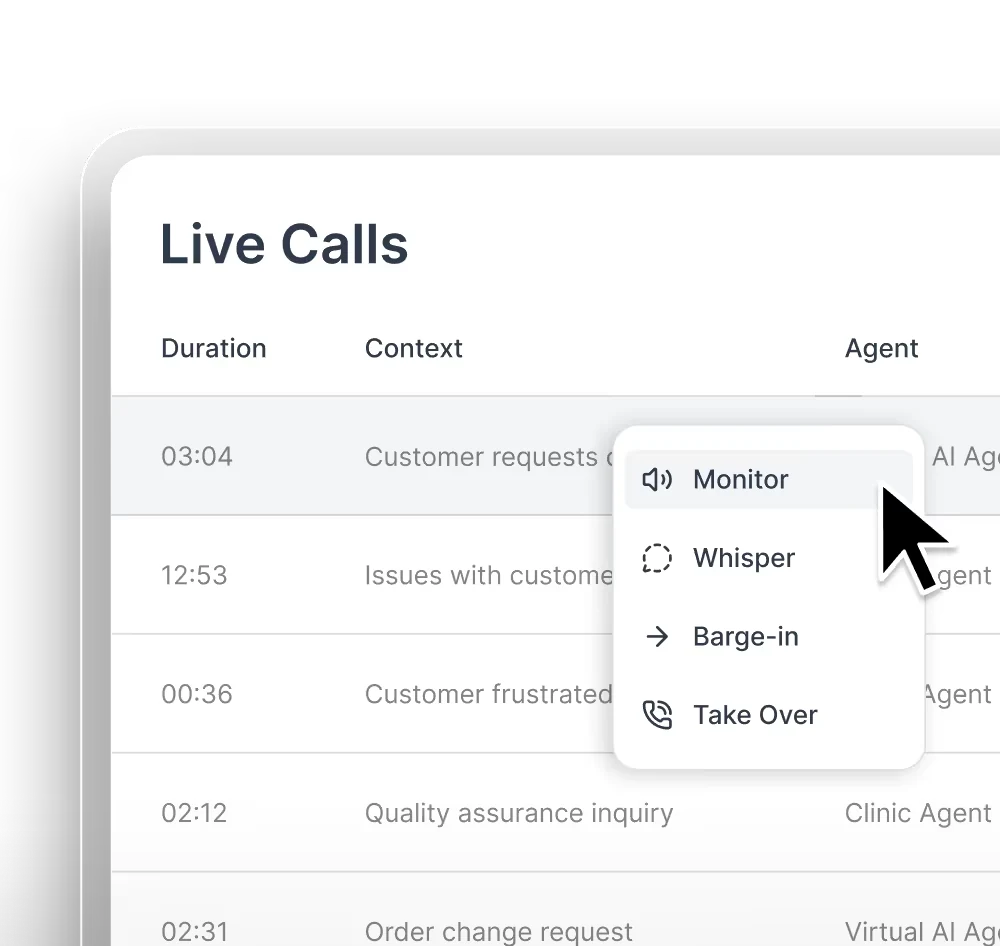
The Synthflow you’ll find at synthflow.ai in May 2026 is meaningfully different from the Synthflow that existed at the same URL in 2024. The 2024 seed-round announcement positioned the product as “AI Voice Assistants for SMEs” — an SMB-targeted no-code voice builder. The 2026 homepage leads with “Enterprise-Ready Voice AI Agents for Automated Phone Calls” with explicit verticals named (healthcare, financial services, retail, real estate, technology, BPO/contact centers, telecom). The enterprise pivot is real and ongoing.
What that means for contractors evaluating Synthflow: the company’s product roadmap, support model, and pricing decisions are now optimized for the enterprise customer profile, not the solo or small-team operator. The Forward-Deployed Engineers, BELL Framework deployment methodology, dedicated Solution Architect + CSM at the Enterprise tier, geo-based call processing, on-premise deployment option, and Master Service Agreement support are all enterprise-tier features. The PAYG model still works for SMB operators, but the trajectory of product attention is heading away from the small-team market.
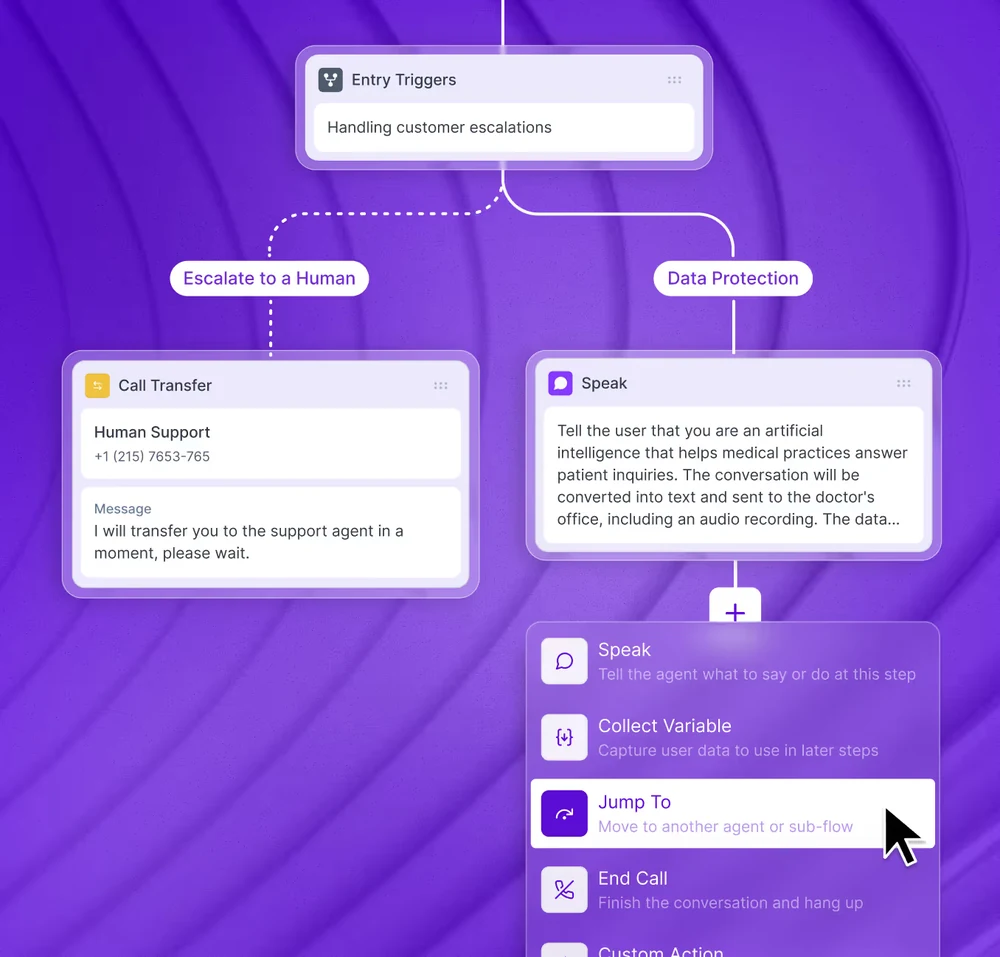
The architectural model is build-your-own-voice-agent on top of Synthflow’s infrastructure. Operators design conversation flows in the visual Flow Designer (node-based editor with branching logic, transfer rules, knowledge base attachment, and integration triggers), select underlying providers (LLM + voice synthesis + telephony), connect integrations natively or via webhooks, and deploy to production phone numbers. Synthflow runs the underlying infrastructure — uptime, latency, compliance — and bills per actual second of successful call audio.
Where Synthflow fits on our AI Tools hub: Bucket A — Agent Builder Platforms, alongside n8n and Zapier (with Zapier covered as a mention on the AI Tools hub since contractor relevance is broader than voice-specific). Cross-listed to the AI Agents hub as a builder reference (the agent you build IS an AI agent), but scored only against the AI Tools framework because Synthflow itself is the platform, not the finished agent.
The genuinely useful contractor use cases for Synthflow specifically:
- Custom voice agents that don’t fit any off-the-shelf product — restoration operators with multi-step adjuster handoff workflows, multi-location ops with location-specific routing rules, agencies building branded voice agents for client contractors.
- Voice automation outside the dominant CRM stacks — operators on Bitrix24, Zoho, ActiveCampaign, or Monday.com where the off-the-shelf AI agents (Alivo, Avoca, GHL AI Employee) don’t natively integrate.
- Multi-trade or multi-vertical agencies serving contractor clients across HVAC, plumbing, electrical, and home improvement with different routing logic per client.
The wrong contractor use cases for Synthflow:
- Solo or small-team operators who just need their phone answered. Smith.ai, Rosie, Dialzara, and ServiceAgent on the AI Call Answering hub ship value the day you sign up.
- Roofing operators on JobNimbus or AccuLynx — Synthflow has no native integration with either dominant roofing CRM. Alivo is the right shape.
- Multi-trade home service operators on ServiceTitan or Housecall Pro who want done-for-you, not build-it-yourself. Avoca AI covers the same trades with managed deployment.
- Operators already on GoHighLevel. GoHighLevel AI Employee at $97/mo Unlimited inside an existing GHL account beats $0.20/minute math at any meaningful call volume.
The PAYG Pricing Reality: What You’ll Actually Pay Per Minute
This is the section where the public information has the most landmines, so we’ll be explicit about what’s true today versus what’s stale on third-party review sites.
Synthflow’s pricing model changed in 2026. The old Starter ($29/mo, 50 minutes), Growth ($99), Scale ($249), and Agency ($750+) tiers are sunset for new signups. Existing customers on those plans report being grandfathered. New signups are on the pay-as-you-go (PAYG) model, with a separate Enterprise tier gated at 10,000+ minutes/month.
The current PAYG pricing stack (verified from synthflow.ai/pricing, May 2026):
No fixed monthly fee. Free to build & test. Successful calls billed by actual seconds. Failed calls free.
Typical all-in cost: $0.13 to $0.24 per minute
Real-world example: 200 calls/month at 4-minute average = 800 minutes × $0.20 = $160/month all-in. SMS billed at 5 messages = 1 voice minute equivalent. Each account includes 5 concurrent calls; additional concurrency at +$20/concurrent call/month up to a 50-call ceiling.
The pricing layers stack honestly with each other. A 4-minute HVAC quote call routed through Synthflow’s managed Twilio with the GPT-4.1 mini LLM costs roughly $0.52 ($0.36 Voice Engine + $0.08 LLM + $0.08 telephony). The same call on GPT-5.2 with Performance Routing costs $0.84 ($0.52 Voice Engine with the +$0.04 Performance Routing add-on + $0.16 LLM + $0.08 telephony + $0.08 the +$0.02 telephony layer is already counted; the math holds at the published rates).
The $2,000/month white-label tier is the meaningful gate for marketing agencies. Agencies serving multiple contractor clients who want branded voice agents (their own logo, their own domain, their own customer-facing support layer) face this flat fee on top of the PAYG per-minute math. For an agency running 10 contractor clients each generating $200/month in PAYG voice spend, the white-label tier doubles the platform cost from $2,000 to $4,000/month. Cost-to-value math depends entirely on whether the agency’s clients are paying enough margin to absorb the white-label tier — a meaningful threshold worth running the numbers on before committing.
The Enterprise tier (custom-quoted) gates the deeper capabilities: 99.99% uptime SLA, dedicated Slack channel, Solution Architect, Customer Success Manager, white-labeling included, custom rate limits, MSA support, geo-based call processing, on-premise option, HIPAA support beyond the standard PAYG compliance posture. Enterprise quoting starts at the 10,000+ minutes/month threshold — for context, that’s 5x our 200-call/month example contractor.
Pricing complaints to take seriously. “Expensive” is the #1 complaint theme on G2 with 145 reviewer mentions. The “crippled unless enterprise” theme on Capterra and Reddit is verified — operators report that Performance Routing, Global Low Latency Edge, and white-labeling all gate behind PAYG add-ons or the Enterprise tier, leaving the base PAYG model functionally limited for production use cases that need any of those features. The honest framing: Synthflow’s PAYG entry is genuinely affordable for low-volume use cases, but production-grade deployment costs stack toward the Enterprise tier faster than the $0.13/min headline suggests.
50+ Native Integrations: The Real Differentiator vs Vapi, Retell, Bland
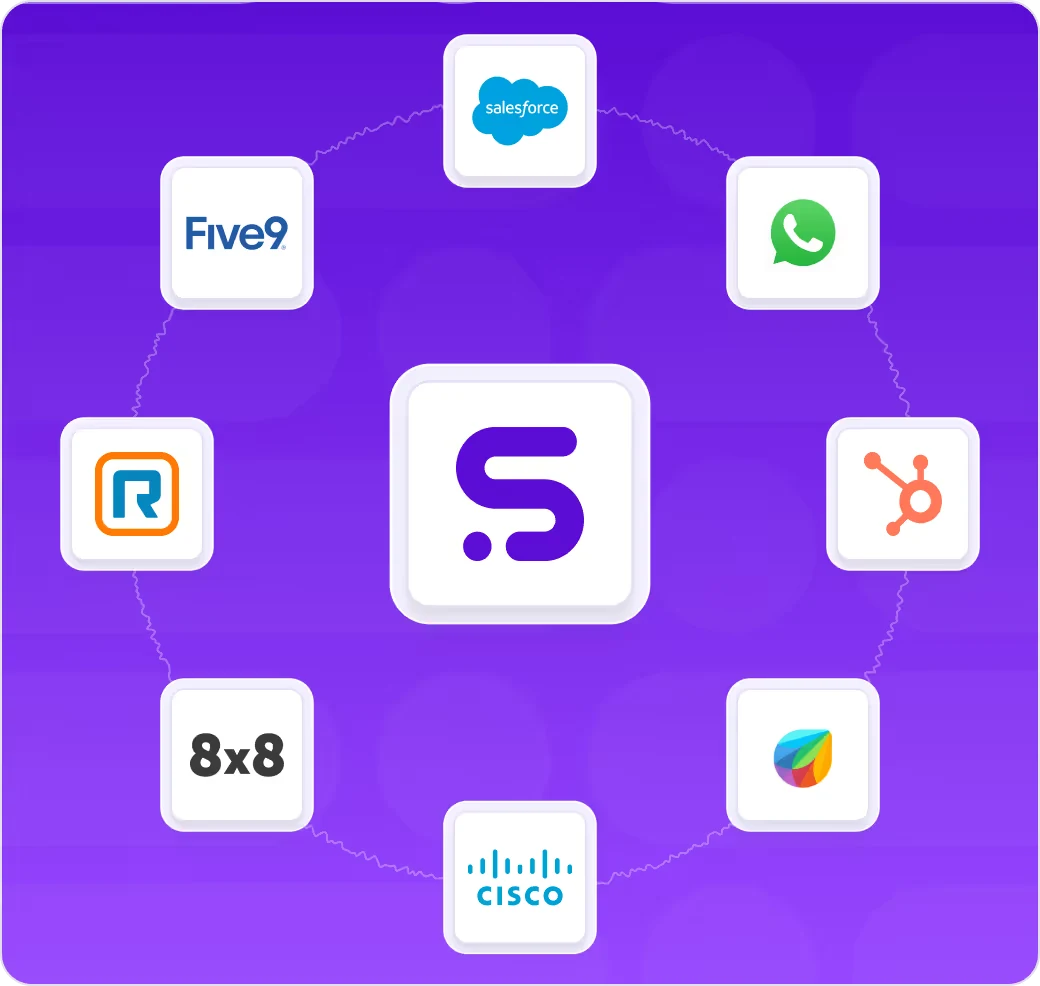
This is Synthflow’s clearest moat in the voice builder category, and the dimension where the platform earns its 5/5 score on integration depth in our framework.
Synthflow’s 50+ native integrations (verified from synthflow.ai/integrations, May 2026):
CRMs (17 native): HubSpot, Salesforce, Pipedrive, GoHighLevel, Zoho, ActiveCampaign, Monday.com, Jobber, Follow Up Boss, Housecall Pro, ServiceTitan, Bitrix24, Velocify, Practice Better, Bravity, Dentrix, AthenaOne. Notable absence: JobNimbus, AccuLynx, Buildertrend — the dominant roofing CRMs in storm-restoration markets and residential construction. For roofing operators, the integration gap is real and the alternative is Alivo with native JobNimbus + AccuLynx + ServiceTitan + Housecall Pro coverage.
Calendars (3 native): Cal.com, Google Calendar, Microsoft Calendar. Calendly is not surfaced as a named native integration — likely available through Zapier or Make middleware.
Telephony (20 carriers): Twilio, Telnyx, Vonage, Plivo, Asterisk, RingCentral, 8x8, Five9, Genesys, NICE, Cisco, Avaya, Dialpad, OpenPhone, JustCall, CloudTalk, GoTo, Ooma, Intermedia, 3CX. BYOC (bring your own carrier) supported at $0.00/min markup.
Workflow connectors: Zapier, Make, ActivePieces, n8n, Bubble, Azure. The native n8n connector specifically is meaningful because n8n is the open-source workflow platform we cover separately on our AI Tools hub — the two products complement each other for tech-comfortable operators who want both voice agent capability and broader workflow automation.
Customer support: Intercom, Zendesk, Freshworks.
Sales tools: Clay, Apollo.io, Gong, Outreach.
E-commerce / payment: Stripe, Shopify.
Data / productivity: Airtable, WhatsApp.
LLM / voice partners: OpenAI, Anthropic, ElevenLabs.
The integration depth advantage over Vapi, Retell, and Bland is genuine. Per third-party comparisons surfaced during research: “Synthflow has 50+ native integrations, while Vapi/Retell/Bland have 0 to 4 and rely on webhooks.” That’s a meaningful chunk of integration engineering work removed from the operator’s plate when the target system is on Synthflow’s native list. For a contractor marketing agency building voice agents for 10 client contractors across HubSpot, GoHighLevel, ServiceTitan, and Housecall Pro, native integration support reduces the per-client deployment time from weeks to hours.
Webhooks and API are fully supported for custom integrations beyond the native list. The documented coding options are comprehensive — most workflow gaps can be bridged with webhook plumbing if the target system isn’t on the native list. The trade-off is that webhook integrations require more maintenance than native integrations (they break when target APIs change, they need monitoring for sync failures, they often need custom error handling).
Native MCP server support is not surfaced on the integrations page as of May 2026 — for tech-comfortable operators specifically interested in Model Context Protocol-based agent integration patterns, this is a feature to verify directly with Synthflow before committing rather than assume.
Building Your First Agent: What the Setup Actually Looks Like
The no-code claim is real but oversells how much technical comfort the platform actually requires for a non-technical contractor to set up correctly. Here’s what the setup workflow actually looks like for a tech-comfortable operator:
Phase 1 — Account creation and template selection (15-30 minutes). Sign up at synthflow.ai. Free to start, no credit card required for build-and-test. Browse the template library — pre-built templates exist for common voice agent use cases including inbound receptionist, outbound qualification, appointment booking, lead capture, and customer survey. Pick the closest template to your use case as the starting point.
Phase 2 — Agent configuration in Flow Designer (2-6 hours). The visual node-based editor where you customize the conversation flow. Configure greeting, qualifying questions, branching logic (handle different caller intents), transfer rules (when to escalate to a human), and integration triggers (push call data to your CRM, book directly into your calendar, send confirmation SMS). Attach a knowledge base (your services, pricing, service area, common objections, brand voice). Select LLM (GPT-4.1 mini for cost, GPT-5.2 for complex conversations) and voice (ElevenLabs default, choice of voices). Set personality and directive (qualify leads, book appointments, follow up on quotes).
Phase 3 — Integration connections (1-3 hours per integration). Connect your CRM (OAuth-based for native integrations), calendar, telephony provider, and any workflow connectors. Native integrations are one-click; webhook integrations require more setup time. Test the connections with a few sample calls.
Phase 4 — Test calls and prompt iteration (3-8 hours). Make test calls to your agent’s number. Listen to actual call recordings. Iterate on the conversation flow, prompts, and knowledge base based on where the agent struggles. This is where the no-code claim meets reality — the visual builder makes flow editing fast, but the prompt engineering layer (writing the actual instructions the LLM follows) is still skill-dependent. Operators with experience in conversation design or prompt engineering get to working agents faster.
Phase 5 — Production deployment and monitoring (ongoing). Deploy the agent to a production phone number. Monitor call logs, sentiment scores, and outcomes through the Comprehensive Logs / Analytics Dashboard. Adjust based on real call patterns. Most operators report meaningful agent quality improvements during the first 30-60 days as the operator learns the platform and refines the configuration.
Total time-to-production for a tech-comfortable operator: roughly 8-20 hours of operator time spread across 1-2 weeks. Compare to off-the-shelf alternatives: Alivo deploys in days with managed configuration; GoHighLevel AI Employee activates in hours inside an existing GHL account; Smith.ai ships value the day you sign up. Synthflow is structurally slower because the operator does the configuration work that off-the-shelf agents handle as part of vendor-managed onboarding.
“Within minutes I was able to select an agent, create a knowledge base… 95% accuracy right out of the gate.” — Jake T., Technical Product Manager / Sr. Frontend Developer (G2)
The verbatim “minutes” claim from Jake T. is real for the simplest template-based agent, but production-grade deployment for a contractor business with real integrations and real call volume is the 8-20 hours described above. Setting expectations honestly matters here — the operators who arrive expecting “minutes to production” and find themselves at hour 12 of prompt iteration are the ones who churn.
Voice Quality and the Underlying Tech Stack (LLMs, ElevenLabs, BELL Framework)
Voice quality is good but not best-in-class — and the operator-friendly version of that statement matters more than the marketing version.
The underlying tech stack is multi-provider:
- LLMs: OpenAI (GPT-4.1 mini, GPT-5.2 family) and Anthropic Claude. Model selection is per-agent at the per-minute rate tier. Tech-comfortable operators can A/B test models on different agents to find the right cost/quality balance.
- Voice synthesis: ElevenLabs is the named integration (the default high-quality voice). The Voice Engine layer also handles other TTS providers (OpenAI’s voice synthesis through the Voice Engine), though Cartesia and Deepgram aren’t surfaced as named integrations the way Vapi and Retell expose them.
- Speech-to-text: Synthflow’s Voice Engine handles STT internally — the specific provider isn’t disclosed publicly.
- Telephony: Native in-house telephony plus 20 carrier integrations (Twilio, Telnyx, RingCentral, 8x8, Five9, Genesys, NICE, Cisco, Avaya, Dialpad, OpenPhone, JustCall, CloudTalk, GoTo, Ooma, Intermedia, 3CX, Vonage, Plivo, Asterisk).
Voice quality benchmarks (third-party verified): Per Tested.media’s March 2026 blind A/B study with 200 real callers comparing Retell, Vapi, Bland, and Synthflow: “Retell wins by a hair when both platforms use the same TTS provider, with the difference in latency tuning and turn detection. Synthflow with the ElevenLabs add-on closes most of the gap but at higher cost.”
The operator-credible takeaway: Synthflow’s voice quality is genuinely good — among the top tier of voice AI builders — but Retell edges Synthflow on equal hardware. For operators where call quality is the single highest buying criterion (high-end residential, premium HVAC service contracts, white-glove restoration), the Retell + custom TTS path may produce slightly better caller experience. For operators where integration depth + ease-of-build matters more than the last 5% of voice quality (which describes most contractor operations), Synthflow’s wider native integration list outweighs the marginal voice quality difference.
BELL Framework — Synthflow’s Q1 2026 enterprise launch. The “new enterprise standard for voice AI” framing on Synthflow’s blog isn’t a technical product feature — it’s a deployment methodology covering how Synthflow’s Forward-Deployed Engineers work with enterprise customers to design, deploy, and operate voice agents at scale. For SMB and mid-market operators, BELL Framework is largely irrelevant — the PAYG self-serve model still exists. For enterprise contractor operations (10,000+ minutes/month), BELL Framework is the methodology your dedicated Solution Architect will run during onboarding. The signal worth noticing: BELL Framework launching in 2026 is part of the broader enterprise pivot — Synthflow’s product attention is moving up-market.
Stated operational guarantees from synthflow.ai homepage: 99.99% uptime SLA, sub-100ms latency target, SOC 2 + HIPAA + PCI DSS + GDPR compliance posture. The compliance posture is genuinely the strongest in the voice builder competitive set — Vapi, Retell, and Bland publish lighter compliance documentation in their developer-first marketing.
Synthflow vs Vapi vs Retell vs Bland: Picking the Right Voice Builder
The four-way competitive comparison is where most contractor evaluations actually land — operators researching Synthflow are usually comparing it against Vapi, Retell, and Bland in parallel. Honest editorial framing on each:
Synthflow is the no-code-first voice builder. Visual Flow Designer, template library, 50+ native integrations (the clear win), in-house telephony, BELL Framework deployment methodology, $0.13-$0.24/min PAYG. Best-fit buyer: tech-comfortable operators and marketing agencies who want to build voice agents without writing code, with integrations as the top buying criterion.
Vapi is the developer-first voice builder. APIs and SDKs designed for engineers building custom voice AI from primitives. Pricing scales well at developer-built scale, voice quality is tunable, integrations are 0-4 native (everything else is webhook). Best-fit buyer: contractor operations with in-house engineering capability, marketing agencies with developer staff, or operators planning to invest 100+ hours building a fully custom voice stack.
Retell edges all competitors on voice quality per Tested.media’s blind A/B (March 2026), with low-latency tuning and turn detection that produces slightly more natural-sounding inbound calls. Pricing is transparent usage-based. Native integrations are 0-4 (same as Vapi). The “low-code” framing oversells how much engineering help operators need for flow edits, CRM integrations, or prompt adjustments. Best-fit buyer: operators where call quality is the single highest buying criterion and engineering staff is available for custom integrations.
Bland is the outbound-volume specialist. Designed for high-volume outbound voice campaigns at developer-built scale. Voice quality is good for outbound use cases, native integrations are 0-4, pricing is volume-tier-based. Best-fit buyer: marketing agencies running outbound voice campaigns at scale, contractor operations with internal sales-development reps running outbound qualification.
Operator migration patterns surfaced during research:
- Vapi → Synthflow. Reported trigger: “robotic voice quality under load and latency problems.” Synthflow’s 99.99% uptime SLA + BELL Framework address those specific pain points.
- Retell → Synthflow. Reported trigger: “Retell calls itself ‘low-code,’ but that still means you’ll need engineering help for every flow edit, CRM integration, or prompt adjustment. Great for builders; frustrating for busy operations teams.” Synthflow’s no-code Flow Designer is the structural fix for that complaint.
- Synthflow → Enterprise alternatives. No clear migration pattern surfaced. The complaint pattern is more “hit Synthflow’s pricing wall at production scale” than full platform switch — operators usually escalate to Synthflow’s Enterprise tier rather than leaving for a competitor.
Practical decision rule for contractors:
- If your operation has in-house engineering capability, Vapi is the cheaper, more flexible path.
- If voice quality is the single highest buying criterion and engineering staff exists, Retell is the right shape.
- If outbound volume is the use case at scale, Bland is the right shape.
- If integration depth (specifically GoHighLevel, ServiceTitan, Housecall Pro, Jobber, HubSpot) is the top criterion and engineering staff doesn’t exist, Synthflow is the right shape — and the no-code Flow Designer is meaningfully easier than Vapi or Retell for non-technical operators.
- If you don’t actually want to build a voice agent and just want a finished receptionist, none of these four are the right shape — see Smith.ai, Rosie, or the AI Call Answering hub instead.
Real Customer Evidence (And Why There Aren’t More Named Contractor Stories)
Synthflow’s testimonial page at synthflow.ai/reviews surfaces six G2-verified named operator quotes — all first-name + last-initial only, with one fully-named company. No HVAC, plumbing, electrical, roofing, or restoration operator case studies are publicly available on Synthflow’s site or third-party review platforms as of May 2026. This is editorially significant and worth flagging honestly.
Verified Tier-1 named operator quotes (G2 reviews surfaced via synthflow.ai/reviews):
“Natural-sounding AI voices… no-code visual workflow builder… seamless integrations with HubSpot, Twilio, and Zapier.” — Anshul C., Gen AI Data Scientist
“Within minutes I was able to select an agent, create a knowledge base… 95% accuracy right out of the gate.” — Jake T., Technical Product Manager / Sr. Frontend Developer
“Handles outbound cold calls with smooth, human-like voice… saved our team countless hours.” — Khắc Sơn L., CTO
“Build truly human-sounding AI receptionists… serves multiple verticals without writing code.” — Claudio C., Director (multi-vertical agency)
“The interface is intuitive even for non-tech team members… responsive, knowledgeable customer support.” — Hamza M., CEO at AI Automatix (the only fully-named company in the testimonial set)
“Native HubSpot integration is a real game changer.” — André M., CEO
Tier-2 verified review platform stats:
| Platform | Rating | Notes |
|---|---|---|
| G2 | 4.5 / 5 | #4 in AI Agents worldwide. G2 Spring 2026 badges: Fastest Implementation + Best Estimated ROI |
| Trustpilot | 4.4 / 5 | trustpilot.com/review/synthflow.ai |
| Capterra | Listed | capterra.com/p/10026634/Synthflow-AI-Receptionist/ |
| Gartner Peer Insights | Listed | Reviews exist, aggregate rating not surfaced in public summary |
Top mention themes (G2 review aggregation): Ease of use (364 mentions), setup ease (148), easy integrations (143), easy setup (112). Top complaint themes: “Expensive” (145), cost limitations (97), learning curve (59).
Tier-3 community sentiment. Reddit and operator forum threads mostly center on the pricing-related complaint pattern. Paraphrased from search aggregation: “Synthflow rates aren’t accurate, they hit me with a bait and switch… half the tools I needed weren’t even usable. Upgraded to a higher tier same story.” The bait-and-switch language likely refers to the 2024 tiered pricing era; the 2026 PAYG model is more transparent but still produces “expensive” feedback at production scale. Slack support degrading after the 30-day onboarding window is another consistent community theme — multiple operators report ticket-only support with slow turnaround beyond the initial onboarding period.
Why the contractor case study gap matters editorially. The platform genuinely works for tech-comfortable operators — the G2 4.5/5 + #4 ranking + Series A funding signals are real. But the public proof leans toward marketing-agency, SaaS-adjacent, and developer-tooling buyers rather than direct contractor operations. For solo or small contractors evaluating Synthflow on a “will this work for my HVAC shop” basis, the absence of peer evidence is itself a real signal. The honest framing: build with Synthflow if you fit the marketing-agency or tech-comfortable mid-market profile that the public proof validates; don’t build with Synthflow if you’re a solo contractor expecting the no-code claim to mean an off-the-shelf experience.
Synthflow’s Score Across Our 6 AI Tools Dimensions
Our framework scores AI tools across six dimensions weighted by editorial relevance to contractor operators. Synthflow’s per-dimension breakdown:
-
Contractor Relevance (22% weight): 4/5 — Synthflow’s positioning is literally “Enterprise-Ready Voice AI Agents” with home-services verticals named first on the homepage (HVAC, plumbing, electrical). Native CRM integrations cover GoHighLevel, ServiceTitan, Housecall Pro, and Jobber — genuine depth where the modal contractor lives. The structural gaps are real but bounded: NO native JobNimbus, AccuLynx, or Buildertrend leaves roofing operators routing through Zapier/n8n, and the 2026 enterprise pivot narrows the SMB self-serve audience. Tech-comfortable contractor operators with 50+ calls/month into the home-services CRM stack are the modal good fit.
-
Integration Depth (18% weight): 5/5 — genuinely class-leading for voice builders. 50+ native integrations vs Vapi/Retell/Bland with 0-4. 20 native telephony providers + BYOC. Comprehensive workflow connector list (Zapier, Make, n8n, ActivePieces). The clearest moat in the competitive set and the dimension where Synthflow earns its strongest score.
-
Ease of Use (17% weight): 4/5 — visual Flow Designer + template library make Synthflow materially easier than Vapi (code-first) or Retell (developer-leaning) for the no-code operator. The first agent goes live in under an hour from template; integrations connect via dropdown rather than custom HTTP. The honest caveat: “learning curve” is the #3 complaint theme on G2 (59 mentions) and the prompt-engineering layer behind the visual builder doesn’t fully abstract away — production-grade deployment is still 8-20 hours for a tech-comfortable operator, not the “minutes” headline. Easier than n8n (4/5 once you learn the model) at first contact and meaningfully easier than the Vapi/Retell competitive set.
-
Value Per Dollar (15% weight): 3/5 — PAYG flexibility removes the old tier-cap problem and the per-minute math at SMB volumes is reasonable ($160/mo at 200 calls × 4 min). But “Expensive” is the #1 complaint theme on G2 (145 mentions), the white-label tier at $2,000/mo is steep, and the “crippled unless enterprise” Capterra/Reddit theme is verified. Production-grade features (Performance Routing, Global Low Latency Edge, white-labeling) gate behind PAYG add-ons or the Enterprise tier.
-
Unique Capability (14% weight): 4/5 — in-house telephony + 50+ native integrations + multi-LLM provider support + multi-voice-provider support is genuinely differentiated in the voice builder category. Not 5 because Tested.media’s March 2026 blind A/B confirms Retell edges Synthflow on voice quality when both platforms use the same TTS provider — Synthflow can’t claim “best voice quality.”
-
Learning Curve (14% weight): 3/5 — templates + visual builder = meaningfully easier than Vapi/Retell. Harder than off-the-shelf agents. Tech-comfortable operators get to working agents in hours; non-technical operators struggle with the prompt engineering layer that the visual builder doesn’t fully abstract away.
Weighted overall: 3.89 + 0.20 calibration constant = 4.09 → displays 4.1/5.0 ★★★★☆. Synthflow lands as the fourth-highest-rated product on our AI Tools hub — behind ElevenLabs at 4.7 (which Synthflow uses exclusively as its TTS layer), Tidio at 4.4, and n8n at 4.3. The 4.1 reflects genuine class-leading integration depth + meaningful contractor positioning + visual builder ease-of-use, offset by the per-minute cost-transparency friction and the 8-20 hour production-deployment reality the no-code marketing oversells.
Recent Updates and What’s Coming in 2026
For contractor operators evaluating Synthflow on a 12-month time horizon, these are the verified updates and roadmap signals worth knowing about:
Verified shipped in 2025-2026:
- $20M Series A led by Accel (June 24, 2025) — funded global expansion, new US office, and acceleration of platform development. Total raised $30M across Seed + Series A.
- Pricing model overhaul (early 2026) — old Starter/Growth/Scale/Agency tiers sunset for new signups; PAYG + Enterprise model launched.
- BELL Framework (Q1 2026) — Synthflow’s enterprise deployment methodology, positioned as “new standard for enterprise voice AI.”
- Comprehensive Logs / Analytics Dashboard — full call transcripts, metadata, duration, outcomes, and sentiment in a single operator view (per Synthflow docs).
- Flow Designer enhancements — node-based visual builder with deeper branching logic, transfer rules, and integration trigger support.
- Enterprise positioning pivot — homepage repositioned around “Enterprise-Ready Voice AI Agents” with explicit vertical targeting (healthcare, financial services, retail, real estate, technology, BPO/contact centers, telecom).
- Forward-Deployed Engineers program — implementation-focused engineering team available to enterprise customers.
- Creator Program for YouTube creators — separate from the affiliate program, with up to $600 + 20% commission per referral for content creators.
Public 2026 roadmap signals (limited specificity beyond the Series A use-of-funds): global expansion, new US office (already opened), continued enterprise platform development. No specific feature roadmap items beyond BELL Framework are publicly disclosed as of May 2026 — this is a transparency gap worth noting. Operators evaluating Synthflow on roadmap commitments should specifically ask during the sales cycle what’s planned for the next 6-12 months.
The trajectory worth noticing: Synthflow’s product attention is moving up-market. The enterprise pivot is real and ongoing. SMB and mid-market operators continue to be served by the PAYG model, but the strategic investment is happening at the Enterprise tier — Solution Architect support, BELL Framework, on-premise option, MSA support, geo-based processing. For a tech-comfortable mid-market contractor evaluating Synthflow at the 1,000-5,000 minutes/month range, the platform fits today; for the same operator on a 24-month horizon, the question is whether Synthflow’s product investment continues to serve their tier or whether the gap to Enterprise widens.
Who Synthflow Is Built For
The right operator profile for Synthflow is specific and narrower than the marketing implies, but genuinely real for operators who fit:
- Marketing agencies serving contractor clients with multiple operators across HVAC, plumbing, electrical, and home improvement. The 50+ native integrations + visual Flow Designer + multi-tenant agency capabilities make Synthflow the right shape for agencies building branded voice agents for client contractors. The white-label tier ($2,000/mo) is a meaningful gate, but for agencies with 5+ contractor clients each generating $500+/mo in voice spend, the math works. The single fully-named operator on Synthflow’s testimonial page (Hamza M., CEO at AI Automatix) is exactly this profile.
- Multi-location HVAC, plumbing, or electrical operations on ServiceTitan, Housecall Pro, Jobber, or GoHighLevel with internal ops staff who can invest 8-20 hours building custom voice flows. Synthflow’s native integration with these CRMs removes the integration engineering work that other voice builders push back onto the operator.
- Tech-comfortable solo and small contractors with workflows that don’t fit any off-the-shelf agent — restoration operators with multi-step adjuster handoff workflows, custom routing logic, or specialty-trade workflows that Alivo / Avoca / GHL AI Employee don’t cover natively. Important caveat: this audience is a meaningful minority of contractor operators, not the majority.
- Contractor business consultants and rollup operators building voice automation across multiple acquired contractor operations on heterogeneous CRM stacks (Bitrix24, Zoho, ActiveCampaign, Monday.com) where the off-the-shelf vertical agents don’t natively integrate.
- Operations comfortable with PAYG pricing who value per-minute predictability over flat-rate simplicity, and have the call-volume profile to make the math favorable (200+ calls/month at typical 3-5 minute call durations).
Who Should NOT Use Synthflow
The audience-mismatch filter on Synthflow is just as important as the audience-fit description. If any of the following apply, Synthflow is the wrong product for your operation:
- Solo or small-team contractors who want sign-up-and-go. Synthflow requires 8-20 hours of operator time to deploy a production-grade voice agent. For solo operators where the cost of build time exceeds the cost of a finished AI receptionist, the math is structurally wrong. The right alternatives are on the AI Call Answering hub: Smith.ai for hybrid AI+human call answering, Rosie for budget AI receptionist coverage, Dialzara for trade-specific intake, ServiceAgent for high-volume CSR-bypass calls. All four ship value the day you sign up.
- Roofing operators on JobNimbus or AccuLynx. Synthflow does NOT natively integrate with either CRM. Forcing Zapier or n8n middleware introduces sync-failure risk that loses leads. The right shape is Alivo — Tier 1 vertical roofing AI agent with native JobNimbus + AccuLynx + ServiceTitan + Housecall Pro + Jobber + 600 more via API at $1,299/mo Agent Team. Roofing operators who pick Synthflow over Alivo are usually choosing wrong unless they specifically need a builder platform rather than a finished agent.
- Multi-trade home service operators on ServiceTitan or Housecall Pro who want done-for-you, not build-it-yourself. Avoca AI at sales-quoted ~$1K-$3K/mo covers HVAC, plumbing, and electrical with managed deployment, the three-pillar Convert/Nurture/Coach architecture, and ServiceTitan Gold Partner integration depth. Avoca’s Series B at $1B valuation (April 2026) is a stronger funding posture than Synthflow’s Series A, and the managed-deployment model removes the build time that Synthflow requires.
- Operators already on GoHighLevel. GoHighLevel AI Employee at $97/mo Unlimited as an add-on inside an existing GHL account beats $0.13-$0.24/minute math at any meaningful call volume — and the AI lives inside the same system as your CRM, calendars, pipeline, and automations rather than alongside it. For a GHL-running contractor doing 800 minutes/month, GHL AI Employee Unlimited is $97; Synthflow at the same volume is $160-$190 plus the build time to set up the voice agent that GHL AI Employee ships pre-configured.
- Operators where call quality is the single highest buying criterion. Tested.media’s March 2026 blind A/B confirms Retell edges Synthflow on voice quality with equal TTS providers. For high-end residential operations, premium HVAC service contracts, or white-glove restoration where the last 5% of voice naturalness materially affects close rates, Retell + custom TTS is the better-shaped path despite the integration depth tradeoff.
- Operators who require flat-rate pricing predictability. PAYG works for operators who track their own usage and optimize. For operators who want a fixed monthly subscription with no per-minute variability, the old tiered model (sunset for new signups) was a better fit; the current PAYG model penalizes set-and-forget operations. Off-the-shelf alternatives like Alivo ($1,299/mo published flat rate) or Avoca AI (sales-quoted ~$1K-$3K/mo) provide flat-rate predictability that Synthflow’s PAYG model deliberately does not.
- Operators below 200 calls/month. The PAYG model has minimum scale for the math to favor Synthflow over a low-cost off-the-shelf receptionist. Below ~200 calls/month, Smith.ai’s hybrid AI+human pricing or Rosie’s $49/mo budget receptionist model produces lower total cost than Synthflow’s $0.13-$0.24/minute stack.
When Synthflow Beats Off-the-Shelf — and When It Doesn’t
The clean editorial close on Synthflow: the platform genuinely works for the buyer profile it was built for, and is structurally wrong for everyone else. That’s the whole story.
Synthflow beats off-the-shelf when:
- The operator’s call workflow doesn’t fit any pre-built AI receptionist or AI agent (custom multi-step flows, specialty-trade routing, multi-tenant agency deployment).
- The CRM stack is on Synthflow’s native list (GoHighLevel, ServiceTitan, Housecall Pro, Jobber, HubSpot, Salesforce, Pipedrive, Zoho) AND not on Alivo’s roofing-specific stack (JobNimbus, AccuLynx).
- The operator has 8-20 hours to invest in building and tuning the voice agent, and the build-time investment is paid back by workflow flexibility no off-the-shelf product matches.
- Voice agent capability needs to span multiple business units, multiple verticals, or multiple customer-facing brands (the agency use case).
- PAYG cost predictability is preferred over flat-rate subscription — operator tracks their own usage and optimizes.
Off-the-shelf beats Synthflow when:
- The operator just wants their phone answered (AI Call Answering hub ships value in days).
- The operation is roofing-vertical on JobNimbus or AccuLynx (Alivo has the native integrations Synthflow lacks).
- The operation is multi-trade home service on ServiceTitan and wants managed deployment (Avoca AI covers the same trades with done-for-you setup).
- The operator is already on GoHighLevel (GoHighLevel AI Employee at $97/mo Unlimited beats the per-minute math).
- The operator needs internal office-team productivity AI rather than customer-facing voice AI (Viktor for Slack-based office workflows).
- The operation is below 200 calls/month (cost-to-value math favors low-cost receptionists like Rosie at $49/mo).
For the operators who fit Synthflow’s profile — marketing agencies, multi-location ops on supported CRMs, tech-comfortable mid-market contractors with custom workflows — the platform delivers the deepest native integration list in the voice builder category, an enterprise-grade compliance posture (SOC 2 + HIPAA + PCI DSS + GDPR), and a $0.13-$0.24/minute PAYG cost structure that produces predictable per-call economics at meaningful scale. The Series A funding from Accel + Singular + Atlantic Labs signals product longevity through 2027-2028 minimum. The 2026 enterprise pivot is real and worth tracking, but doesn’t yet meaningfully damage the SMB and mid-market product experience for operators on PAYG.
The operators outside that profile — solo small contractors, roofing-vertical operators on JobNimbus/AccuLynx, multi-trade ops on ServiceTitan wanting done-for-you, anyone already on GoHighLevel, anyone below 200 calls/month — get better outcomes from the alternatives named in the section above. The honest editorial position on Synthflow in 2026 is that the platform is excellent at what it does and ruthlessly bad at what it isn’t trying to do. Picking it for the right reason produces a working voice agent in 1-2 weeks. Picking it for the wrong reason wastes the build time, then sends the operator back to the off-the-shelf alternative they should have started with.
For operators ready to evaluate Synthflow on the right reason — tech-comfortable, integration-driven, custom-workflow buyers — the free build-and-test path costs zero dollars and 4-8 hours of operator time. That’s the cleanest way to validate fit before committing to PAYG billing. For operators who finish that validation pass and decide Synthflow isn’t the right shape, the AI Agents and AI Call Answering hubs cover every meaningful alternative we’d recommend.
Ready to Evaluate Synthflow on Your Workflow?
Synthflow is free to build and test agents on the PAYG model — no credit card required to start. Spend a half-day in the visual Flow Designer, validate one or two production calls, and decide whether your CRM stack and call volume produce favorable per-minute economics before committing.