


“JobNimbus is the AccuLynx alternative most roofers should try first. It keeps the roofing-specific pieces that matter (EagleView, CompanyCam, supplier ordering, insurance custom fields), bends further on workflow, and does not lock you out the day you add a siding crew. Roofr is the pick if you are small, retail-only, and want measurements built in. Jobber is the pick if roofing is one of several trades you run.”
I ran my operation on AccuLynx and moved back to JobNimbus because I needed workflow control AccuLynx does not give you. If you are leaving for price, roofing-only scope, or the add-on stack, one of the six below fits. If you are leaving because estimating feels slow, stay put — nothing here beats AccuLynx's estimate-to-material-order chain.
Why Roofers Leave AccuLynx
Straight up front: AccuLynx is a good platform. I switched to it from JobNimbus, ran my operation on it for months, and the estimating chain — aerial measurement to signed contract to material order without leaving the screen — is still the best thing in roofing software. I gave it 4.4/5 and meant it.
I still left. So do a lot of roofers, and the reasons cluster around five things, every one of them in the cons list of our review.
The price is not the price. The Essential plan is $250/month. Larger teams move to per-user pricing in the $60–$120 range. Then the add-ons start: SMS texting, the Smart(er) Docs proposal builder, and the customer portal are all separate line items. A 10-person shop typically runs $800–$1,500/month once everything is turned on, and none of it is on their website, because AccuLynx does not publish pricing.
The contract and billing terms bite. Annual commitments get the good rates, which means you are locked in for the year. Our review flags complaints about inactive-user charges and post-cancellation data access. Read the user agreement before the rest of this page.
It is roofing only. Period. The day you add a siding crew, start doing gutters, or take on a window job, AccuLynx has nowhere to put it. Fine for a dedicated residential roofer. A wall for everyone else.
Small shops pay for depth they never touch. Six aerial measurement providers, direct ordering from three supply houses, commission tracking, HailWatch storm data. A three-person crew doing eight retail jobs a month is funding an enterprise feature set to run a CRM and send proposals. Our review puts the break-even at roughly $500K in revenue or three-plus users.
You get their layout, not yours. The dashboard is not customizable, backend workflow configuration is limited, and the message board got removed in January 2025 with little notice. This is the one that got me. I needed to shape the system around my business, and AccuLynx wanted the reverse.
If any of those are your reason, here are the six platforms worth your time, in the order I would recommend them to another roofer.
The 6 AccuLynx Alternatives, Ranked
Ranked by fit for a roofer leaving AccuLynx, not by overall rating. Jobber scores higher than JobNimbus on our site, but a roofer gives up far less moving to JobNimbus.

1. JobNimbus
Best Overall AccuLynx AlternativeWhat it is. JobNimbus is the other roofing CRM. About 86% of its users are in construction, mostly roofing, and it runs the same core loop AccuLynx does: lead, inspection, estimate, contract, production, invoice. It is also where I ended up after AccuLynx.
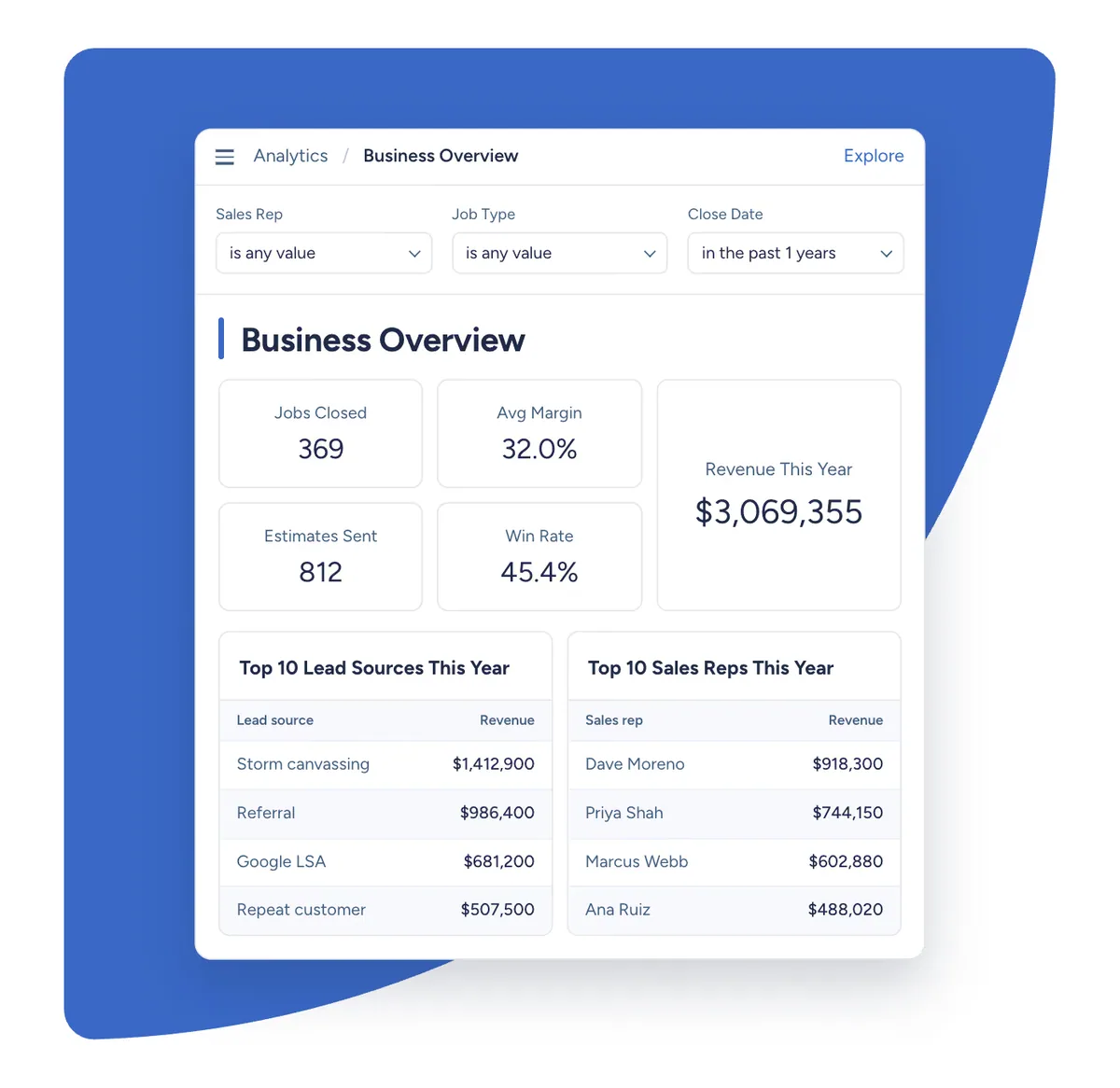
What it costs. Base plans start at $225/month, and every active user bills on top by role: $75 admin, $55 sales, $30 field, $20 subcontractor. Engage texting is $49–$249/month. Solo operators land around $350/month; a five-person team runs $600–$700; ten people is $1,200–$1,300. Quote-based, same as AccuLynx. Fourteen-day trial, no card.
Where it beats AccuLynx. Flexibility. Custom fields for carrier, adjuster, mortgage company, and supplement status. A visual automation builder that triggers follow-ups, tasks, and status changes without code. Multiple jobs per contact. It runs siding, gutters, and general contracting alongside roofing, which AccuLynx will not. Integrations are close to parity where it counts: EagleView, Hover, CompanyCam (bidirectional), ABC Supply, Beacon, QuickBooks, plus Zapier. AssistAI answers the phone 24/7.
Where it loses. Estimating. AccuLynx’s six-provider measurement chain and supply-house ordering with live pricing is deeper and faster. No built-in job costing, no customer portal, a mobile app with mixed reviews, and per-user fees that mean it is not cheaper at every headcount.
Switch to JobNimbus if you need to shape the workflow instead of adopting one, you have a second trade coming, or you want a roofing CRM without an annual contract negotiation to see the price.
Read the full JobNimbus review →

2. Roofr
Best for Small Retail RoofersWhat it is. Roofr started as a measurement service and grew a CRM around it. That order matters: the measurement and proposal side is excellent, the CRM is good enough for a small shop and thin for a production operation.
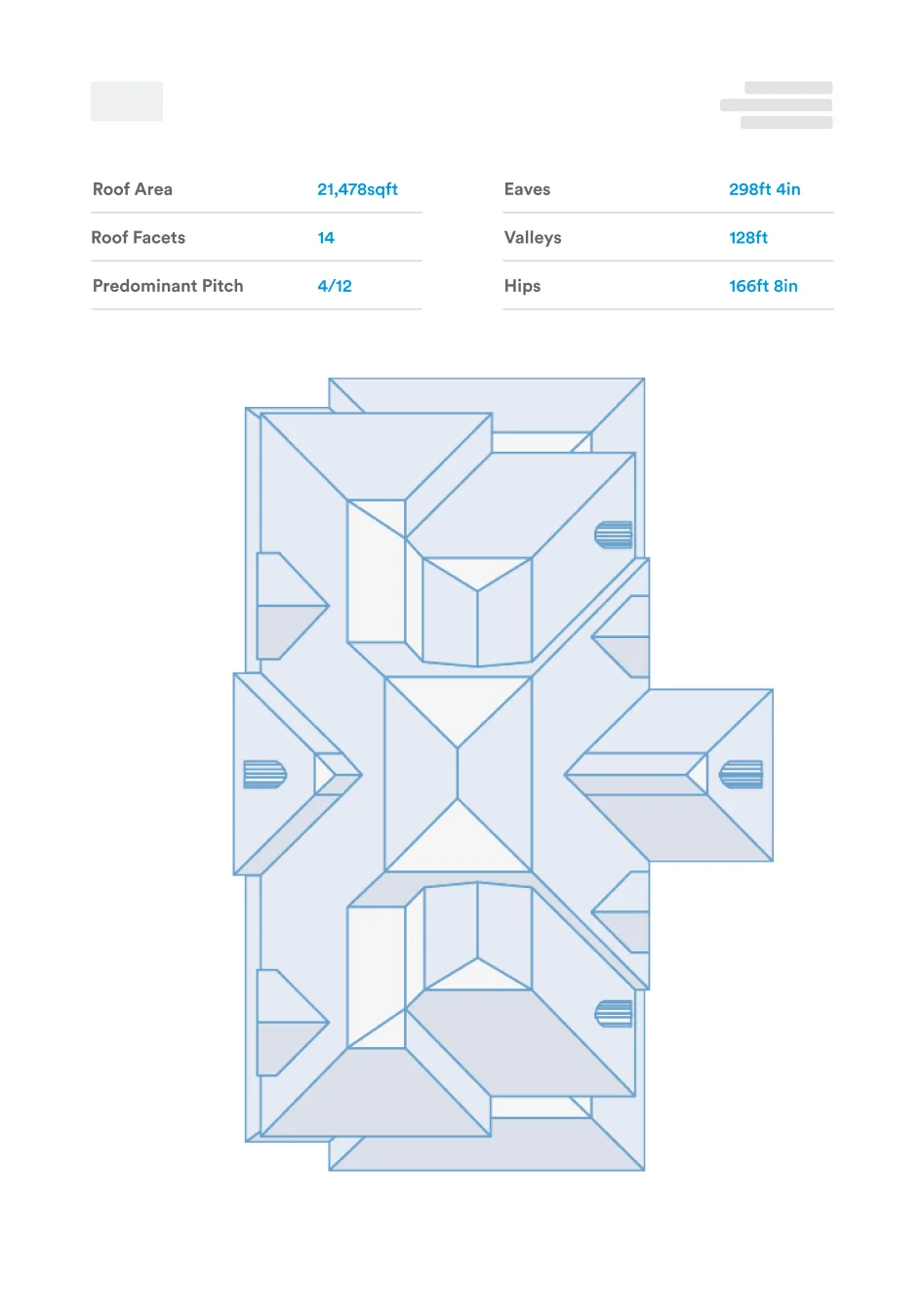
What it costs. Starter is free forever with no card, $19 per report, 24-hour delivery. Essentials is $249/month ($209 annual) with $13 reports and 2-hour guaranteed delivery. Scale is $349/month ($299 annual) and adds custom job boards, crew management, job costing, and QuickBooks. Every tier has unlimited seats, a real difference from AccuLynx’s per-user model. SMS is $49/month; the Xactimate ESX file is $10 per report.
Where it beats AccuLynx. Measurements are built in and cheap. You are not paying AccuLynx a subscription and then paying EagleView $35–$87 per report on top. Our math for a five-person office pulling 20 reports a month lands around $1,104 on Roofr versus roughly $1,300 on AccuLynx plus EagleView, before AccuLynx’s proposal and portal add-ons. Reports are editable after delivery. The proposal builder has native e-signature, card and ACH collection, and GoodLeap financing at the quote.
Where it loses. CRM depth. No route optimization, no business phone, no inventory, no customer self-scheduling, and JobNimbus and AccuLynx are meaningfully deeper for shops running 50+ jobs a month. QuickBooks sync is one-way and Scale-only. Auto material calculation is shingle-only. No public API. On heavily wooded rural lots, expect to correct some outlines by hand.
Switch to Roofr if you are a one-to-ten-person retail roofer who sells at the kitchen table, orders measurements every week, and wants the measurement bill and the software bill to be the same bill.

3. Jobber
Best for Roofing Plus Other TradesWhat it is. Jobber is field service management for home service businesses: quote, schedule, dispatch, invoice, get paid. It was not built for roofing and does not pretend to be. It is here because a lot of companies leaving AccuLynx are leaving precisely because they are no longer roofing-only.
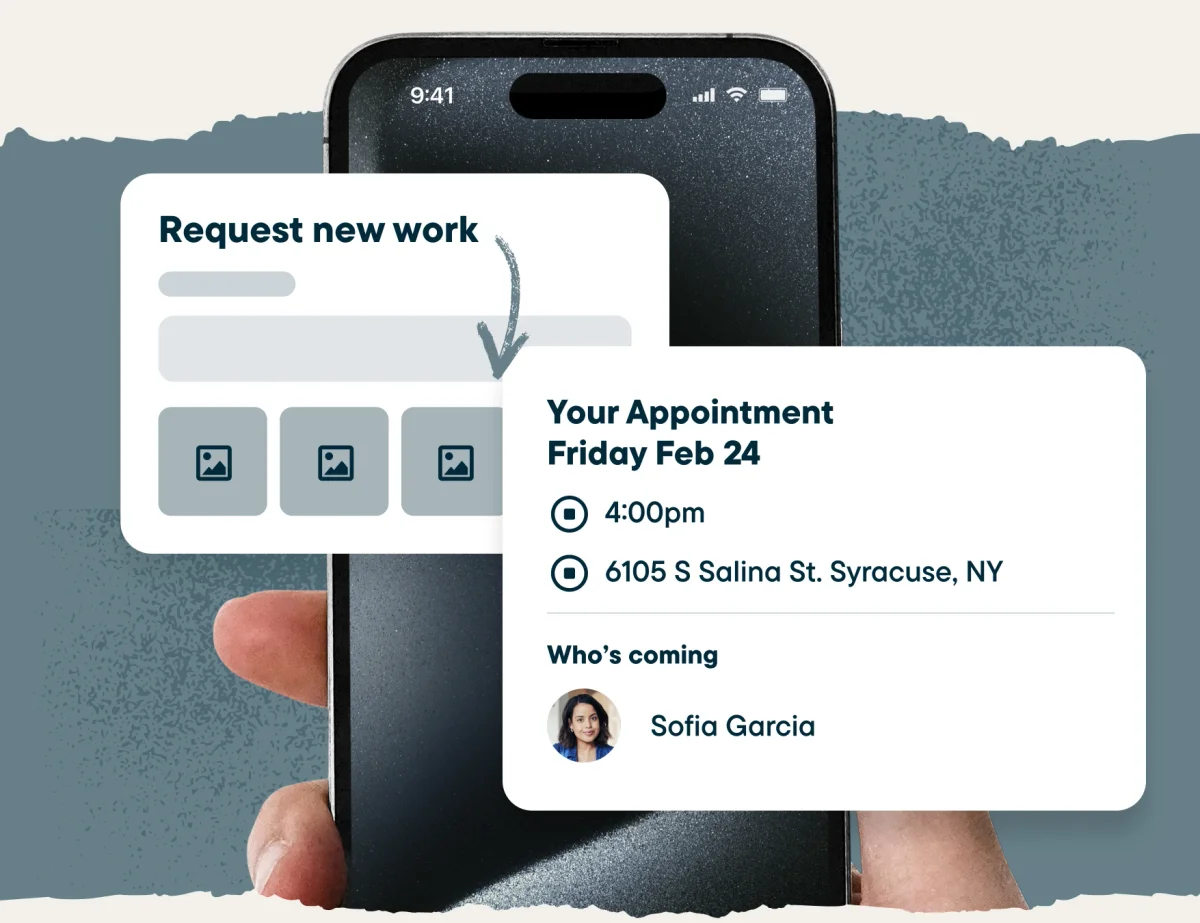
What it costs. Core is $49/month month-to-month, $39 on a one-year commitment billed monthly, or $29 billed annually, for one user. Connect ($139 / $119 / $99) includes 5 users, Grow ($199 / $169 / $149) includes 10, and Plus ($499 / $439 / $399) includes 15, with extra seats at $29. Annual billing saves up to 25%, but you can start monthly with no contract. AI Receptionist is $29/month. All of it is on their website, no demo required.
Where it beats AccuLynx. Cost, transparency, and reach. A six-person crew on Grow with the AI Receptionist is about $178/month on annual billing. The mobile app is rated 4.8 on iOS and 4.7 on Android, the best in the contractor CRM category. Client Hub gives homeowners a self-service portal without an add-on fee. Setup takes days, not weeks. And it runs every trade you do from one place.
Where it loses. Everything roofing-specific. No aerial measurement workflow, no shingle assemblies, no insurance supplement tracking, no supplier ordering. The quoting tool is a line-item builder you populate yourself. Reporting is basic, dispatch is drag-and-drop only, and QuickBooks sync occasionally drops line items. Roofers on Jobber typically pair it with Roofr for the estimate.
Switch to Jobber if roofing is one of three or four trades on your truck, you are under the volume where AccuLynx’s estimating depth pays for itself, or you want to be live this week on a monthly plan you can cancel.

4. Housecall Pro
Best for Service-Heavy OperationsWhat it is. Housecall Pro is the other big home-service platform, built around same-day dispatch, fast payments, and recurring service plans. Our own review answers “is it good for roofing” with a flat no. It is here because some AccuLynx refugees are exterior service companies with a roofing division now, and for that business it is a legitimate answer.
What it costs. Basic is $59/month annual ($79 monthly) for one user. Essentials is $149 ($189 monthly) for up to five. MAX is $299 ($329 monthly) for up to eight, plus $75 per extra user, and MAX is where the API, phone support, and proposal tool live without add-on fees. CSR AI is priced by sales. The recurring complaint: signing up at $149 and sitting at $300–$400 six months later.
Where it beats AccuLynx. Getting paid and answering the phone. Instapay puts card payments in your account in under 30 minutes, weekends included. Wisetack financing sits inside the estimate. CSR AI books jobs at 2 a.m. CompanyCam photos flow straight in. Most crews are running in a day or two, and Capterra’s 4.7/5 across 2,700+ reviews is not a fluke.
Where it loses. All the roofing pieces: no EagleView or Hover, no supplement workflow, no storm-claim tracking, no supplier ordering, and a pipeline built for service calls, not multi-week projects. The Android app is rated 3.2/5, and Trustpilot shows a pattern of billing and cancellation complaints.
Switch to Housecall Pro if most of your revenue is now repairs, maintenance, gutters, and service calls, and re-roofs are the exception instead of the rule.
Read the full Housecall Pro review →

5. Contractor Foreman
Best for GCs With a Roofing ArmWhat it is. Contractor Foreman is an all-in-one construction management platform for residential GCs and remodelers: estimating, project management, scheduling, time cards, financials, CRM, client portal, and more. Twenty-plus modules, one price, and the price is the whole pitch.
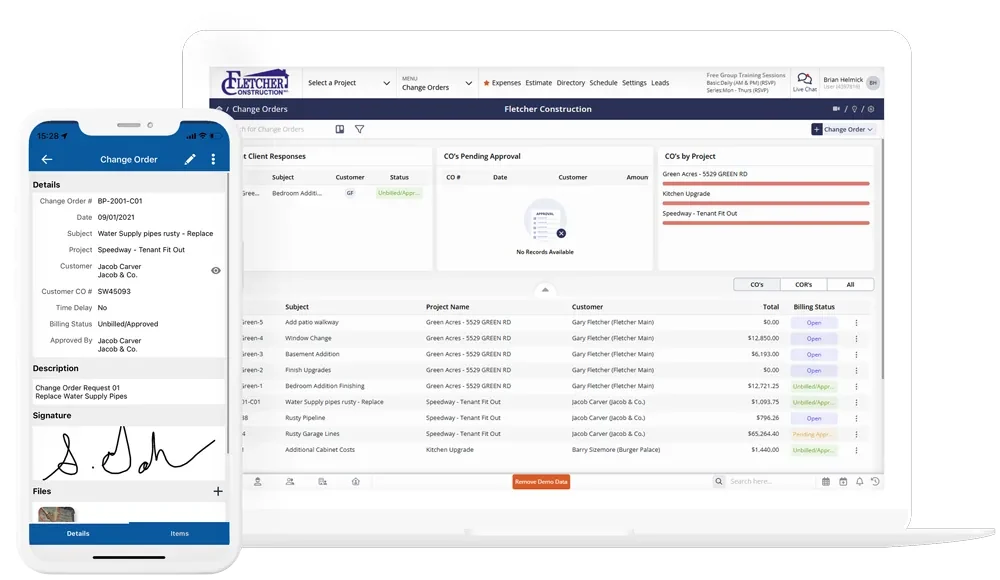
What it costs. Published, no demo gate. Basic is $49/month for one user, Standard $105 for three, Plus $166 for eight, Pro $221 for fifteen, Unlimited $332 for everyone. Those are annual rates; quarterly is about 25% more and there is no monthly option. Thirty-day trial on every tier, 100-day money-back on Plus and up, and a Price Lock Guarantee against renewal hikes.
Where it beats AccuLynx. Per-seat math and scope. At 15 users on Pro you are paying $14.73 per head; at 30 on Unlimited it is $11. AccuLynx’s per-user tiers cannot touch that. You also get job costing, change orders, daily logs, and a client portal without a portal add-on. QuickBooks Online, Gusto, Stripe, and CompanyCam are native. If you frame houses, build decks, and do roofs, all of it lives in one place.
Where it loses. It is not roofing software. Its own trade-fit chart lists roofing as “works,” not “built.” No EagleView, no Hover, no Xactimate, no ESX export, no supplement workflow. The cost-item database is shallow, large estimates slow down, and the mobile app has no true offline mode. The 3.7 rating reflects that gap.
Switch to Contractor Foreman if you are really a general contractor who happens to sell roofs, you have a crew of ten-plus that needs logins, and you want every one of them on the platform for one flat number.
Read the full Contractor Foreman review →

6. Buildertrend
Best for Remodel-Heavy Exterior CompaniesWhat it is. Buildertrend is the category leader for custom home builders and remodelers. Its moat is the Selections module, where the homeowner picks every finish inside a portal with allowance tracking. If your AccuLynx exit is really a pivot toward whole-exterior remodels sold as one design-driven package, it belongs on your list. For anyone else, it is last for a reason.
What it costs. Demo-gated; these rates come from verified third-party sources. Essential is $339/month annual ($499 monthly) with no estimating. Advanced is $499 ($799 monthly) and adds the estimating suite. Complete is $829 ($1,099 monthly) with Selections and warranty. Unlimited users on every tier, $500–$2,000 in implementation fees, no free trial.
Where it beats AccuLynx. The homeowner experience. The client portal and Selections are the best in residential construction, AI Client Updates drafts weekly homeowner summaries from your daily logs, AI Bill Pay digitizes vendor invoices, and the financing stack runs deep. Unlimited seats mean a 20-person company pays the same as a five-person one. Capterra’s 4.5/5 across 2,483 reviews is the largest review base in the category.
Where it loses. It shares AccuLynx’s worst habits and adds a few. Pricing is hidden. Renewal increases of 50–75% are documented on G2, Capterra, and ContractorTalk. No bulk data export, so getting out is harder than getting in. No native CompanyCam, EagleView, Hover, or Xactimate. The mobile app is fragile. And at $499 minimum to write an estimate, it costs more than the platform you are leaving.
Switch to Buildertrend if you are becoming a remodeler with a roofing line, your close depends on a homeowner picking finishes in a portal, and you have already priced the Advanced tier with eyes open.
Read the full Buildertrend review →
Side-by-Side: AccuLynx vs the Alternatives
| Product | Starting price | Pricing model | Free trial | Roofing-specific? | Our rating |
|---|---|---|---|---|---|
| AccuLynx | $250/mo | Flat Essential plan, then $60–$120/user; add-ons for texting, proposals, portal; quote-based | 14 days | Yes, roofing only | 4.4 |
| JobNimbus | $225/mo | Base plan plus per-user role fees ($20–$75); Engage texting add-on; quote-based | 14 days | Yes, plus other trades | 4.5 |
| Roofr | $0 Starter / $209–$349/mo | Flat tiers, unlimited seats, $13–$19 per report | Free tier, no expiry | Yes | 4.2 |
| Jobber | $39/mo | Published tiers by user count, $29 per extra seat, monthly or annual | 14 days | No | 4.6 |
| Housecall Pro | $59/mo | Published tiers, $75 per extra user on MAX, heavy add-on stack | 14 days | No | 4.4 |
| Contractor Foreman | $49–$332/mo | Flat tiers by user cap, annual or quarterly only, unlimited users at $332 | 30 days | No (multi-trade GC) | 3.7 |
| Buildertrend | $339–$829/mo | Flat tiers, unlimited users, demo-gated, estimating from $499 | None | No (builders and remodelers) | 4.0 |
Pricing as of September 2026. AccuLynx, JobNimbus, and Buildertrend do not publish rates, so get your quote in writing.
Best AccuLynx Alternative by Situation
1–5 person roofing crew
JobNimbus if you are roofing-only and doing ten or more jobs a month. A solo admin plus texting is about $350/month, and you keep EagleView, CompanyCam, and supplier ordering. Roofr if you are smaller or mostly retail; the free Starter tier and $13 reports mean you can run for months before paying a subscription. Jobber at $39/month if roofing is not the whole business.
Storm restoration and insurance work
Honest answer: this is where AccuLynx is hardest to replace, and our GoHighLevel vs AccuLynx piece argues supplement-heavy operations should keep it. If you are leaving anyway, JobNimbus is the only alternative with custom fields for carrier, adjuster, claim number, and supplement status. Pair it with Roofr for the $10 Verisk-certified ESX export into Xactimate.
Retail-only roofing
Roofr. The proposal builder with GoodLeap financing at the quote, editable measurement reports, and the Instant Estimator widget are all aimed at the retail sale, and you are not paying for supplement tracking you never open. JobNimbus if your volume is high enough to need production boards and crew scheduling.
Roofing plus siding, gutters, or windows
JobNimbus first, because it stays roofing-literate while handling the other trades. Jobber if the mix skews toward service and repair work and you value the mobile app over measurement integrations. Buildertrend only if the mix has turned into design-driven whole-exterior remodels.
You want aerial measurements built in
Roofr. It is the only platform here where the measurement is part of the product rather than a partner integration, and the cheapest per report by a wide margin. If you want to keep ordering from EagleView or Hover inside your CRM, JobNimbus is the only alternative with those integrations native.
You need it cheap and live this month
Jobber. Published pricing, a 14-day trial with no card, no contract, and most teams are running in under a week. Housecall Pro at $59/month if payment speed matters more than a roofing pipeline. If cheap means free, Roofr Starter is live today.
What Switching Off AccuLynx Actually Involves
I have done this migration in both directions. Plan for the following.
Export before you cancel. Our AccuLynx review flags post-cancellation data access as a documented complaint area. Treat your last paid month as the export window: contacts, job records, signed contracts, photos, invoices, and every measurement report you paid for. Download it while your login still works.
Know what moves and what you rebuild. Contacts, jobs, documents, and photos move as data. Smart(er) Docs templates, estimate assemblies, pipeline stages, and automations do not — that is configuration. Rebuild your proposal template and stage list before go-live, or your sales team will be writing proposals in Word for two weeks.
CompanyCam is your continuity layer. If your photo history lives in CompanyCam, it reconnects on the new side: JobNimbus, Roofr, Housecall Pro, and Contractor Foreman all have native integrations. Buildertrend does not; it treats CompanyCam as a competitor.
EagleView and Hover carry over on one platform only. JobNimbus has both integrations native. Roofr replaces them with its own reports. Jobber, Housecall Pro, Contractor Foreman, and Buildertrend have none, which means ordering outside the CRM and attaching PDFs by hand.
Timeline. Our JobNimbus vs AccuLynx comparison puts a JobNimbus move at two to three weeks with their migration assistance. Do not plan tighter than that for any platform, and run both subscriptions through the overlap.
Contract exit. If you took an annual AccuLynx deal for the better rate, find the end date first and check the user agreement on inactive-user charges. Time the new trial so your rebuild lands inside the last 30 days of the old term. Every alternative here except Contractor Foreman (annual or quarterly) and Buildertrend (annual, with documented renewal hikes) lets you start monthly.
Related Comparisons
Narrowed it to one? These head-to-heads go deeper:
- JobNimbus vs AccuLynx — the comparison most roofers are actually making
- Jobber vs AccuLynx — multi-trade platform against the roofing specialist
- Housecall Pro vs AccuLynx — service trades or roofing, and why neither does both
- ServiceTitan vs AccuLynx — if you outgrew AccuLynx upward, not sideways
- GoHighLevel vs AccuLynx — when the answer is a marketing layer, not leaving
Full field: our contractor CRM rankings.