


“For a dedicated roofing company, AccuLynx is the best JobNimbus alternative: deeper estimating, six aerial measurement providers, a real insurance supplement workflow, and a customer portal JobNimbus still doesn't have. For a small retail roofer, Roofr costs less and produces its own $13 measurements. If your roofing company also runs service calls, Jobber is the one to trial first.”
AccuLynx for dedicated roofers, Roofr for small retail shops, Jobber when roofing is one of several service lines. Contractor Foreman and Buildertrend only make sense if you're really a GC or builder. And if you do roofing plus siding and gutters, JobNimbus may still be the right call.
Why Roofers Leave JobNimbus
I run my roofing operation on JobNimbus and I’d pick it again; our JobNimbus review rates it 4.5. But I’ve also left it once, for AccuLynx, before coming back, and I hear the same complaints from other roofers often enough to name them first.
The bill is bigger than the sticker. The base plan starts around $225/month, but every user is billed on top by role: $75 admin, $55 sales, $30 field tech, $20 subcontractor. Engage texting is another $49-$249/month. A solo operator lands near $350/month, five people at $600-$700, ten at $1,200-$1,300. None of it is published anymore; you request a quote.
The tier ceilings bite early. Essentials caps you at 3 boards, 10 automations, and 2 integrations; Pro at 5, 30, and 5. A normal roofing stack (EagleView, CompanyCam, QuickBooks, a supplier feed, Zapier) is five integrations on day one.
The mobile app is polarizing. The iOS rating is 4.8 across 11,400+ ratings, but a loud minority reports crashes and missing features, and offline use is limited. Test it on your crew’s actual phones during the trial.
No customer portal, no job costing, no vendor portal. Homeowners can’t check status or pay a balance on their own, so those calls hit your office. AccuLynx, Jobber, and Housecall Pro all ship a portal.
Reporting is shallow and email is unreliable. Reviewers describe Insights as lacking depth, and multiple users, me included, have had emails not go out. That’s the fix I’d most like to see.
Insurance work has a ceiling. The EagleView integration is one of the deepest anywhere, but JobNimbus doesn’t export ESX files or replace Xactimate, so you pay EagleView prices on every insurance measurement, and it integrates two measurement providers where AccuLynx integrates six.
If two or three of those describe your operation, keep reading. If none do, the JobNimbus automations guide will do more for you than a migration.
The 6 Alternatives, Ranked
Ranked for a roofing company leaving JobNimbus, not for contractors in general. AccuLynx, Roofr, and Buildertrend have no affiliate program with us; they sit exactly where they’d sit anyway.

1. AccuLynx
Best for Dedicated Roofing CompaniesAccuLynx has been roofing-only since 2008, and it’s what most JobNimbus users mean when they say “alternative.” I switched to it. Here’s what I found.
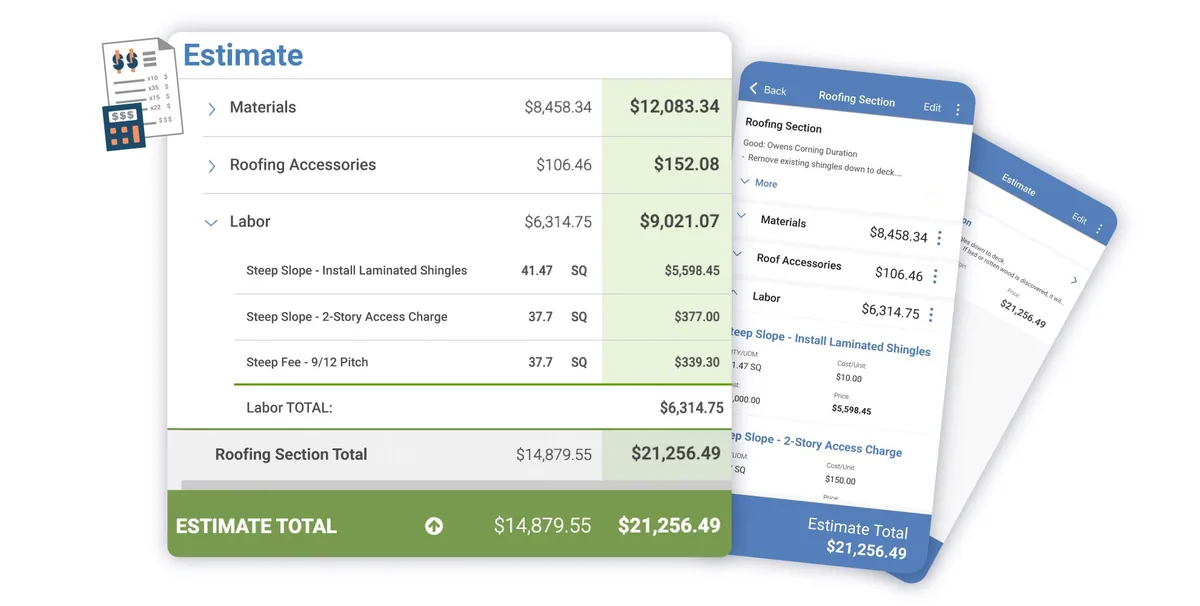
What it is: CRM, native estimating, Smart(er) Docs proposals, material ordering, production scheduling, AccuPay payments, a customer portal, and commission tracking, for residential roofing only. 4.6/5 on GetApp across 800+ reviews.
What it costs: the Essential plan is $250/month flat; larger teams move to $60-$120 per user. Texting, proposals, and the portal are add-ons, so a 10-person shop typically lands at $800-$1,500/month. Pricing isn’t published; onboarding with a real trainer is included.
Where it beats JobNimbus: the estimating chain. Order a measurement from any of six providers (EagleView, Hover, GAF QuickMeasure, Geospan, RoofSnap, RoofScope), the numbers populate the estimate, the homeowner signs, and the material order goes to ABC, SRS, or QXO without anyone re-keying a number. Supplement tracking is the best in the category. The portal takes “when are you coming?” calls off your office. One contractor, six years on it and two attempted JobNimbus migrations later: “Building labor and material orders is much better, much smoother, and integrates with original EagleView measurements.”
Where it loses: it doesn’t bend. I went back to JobNimbus because I needed different automation rules for insurance versus retail jobs, and AccuLynx has its own opinionated way of doing things. The dashboard isn’t customizable, the mobile app has a known photo-scrolling bug, and billing and post-cancellation data access have drawn documented complaints, so get export terms in writing. And if you ever add siding or gutters, it’s roofing only, period.
Switch to AccuLynx if you’re a dedicated residential roofer doing consistent volume, especially insurance work, and you’d rather have a cleaner out-of-the-box workflow than a customizable one.
Read the full AccuLynx review →

2. Roofr
Best for Small Retail RoofersRoofr started as a cheap EagleView alternative and has grown into measurements, proposals, payments, material ordering, and a light CRM. 12,000+ roofing companies run on it. I pull measurements from it almost daily.
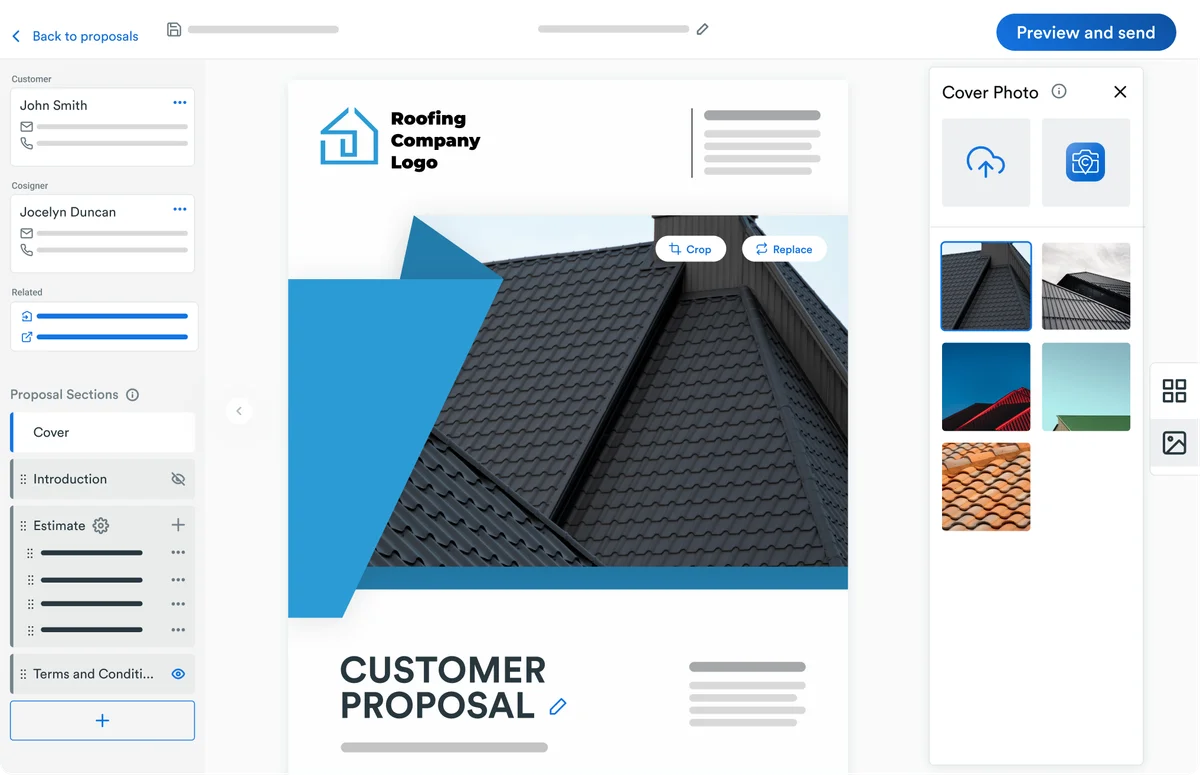
What it costs: Starter is free forever with $19 reports. Essentials is $249/month ($209 annual) with $13 reports and two-hour delivery. Scale is $349/month ($299 annual) and adds job boards, crew management, job costing, and QuickBooks. Every tier is unlimited users. The Verisk-certified Xactimate ESX file is $10 per report on any tier; SMS ($49) and Instant Estimator ($149) are monthly add-ons.
Where it beats JobNimbus: price and measurement. JobNimbus doesn’t produce measurements; you buy them from EagleView at $35-$87 a report. Roofr’s are $13, delivered in two hours on paid plans, and editable after delivery, which nobody else offers. If you write your own Xactimate estimates, the $10 ESX drops in clean; JobNimbus has no ESX path. The proposal builder, with Good/Better/Best tiers, e-signature, Stripe payments, and GoodLeap financing, holds up against AccuLynx. And there’s no per-seat math.
Where it loses: the CRM is bolted onto a measurement tool. No route optimization, no business phone line, no inventory, no self-scheduling, limited reporting, and no native app (it’s a PWA). QuickBooks sync is one-way and Scale-only. No public API. Material calculation is asphalt only. On tree-covered rural lots, about one in four of my back-road reports needed outline fixes. For a production shop running 50+ jobs a month, it isn’t deep enough.
Switch to Roofr if you’re solo to about ten people, mostly retail residential, and what you actually want is fast, cheap measurements and a proposal you can sign at the kitchen table.

3. Jobber
Best if You Also Run Service CallsJobber is field service software (quoting, scheduling, dispatch, invoicing, a client portal) built for HVAC, plumbing, electrical, landscaping, and general home services. 250,000+ users, 4.5/5 on G2 and Capterra. It is not built for roofing, which is why the highest-rated product on this page is ranked third.
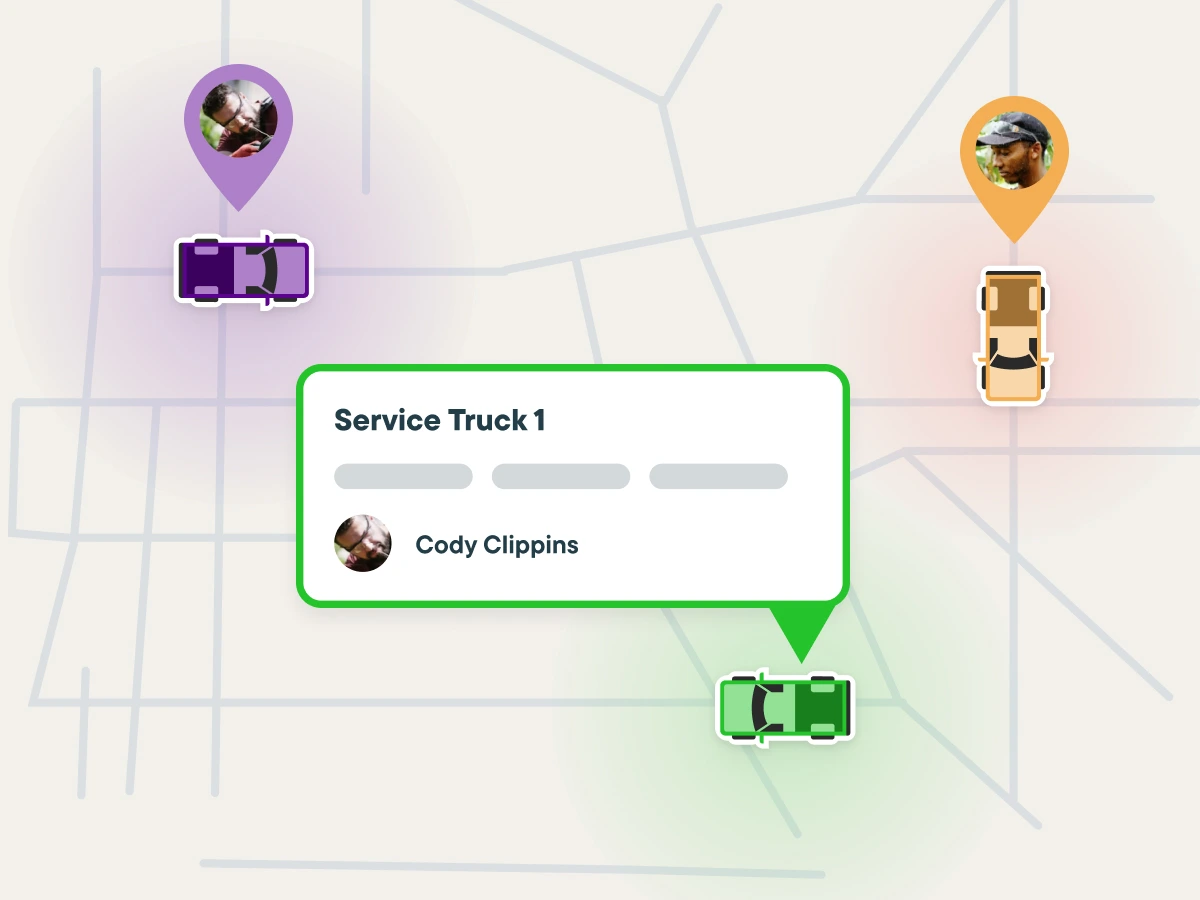
What it costs: published. Core is $49/month month-to-month, $39 on a one-year commitment billed monthly, or $29 billed annually, for one user. Connect ($139 / $119 / $99) includes 5 users, Grow ($199 / $169 / $149) includes 10, Plus ($499 / $439 / $399) includes 15, then $29 per extra user. Annual billing saves up to 25%. AI Receptionist is $29/month. The 14-day trial needs no card.
Where it beats JobNimbus: ease of use and price at the size of company paying JobNimbus $600 a month. Teams are running in under a week, and the mobile app is excellent on both platforms. Client Hub lets homeowners approve quotes, see appointments, and pay balances. Recurring billing and batch invoicing handle the maintenance side (gutter cleaning, inspections, repair contracts) that JobNimbus’s project model was never designed for. Wisetack financing sits on the quote from Connect up.
Where it loses: everything roofing-specific. No aerial measurement, no shingle assemblies, no supplement tracking, no Xactimate path, no supplier ordering. Jobber treats a $50,000 roof the same as a $500 drain cleaning. Reporting is basic, dispatch is manual drag-and-drop, and the QuickBooks sync drops roughly 2% of line items. You’d pair it with Roofr or iRoofing for estimates, and Roofr has no Jobber integration, so that handoff is manual.
Switch to Jobber if roofing is one of several service lines, most of your tickets are repairs and maintenance rather than full replacements, and you’re tired of paying roofing-CRM prices for a workflow you use a quarter of.

4. Housecall Pro
Best Payments StackHousecall Pro is Jobber’s closest competitor: same customer, same trades, different strengths. 40,000+ businesses, 4.7/5 on Capterra across 2,700+ reviews.
What it costs: published. Basic is $59/month (annual) for one user, Essentials $149 for up to 5, MAX $299 for up to 8 plus $75 per extra user. Add-ons stack: CSR AI, the Sales Proposal Tool, Recurring Service Plans, and Campaigns all cost extra below MAX. The consistent complaint is signing up at $149 and being at $300-$400 six months later. Trustpilot sits at 2.9/5, mostly on billing and cancellation.
Where it beats JobNimbus: getting paid. Instapay puts card and ACH payments in your account within 30 minutes, weekends included, for an extra 1%. Wisetack financing lives inside the estimate, and 0% for 24 months on a $6,000 ticket changes the conversation. Homeowners book themselves through a website widget onto your dispatch board. CSR AI answers calls and books into your calendar natively; JobNimbus’s AssistAI does a similar job at $0.15 a minute. CompanyCam integrates. QuickBooks Online and Desktop both sync from Essentials up.
Where it loses: the same places Jobber does. No measurement, no insurance workflow, no supplier ordering; our review says outright that roofers need a different tool. The Android app is rated 3.2/5. Phone support, the API, and webhooks are MAX-only.
Switch to Housecall Pro if you’d otherwise pick Jobber but your crew runs iPhones, you bill enough big tickets that 30-minute payouts and financing at the estimate matter, and you want AI call answering that books directly into the schedule.
Read the full Housecall Pro review →

5. Contractor Foreman
Best for GCs Who Also RoofContractor Foreman is an all-in-one construction management platform for residential GCs and remodelers, 20+ modules on every tier: estimating, project management, Gantt scheduling, GPS time cards, AIA invoicing, purchase orders, CRM, safety, and a client portal. 820+ Capterra reviews at 4.5/5, with a 4.6 on value.
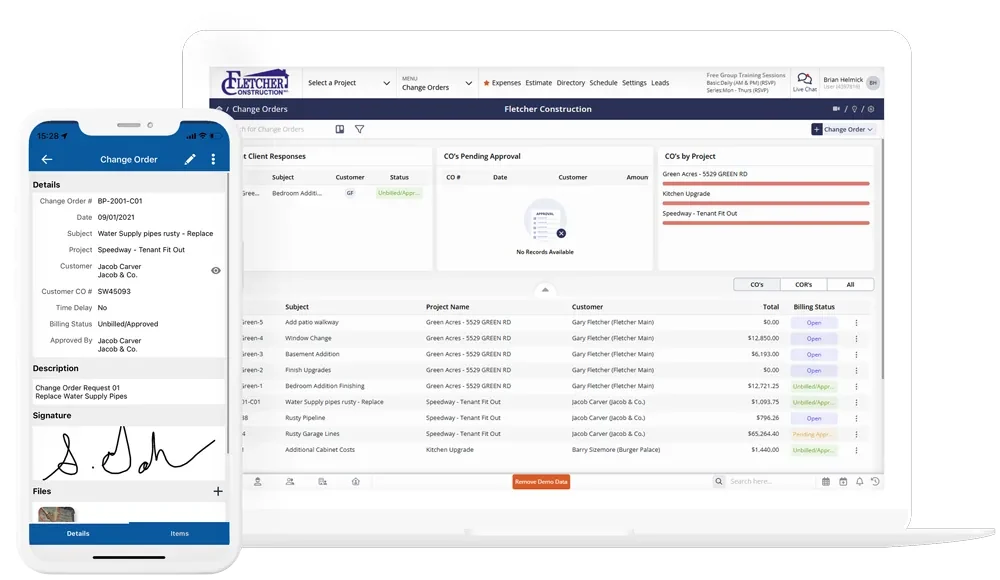
What it costs: published, annual billing. Basic is $49/month for one user, Standard $105 for 3, Plus $166 for 8, Pro $221 for 15, Unlimited $332 for unlimited users. No month-to-month; quarterly costs about 25% more. Every tier gets a 30-day trial, Plus and up add a 100-day money-back guarantee, and a Price Lock Guarantee says your rate never goes up.
Where it beats JobNimbus: price at head count, and job costing. A 15-person crew on JobNimbus is north of $1,200/month; on Contractor Foreman Pro it’s $221. Job costing, purchase orders, subcontracts, progress billing, and a client portal are native, and CompanyCam integrates. For drawings, RFIs, and change orders on the non-roofing side, JobNimbus can’t touch it.
Where it loses: it is not a roofing tool. No Xactimate, no ESX, no EagleView or Hover, no supplement workflow, no supplier ordering. The shipped cost database is thin (“missing tons of everyday items,” per one Capterra reviewer), so you build your own pricebook. Large estimates lag, offline is time cards only, and QuickBooks Desktop sync ended January 1, 2026. AI is a help chatbot and a CSV takeoff import. The 3.7 reflects low scores on measurement and AI dimensions it isn’t competing on; for the GC it’s built for, it plays closer to a 4.
Switch to Contractor Foreman if you’re a general contractor with a roofing division rather than a roofer with a GC license, head count is pushing per-seat pricing past reason, and job costing matters more than aerial measurement.
Read the full Contractor Foreman review →

6. Buildertrend
Best for Custom Home BuildersBuildertrend is the category-leading construction management platform for custom home builders and remodelers: 20 years old, 20,000+ builders, 2,483 Capterra reviews at 4.5/5. It’s here because JobNimbus markets to general contractors, and some of those are really builders.
What it costs: not published; you fill out a demo form. Third-party sources confirm Essential at $339/month annual (project management only, no estimating), Advanced at $499 (adds estimating and proposals), and Complete at $829 (adds Selections and warranty). Unlimited users on every tier. Implementation runs $500-$2,000. No free trial. Renewal increases of 50-75% are documented in multiple reviews.
Where it beats JobNimbus: the homeowner experience on a long build. Selections lets a client pick every fixture and finish against an allowance budget, with approvals and change-order impact tracked. AI Client Updates drafts the weekly homeowner summary from daily logs and schedule items in about six minutes. Gantt scheduling with dependencies and trade-conflict warnings fits an eight-week build the way a Kanban board fits a three-day roof. Financing for you (Parafin) and the homeowner (Nelnet, GreenSky) is built in.
Where it loses: for a roofer, nearly everything else. No CompanyCam; Buildertrend positions it as a competitor. No EagleView, Hover, Xactimate, or supplier ordering. Essential can’t write estimates, so the real entry price is $499. The mobile app is fragile. And there’s no bulk data export, the last thing you want from a platform you’re migrating into.
Switch to Buildertrend if you’ve stopped being a roofing company and become a builder, with design-heavy work, $1M-$15M in volume, and jobs measured in months.
Read the full Buildertrend review →
Side-by-Side: JobNimbus vs the Alternatives
| Product | Starting price | Pricing model | Free trial | Roofing-specific? | Our rating |
|---|---|---|---|---|---|
| JobNimbus (current) | $225/mo | Base plan + per-user fees by role; quote only | 14 days | Yes | 4.5 |
| AccuLynx | $250/mo | Flat, then $60-$120/user; quote only | 14 days | Yes, roofing only | 4.4 |
| Roofr | $0 Starter / $209-349/mo | Flat, unlimited users + $13-$19/report | Free Starter tier | Yes | 4.2 |
| Jobber | $39/mo | Tiers by user count; $29/extra user | 14 days | No | 4.6 |
| Housecall Pro | $59/mo | Tiers by user count; $75/extra user on MAX | 14 days | No | 4.4 |
| Contractor Foreman | $49-332/mo (annual) | Flat tiers by user cap; unlimited at $332 | 30 days | No (GC tool) | 3.7 |
| Buildertrend | $339-829/mo (annual) | Flat, unlimited users; demo-gated | None | No | 4.0 |
Ratings are our category scores; the ranking above is fit for a roofer leaving JobNimbus, which is a different question.
Best Pick by Situation
Storm and insurance restoration
AccuLynx. Supplement tracking with approved-versus-pending line items, six measurement providers, and EagleView ordering from inside the job. It’s the only alternative that improves your insurance workflow rather than removing it. If you’re small and write Xactimate yourself, Roofr’s $10 ESX is the cheaper path, though adjuster-scrutinized claims still want EagleView. And be honest: JobNimbus plus EagleView is already a clean restoration stack, so the move is for supplement workflow and the portal, not measurement.
Retail roofing sales
Roofr up to about ten people: Instant Estimator turns website visitors into pre-priced leads, the Good/Better/Best proposal signs on a tablet, GoodLeap shows a monthly payment, and there’s no per-seat penalty for adding a rep. Above that size, AccuLynx, where Smart(er) Docs and AccuFi/GreenSky financing cover the same close at production volume.
Roofing plus siding and gutters
This is where I’d tell you not to leave. AccuLynx is roofing only, Roofr takes siding and gutter line items without deep assemblies, and Contractor Foreman has no measurement or supplier feeds. JobNimbus’s multi-trade flexibility is one of the reasons I came back. If exteriors are half your revenue and you want job costing, Contractor Foreman is the alternative; otherwise stay and fix your automations.
Roofing company that also does service calls
Jobber, or Housecall Pro if your crew runs iPhones and payment speed matters. Recurring billing, a dispatch calendar, and a client portal cover the repair side that JobNimbus’s project boards don’t. For replacements, keep a Roofr Starter or iRoofing account alongside; the handoff is manual, because neither has a Roofr integration.
You want measurement reports built in
Roofr. The only platform here that produces its own reports. AccuLynx integrates six providers, but you still pay EagleView, Hover, or GAF per report. The other four have no measurement layer.
You’re a GC doing roofing among other trades
Contractor Foreman for price and job costing; Buildertrend if you’re a custom home builder and Selections would change how you close. Neither has EagleView, Xactimate, or supplier ordering, so keep a free Roofr Starter account for roofing bids.
What Switching Actually Involves
What comes out of JobNimbus. Contacts, job history, and invoice data export, and JobNimbus offers migration assistance. Our JobNimbus vs AccuLynx comparison puts the transition at two to three weeks with both subscriptions overlapping, which matches my experience. Ask support how documents and photos come out before you cancel; the exports people talk about cover contacts, jobs, and invoices, not attachments.
What doesn’t move. Boards, automations, custom fields, estimate templates, and Engage text threads are JobNimbus-specific. You rebuild them, whether that’s AccuLynx’s fixed pipeline, Roofr’s job boards, Jobber and Housecall Pro’s job statuses, or Contractor Foreman and Buildertrend’s projects. Plan a week of configuration before your first live job, and take every onboarding session offered.
Photos. If they live in CompanyCam, they survive: it connects to AccuLynx (two-way, same as JobNimbus), Roofr, Jobber, Housecall Pro, and Contractor Foreman. Buildertrend is the one platform here with no CompanyCam integration.
EagleView. Reports you’ve already ordered are PDFs in each job’s Documents tab; pull the ones tied to open claims. Going forward, AccuLynx is the only alternative where you keep ordering from inside the CRM. On Roofr you switch to its own reports; on the other four you order from EagleView and upload the file.
QuickBooks. Your history is safe in your accounting. AccuLynx and Housecall Pro sync Online and Desktop; Jobber syncs Online on Connect and up; Contractor Foreman and Buildertrend are Online only; Roofr’s is one-way and Scale-only. If you’re on Desktop, that narrows the list.
Timeline. Two to three weeks of overlap is the honest number. AccuLynx says most customers are operational in about a week; Jobber and Housecall Pro are faster; Contractor Foreman’s 30-day trial and 100-day guarantee give you room to change your mind; Buildertrend is a paid implementation measured in weeks. Do it in a slow month, not the week after a hail event.
Check the exit before you enter. AccuLynx has documented complaints about data access after cancellation, and Buildertrend has no bulk export. Get the export format, cost, and timeline in writing before you sign. You’re reading this because you want the option to leave; keep it.
Related Comparisons
- JobNimbus vs AccuLynx: the matchup that matters for dedicated roofers
- JobNimbus vs Jobber: roofing CRM against field service software
- JobNimbus vs Housecall Pro: roofing or service work
- JobNimbus vs ServiceTitan: before you “graduate” to enterprise software
- GoHighLevel vs JobNimbus: marketing layer versus operations layer
For the wider field, see our contractor CRM rankings and estimating software rankings.