


OpenSpace processes a 360-degree walk in roughly fifteen minutes. The Vision Engine doing that work has been in production since 2018, and it’s the speed reference every commercial GC running an interior-walk workflow benchmarks against. About 350,000 users in 131 countries have captured 64 billion square feet on the platform; 62 percent of ENR Top 400 contractors are customers; the homepage names Suffolk, Gilbane, Marriott, JLL, and Comfort Systems USA among production deployments.
In October 2025 the company did something its main competitor didn’t — it acquired the verification layer instead of getting acquired by one. Disperse joined OpenSpace and brought human-in-the-loop computer-vision verification for billing-grade progress tracking, now shipping as OpenSpace Track.
“By joining OpenSpace, we can deliver that clarity at unprecedented scale — and bring even more value to builders.” — Olli Liukkaala, former CEO of Disperse, post-acquisition statement, October 2025
The last twelve months are the most active stretch in the company’s seven-year history: OpenSpace Air launched May 2025, the Disperse partnership formalized in June, AI Autolocation was announced in September, the Disperse acquisition closed October 28-29, OpenSpace Field went GA February 3, 2026, and an April 2026 blog signaled a clear AI-agent direction for the platform’s next year. That’s the context — five products under one Vision Engine, with the Disperse layer as the most consequential strategic move of any 360-walk vendor in 2026.
Five products, one Vision Engine
The company markets a “Visual Intelligence Platform” with five named products that share the same Vision Engine and project hierarchy. Most contractors come in with one mental model — “the 360-walk software” — and that captures Capture but misses the rest.
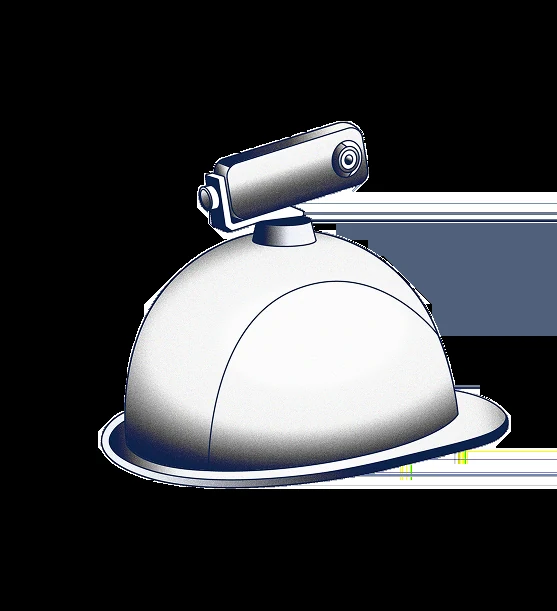
Capture is the foundation. A super mounts an Insta360 X3, X4, or X5 (or a Ricoh Theta Z1) on a hard-hat bracket, opens the OpenSpace mobile app, marks the starting point on the floor plan, and walks the building. The mobile app records 360-degree video at 2 frames per second; each frame becomes a pinned image once the Vision Engine processes it. Documenting 25,000 square feet takes roughly 10 minutes of walking. Processing takes about 15 minutes. The result is a navigable floor plan where every clickable pin shows the 360-degree view from that location, with full date filtering and a Reveal Mode slider for before-and-after comparison.
Field went GA February 3, 2026 and is the image-first task management layer. AI Autolocation removes the manual-pin step entirely — the smartphone uses prior 360 capture to suggest position on plan automatically. Suffolk Construction reports 86 percent speed improvement on issue documentation. AI Voice Notes auto-fill assignee, due date, priority, and tags from a voice recording attached to a photo. AI Search across the Media Library uses construction-specific terminology.
Track is what Disperse became after the October 2025 acquisition. Billing-grade progress tracking with 700-plus visual components across 200-plus schedule tasks. Hybrid AI-plus-human-verified model with 24-to-48-hour reports. Schedule integrations to Primavera P6, Asta Powerproject, Microsoft Project, and Excel. The Cleveland Construction case study quote: “The speed at which it was implemented and accuracy of data was astounding to our executive team.”
Air launched May 2025 to close the drone gap. Drone-agnostic — works with all DJI, Esri, and Skydio drones. Includes orthomosaics, point clouds, 3D meshes, elevation models, virtual control points, and measurement tools. Bundled in every OpenSpace subscription rather than sold separately.
BIM+ is the 3D coordination module. BIM Compare ships side-by-side reality + 360 imagery, Sheet Overlay puts 2D drawings on the model floor plan, BIM Element Overlay places model elements (HVAC grilles, junction boxes, structural members) into site imagery for verification. Direct ACC and BIM 360 Docs import. Sold as add-on to Capture.
The unified play matters because the same Vision Engine runs across all five products, and the data flows between them — a 360 walk captured on Capture feeds Field’s task management, Track’s progress quantification, and BIM+‘s coordination workflow without any manual handoff between vendors.
The 15-minute walk: a typical commercial capture, end to end
Picture a Tuesday morning on a 30-story tower at level 12, MEP rough-in stage. A super opens OpenSpace on her iPhone, picks the project from the list, and selects the level 12 floor plan. She straps an Insta360 X4 to her hard-hat bracket, walks to a corner she’s marked before, and taps Start.
She walks the floor at normal pace — past the elevator core, down the corridor, into each room, the mechanical space, the utility chase. Twelve minutes. The mobile app records 360-degree video at 2 frames per second the whole time, syncing to WiFi when she’s near the trailer. By the time she’s back at her truck, the Vision Engine has auto-aligned every frame to the floor plan, tagged photos by spatial location, and made the entire level searchable on the web app.
That’s the workflow primitive everything else builds on. Below the line:
Hardware support as of May 2026: Insta360 X3, Insta360 X4, Insta360 X5 (newest, dual 1-inch sensors), Ricoh Theta Z1 51GB. All available at store.openspace.ai — X3 $375, X4 $550, X5 $645, Theta Z1 $999.95. Hard hat $28; mounting kits $40-$45. For autonomous capture: drone via Air, laser scanners via BIM+ point cloud workflow.
Plan ingestion happens via PDF floor plans, BIM models, or auto-sync from Procore Drawings, Autodesk Construction Cloud, BIM 360, PlanGrid, or Revizto. The platform auto re-maps when plans update — a real operational win for fast-moving commercial projects where drawing revisions ship weekly.
Time-lapse and progress comparison ship as two named features: Split View (two captures side-by-side, different dates) and Reveal Mode (before/after slider you drag across the same view). Both useful for owner reporting and dispute documentation.
Field Notes are image-based annotations that create Procore Punch Items, Procore Observations, and Autodesk Issues directly with two-way sync. Bulk Field Notes export to Procore Punch List in one operation. Markup, dimensioning, and assignment flow through.
Reports ship as branded PDFs covering progress, defects, BIM-compare exports, and Power BI dashboards (customer-built via API; see Gap İnşaat case study). Shared Folders provide selective access for owner-facing handoffs. Offline deliverable as zip file gives lifetime access — useful for owner deliverables at project closeout.
QuickCodes are capture-and-training shortcuts that field crews scan with their phone to launch a specific capture flow with pre-configured settings. AI Image Enhance (April 2025) provides one-click sharpening on captured imagery. Checklists for QA/QC inspections tie capture to commissioning.
OpenSpace vs DroneDeploy: where each one wins
These two are the leading 360-walk platforms for commercial construction in 2026, and contractors evaluating either should also evaluate the other. Surfacing the comparison early because it’s the single question that defines the buying decision in this category.
| Dimension | OpenSpace | DroneDeploy |
|---|---|---|
| Founded | 2017 | 2013 |
| Status | Independent, acquired Disperse Oct 2025 | Independent, acquired StructionSite Oct 2022 |
| Primary capture | Ground-level 360° walks (Vision Engine since 2018) | Aerial drone mapping (since 2013) + Ground (ex-StructionSite) |
| Processing speed | ~15 min Vision Engine | ~2 hr Progress AI cycle |
| AI maturity (interior) | Higher — 2018 vintage, mature plan-pinning | Newer (Ground product since 2024 brand-merge) |
| AI maturity (aerial) | Newer — Air launched May 2025 | Higher — Aerial since 2013 |
| BIM coordination | Deep — BIM+ module, ACC + BIM 360 native | Lighter — BIM Compare on Ground side |
| Procore integration | Deepest two-way sync in category | Embedded App, but less embedded than OpenSpace |
| Verified progress (billing-grade) | YES — Track with Disperse human verification | Progress AI is fully automated; no human verification layer |
| Pricing | ACV-based, sales-quoted, no free trial | Aerial published pricing; Ground custom-quote; 14-day free trial |
| Customer base | 350K users, 80K projects, 62% of ENR Top 400 | 3.18M sites, 40% of ENR Top 400 (DroneDeploy combined) |
| Industry preference (G2 head-to-head) | Preferred for support quality + meeting business needs | Preferred for drone-first/exterior workflows |
| Best for | Vertical interior commercial construction, BIM-heavy work | Site-development, civil, agriculture, exterior, drone-native |
OpenSpace wins on: interior vertical construction, BIM-heavy projects, billing verification with audit trail, ACC + Procore-anchored stacks, owner reporting with verified percent-complete data. The Vision Engine maturity advantage is real — eight years in production beats DroneDeploy Ground’s post-2024-merge integration.
DroneDeploy wins on: site development, civil, large outdoor footprints, drone-native crews, exterior progress and earthworks, no-360-camera workflows. The Aerial product depth is real — DroneDeploy has been the drone-photogrammetry category reference for over a decade.
Run both if you’re a commercial GC at $100M-plus revenue running interior walks and drone flyovers on the same project. Two vendor relationships, two reality-capture platforms, but best-of-breed for each capture mode. That’s the standard play for top-tier ENR contractors.
Track, Field, Air: what the AI layer actually does

Vision Engine is the foundation, in production since 2018. Auto-aligns 360 walks to floor plans with no manual pinning, processes captures in roughly 15 minutes for a typical commercial walk, and continuously improves with usage. The data sheet at openspace.ai/resources/data-sheets/vision-engine-datasheet/ covers the technical depth. Every other AI product on the platform builds on top of it — without it, ClearSight has nothing to analyze, Track has nothing to track, Field has no map to auto-locate against.
ClearSight is the analytics layer with three named features: Object Search (find where specific items appear in captured imagery using construction-specific terminology), BIM Comparison (side-by-side reality vs design verification), Progress Tracking (auto-quantify work-in-place for key trades and project milestones). Turns OpenSpace images into actionable data and dashboards — meaningful because most reality-capture data ends up archived rather than used.
Track is the post-Disperse-acquisition product. Hybrid AI-plus-human-verified construction progress tracking. Monitors 700-plus visual components across 200-plus schedule tasks including framing, MEP, finishes, and fireproofing. AI imagery processing in roughly 15 minutes; full progress reports within 24-to-48 hours via the human-verification layer. Schedule integrations cover Primavera P6, Asta Powerproject, Microsoft Project, and Excel — the four schedule tools most commercial GCs actually run. The billing-grade audit trail is what differentiates Track from fully-automated competitors: when an owner pays you against percent-complete, the human-verification layer is what holds up under scrutiny.
Field went GA February 3, 2026 with two AI breakthroughs:
- AI Autolocation is “GPS for indoors.” Uses smartphone plus previous 360 capture to suggest position on plan; auto-pins Field Notes without manual placement, without beacons, without special hardware. Suffolk Construction reported 86 percent speed improvement on issue documentation using this. For commercial supers documenting punch items across a 30-story tower, the manual-pin step was historically the bottleneck — this removes it.
- AI Voice Notes lets a super photograph an issue and record audio while walking. The system auto-fills assignee, due date, priority, and tags. Issues created up to 86 percent faster.
- AI Search across the Media Library uses construction-specific terminology — search “exposed conduit” or “hangers missing” and surface the relevant captured imagery directly.
Air is the May 2025 drone product, drone-agnostic across DJI, Esri, and Skydio. Orthomosaics, point clouds, 3D meshes, elevation models, virtual control points, distance/slope/area/volume/cut-fill measurement tools. Included in every subscription.
BIM+ is the 3D coordination add-on. BIM Compare side-by-side, Sheet Overlay (2D drawings on model floor plan), Saved Views, BIM Element Overlay (placing model elements like HVAC grilles into site imagery for verification), point cloud comparison, offline mobile access, BCF export. Direct ACC and BIM 360 Docs import. The depth here is real — for VDC-heavy commercial workflows, BIM+ does what most photo-doc tools can’t even attempt.
Compared to DroneDeploy Progress AI specifically: DroneDeploy Progress AI is fully automated with claimed 95-percent accuracy across 80-plus trades and 2-hour reports. OpenSpace Track is hybrid AI-plus-human-verification with 24-to-48-hour reports and explicit billing-grade audit trail. Different shapes solving different problems — automated trend visibility (Progress AI) versus billable, defensible work-in-place (Track).
Why this is a Procore-stack tool

OpenSpace’s integration roster is the cleanest fit signal it ships. Read the list and you can tell who the company built this for.
What ships natively:
- Procore — the deepest two-way sync of any 360-walk product, listed at marketplace.procore.com/apps/openspace-two-way-sync. Punch Items + Observations bidirectional. Embedded experience inside Procore’s UI. Bulk Field Notes push to Procore Punch List. Multi-integration linking lets one OpenSpace project sync simultaneously to Procore, Autodesk Forma, BIM 360, PlanGrid, and Revizto. The flagship integration that drives most production deployments.
- Autodesk Construction Cloud + Autodesk Build — two-way sync closed February 2026 with the OpenSpace Field GA. Issues bidirectional. Direct model and Docs import. Was a complaint pattern across 2023-2024 reviews; mostly resolved now.
- Autodesk BIM 360, PlanGrid, Forma, and Revizto — model + plan source integrations.
- Power BI — customer-built via API (Gap İnşaat case study documents the workflow).
- Schedule tools (via Track add-on): Primavera P6, Asta Powerproject, Microsoft Project, Excel.
What doesn’t ship — verified May 4, 2026:
| Tool | Native? | Why it matters |
|---|---|---|
| JobNimbus | No | Roofing CRM — different market |
| Jobber | No | Residential service FSM |
| Housecall Pro | No | Residential service FSM |
| ServiceTitan | No | Service-trade FSM |
| AccuLynx | No | Roofing/insurance CRM |
| GoHighLevel | No | Marketing automation |
| Smith.ai | No | AI receptionist (different category) |
| CompanyCam | No | Competing photo-doc product |
| Raken | No | Adjacent commercial daily-reports |
| DroneDeploy | No | Direct competitor in 360-walk + aerial |
| Buildertrend | No | Residential GC platform |
| Fieldwire | No | Adjacent field-PM product |
Bluebeam and Microsoft Teams native integrations are unverified — could not be confirmed in OpenSpace’s documentation as of May 4, 2026. Treat as absent unless your demo proves otherwise.
If your operation runs the residential-trade FSM stack, OpenSpace is the wrong shape for the job. Built for commercial GCs running Procore and ACC, with an integration roster that makes the audience explicit. If you came in expecting OpenSpace to slot into a Jobber + JobNimbus + AccuLynx workflow, CompanyCam is what you actually want — cleaner UX for residential photo-with-job, lower per-seat cost, and native FSM integrations OpenSpace doesn’t ship.
For the marketing-automation-plus-FSM case that comes up across residential service trades — running Jobber + GoHighLevel as a paired stack under $400 a month combined — OpenSpace doesn’t slot in there either.
What you’ll pay (and why nobody publishes the number)
The go-to-market is enterprise commercial construction. Two-to-three discovery calls is the standard pre-quote evaluation timeline. There’s no published pricing page, no time-limited free trial, and no self-serve flow. If you’re a 50-person commercial GC at $30M-$80M annual revenue, this lines up with what your procurement team already expects. If you’re a 5-person residential remodeler, this isn’t your tool — and the pricing structure is the loudest signal of that.
Pricing scales with annual construction volume, not per user or per project. Two tiers (Core, Enterprise) plus the Track add-on. Hardware sold separately at the OpenSpace store.
Third-party sources cite a $10,000 minimum for under-$40M-revenue companies — unverified by OpenSpace publicly. No free trial; sales-led pilots only. Hardware sold separately at store.openspace.ai. Demand renewal pricing in writing — enterprise SaaS escalates 15-30% at year-two routinely.
Hardware costs are real and worth budgeting separately. A 5-person commercial GC equipping the field team with Insta360 X4 cameras and hard-hat mounts is looking at roughly $3,000 in hardware before any subscription. The X5 upgrade adds dual 1-inch sensors and meaningfully better low-light capture — relevant for shell stages and unfinished interior spaces where light is poor.
Customer reviews keep hitting the same three notes
Aggregate review data on OpenSpace in May 2026 is genuinely thinner than its market share would suggest — Capterra has a small sample, G2 returns access errors to direct fetches, and SoftwareFinder tilts enterprise. The named-customer evidence is strong; the aggregated review evidence is sparse. Both are real signals.
The first note is the capability one — it shows up across positive reviews:
“It is very easy to use and to gather data that is hugely impactful for a project.” — Stephen R., National BIM/VDC Manager, Construction industry, Capterra 4/5 stars · October 18, 2023
“With OpenSpace, you can do your QC from your couch at night, if you wanted to.” — Alex Lowry, Project Manager, SC Builders, FeaturedCustomers
“This level of access and documentation essentially equals protection.” — David Niewiadomski, Senior Project Manager, Commodore Construction, FeaturedCustomers
The second note is the learning-curve one — and it’s the most consistent counter-signal. Mohammed M., a mid-market construction reviewer on SoftwareFinder in March 2023:
“It’s quite difficult to use and you’ll definitely need to invest time in training.” — Mohammed M., Mid-Market construction (51-100 employees), SoftwareFinder 4/5 · March 2023
The platform is genuinely capable, but field-team adoption isn’t automatic without dedicated onboarding — which is why Core tier explicitly bundles “expert-led onboarding” as a stated feature.
The third note is mobile reliability — and it’s the one to pressure-test in your pilot:
“The ‘Done’ button does not work [during multiple recordings]… recordings corrupt way too often. Having to do a 10+ minute walk more than once is just very frustrating.” — Anonymous iOS App Store reviewer, Apple App Store · November 12, 2025
For a super walking a 30-story tower, redoing a 12-minute walk because it corrupted is real friction. The pattern shows up across multiple platforms — the iOS app sits at 4.0 stars across 41 ratings, mid-pack for the category.
The Disperse case study quote, named and dated October 2025 from the acquisition press release: Elliot Christiansen, SVP Operations at Cleveland Construction (Mentor, OH): “The speed at which [OpenSpace Track] was implemented and accuracy of data was astounding to our executive team.”
For contractors who weight Capterra heavily, OpenSpace’s data is genuinely thinner than CompanyCam (4.7 across 1,800-plus reviews) or Raken (4.6 across 248). The named-customer evidence is strong; the aggregated review evidence is sparse. Both are real signals worth pricing into the buying decision.
The honest fit test
Six archetypes where OpenSpace is the editorial pick, and seven where it isn’t. If you’re in the second list, the redirect tells you what to use instead.
It’s the right pick if you’re:
- A commercial general contractor at any size running ENR-Top-400-style operations with BIM-heavy coordination requirements — 62 percent of ENR Top 400 GCs are already customers
- A large MEP or specialty trade doing BIM-coordinated commercial work (IES Holdings, Comfort Systems USA, Polk Mechanical, and similar named customers)
- An owner-developer managing portfolios of large interiors — data centers, healthcare campuses, multifamily complexes, industrial buildings — where Disperse-verified billing-grade progress is non-negotiable
- A restoration or disaster-response contractor documenting insurance work where audit-trail-verified documentation matters more than residential-style photo-with-job
- An industrial operator — manufacturing facilities, power plants, industrial campus construction — where multi-zone BIM+ workflow and Disperse-verified progress match the audit requirements
- A compliance-heavy commercial operation running OSHA-driven safety programs alongside owner-facing reporting
It’s the wrong pick if you’re:
- A residential remodeler or custom home builder — use Buildertrend. Native scheduling, customer portal, sales pipeline, selections, and proposal workflow OpenSpace doesn’t ship.
- An HVAC, plumbing, or electrical service business — use Workiz, ServiceTitan, Jobber, or Housecall Pro. For marketing automation and AI call answering on top, the Jobber + GoHighLevel paired stack under $400/month combined is the right pairing.
- A roofing contractor with insurance work — use JobNimbus or AccuLynx. For roof-only measurement, EagleView or Hover serve pre-flown imagery without flying drones.
- A solo contractor or 1-5-person residential shop — use CompanyCam at $13/user/month or Contractor Foreman at $332/month flat for unlimited users.
- A photo-doc-first residential operation — use CompanyCam. Cleaner UX, deeper photo AI search, native integrations to JobNimbus, Jobber, AccuLynx, Buildertrend that OpenSpace doesn’t ship.
- A drone-first / heavy-civil / earthworks-first contractor — use DroneDeploy Aerial. OpenSpace Air narrowed the gap May 2025 but DroneDeploy still wins drone-native workflows.
- An operation that needs transparent published pricing or a free trial — OpenSpace doesn’t ship either. If you can’t tolerate two-to-three discovery calls before you see a number, this isn’t the product for you.
Bottom line
OpenSpace in 2026 is the most defensible 360-walk-plus-progress-verification platform for commercial construction, and the Disperse-acquired human-verification layer is the editorial moat DroneDeploy doesn’t ship. Vision Engine processing speed (~15 min vs DroneDeploy’s ~2 hr Progress AI), the deepest Procore two-way sync in the category, the BIM+ module for VDC-heavy workflows, and the AI Autolocation breakthrough in OpenSpace Field GA February 2026 stack into a real product advantage for the audience that uses it.
The catches matter just as much. Pricing is ACV-based custom-quote with no free trial — sales-led only. Mobile app reliability has documented complaint patterns (recording corruption, multi-recording Done-button bug) that persist into late 2025 reviews. The learning curve is steep enough that OpenSpace explicitly bundles “expert-led onboarding” as a stated Core feature. Zero native integrations with the residential-trade FSM stack — by design, but disqualifying for that audience.
The 4.4 rating reflects the asymmetric strengths in spatial pinning, billing-grade verification, and AI maturity, weighted against the pricing opacity, mobile reliability complaints, and onboarding curve. If you’re in the buyer profile — commercial GC, BIM-heavy work, Procore-anchored stack, owner-reporting requirements — OpenSpace is the editorial winner of the 360-walk category. If you’re not, the discovery-call cycle will tell you within the first week, and the right move is one of the redirects above.
The Disperse acquisition is what makes OpenSpace genuinely different from anything else in this category in 2026. Either the human-verification layer matters for how your owners pay you, or it doesn’t — and that’s the question the buying decision actually rests on.